0
0

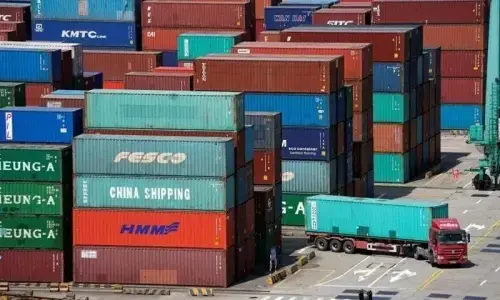
KARACHI, Aug 16: D.G. Khan Cement Company is in the process of acquiring cement grinding mill with a capacity of 230 tons per hour or 5,000 tons per day, a senior company official said on Wednesday, claiming it to be the largest grinding mill set up by any cement plant in the world.
“The plant is to be supplied by FL Smith. A smaller version is to go into operation in Brazil two months from now,” the company official said. The company, like most others is in the throes of giant expansion. Capacity enhancement by 7,600 tons per day that has been undertaken currently at Khairpur (Chakwal) is expected to come on stream in the last quarter of 2006.
But between D.G. Khan and another giant in the cement sector, the Lucky Cement Company, the race is to be the biggest. The official at D.G admitted that it was “strategically and psychologically important” for the company to recapture its place at the top, which it had firmly held since 1990. But last year, Lucky Cement went into huge expansions that raised its total production capacity to 21,000 tons making it the biggest cement plant in the country. “Even with the enhanced output from the new plant, D.G. Khan would be able to raise its capacity to just 14,000 tons,” an official at Lucky boasted. D.G. Khan, is already known to have ordered a 10,000 tons per day capacity plant with F.L. Smith. But that would not be launched until 2008-09, and in the meantime, the company is stated to be concentrating on enhancement of capacities of the original plants.
Some of the sector watchers believe that like the country’s financial sector, sooner or latter it would all boil down to the survival of the few big. Of the 22 cement plants in operation currently, there were numerous smaller ones with as low a capacity as 2,000 tons per day or slightly higher. When the going gets tough, the smaller companies might find it difficult to survive in a sea of competition. They would be forced to merge into larger units or would be ‘bought over’ by the big fish.
But interestingly, some other industry onlookers disagree. They believe that the mergers and acquisitions were forced by the capital requirements in the banking and insurance sector. Such was not the case with cement companies. “Multinational buy-outs of cement plants in developed world is a common phenomenon,” says a company executive who asked not to be named for he added: “To retain a cement company in the portfolio of industrial investment in the country was not only a matter of ‘ego’ for most sponsors in the sector, but there would be hard to find cash rich individuals who would venture into such buy-outs”.