Energy: Crude reality — Is oil glut imminent?
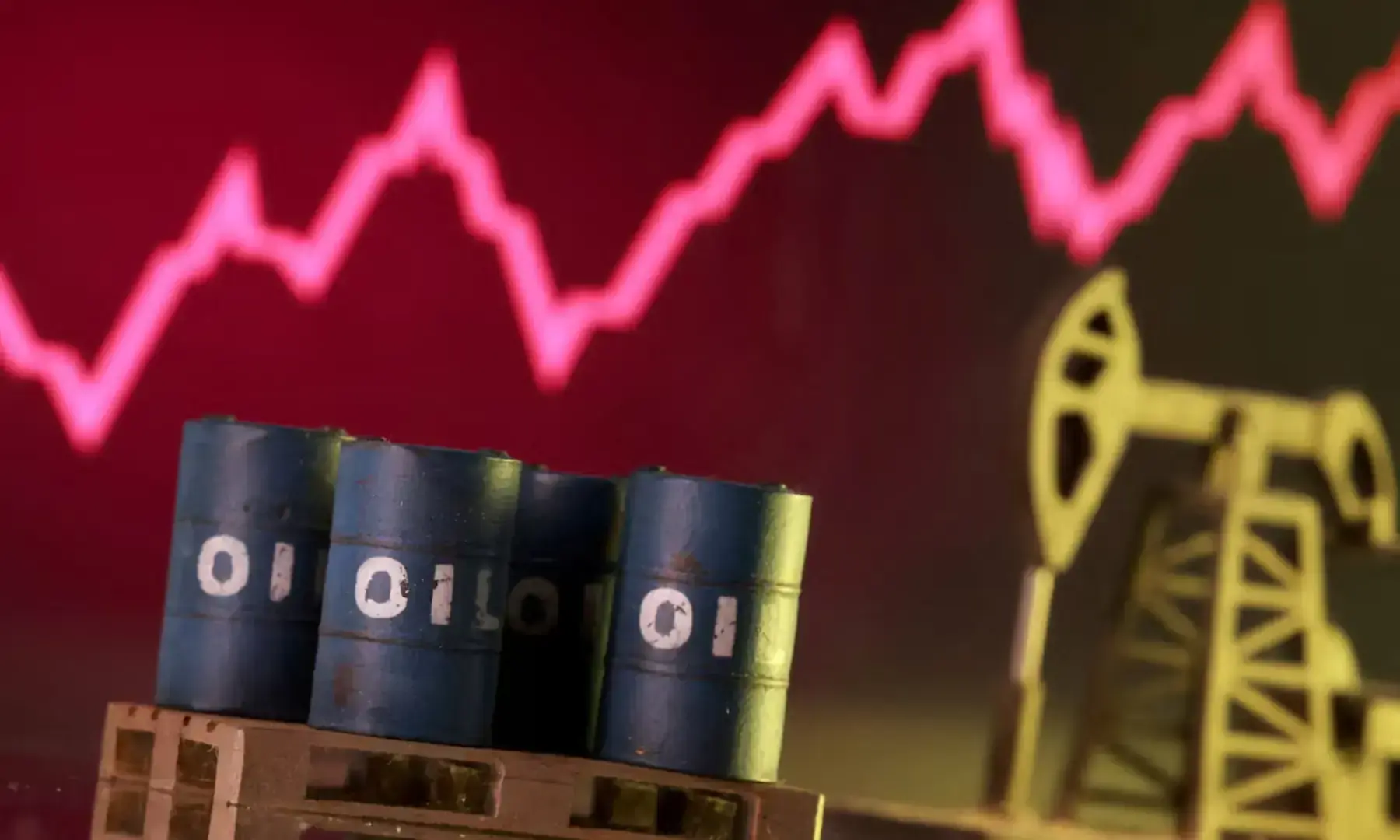
Oil markets are undergoing a massive shift in sentiment. The Republicans’ thrashing in the mid-term elections, the consequent cooling off the Middle East war theatre, softening global demand, and growing talk of a global surplus have altered crude market fundamentals.
Oil markets weakened this weekend. This was a second straight weekly drop in prices. Markets took further cue when US President Donald Trump told reporters that the war with Iran was “effectively over.” Oil prices fell to their lowest level since late August.
Both Brent and WTI were down by about 2.5pc last week, after falling by 16pc and 13pc, respectively, the week before that ended Nov 6. On Friday (Nov 13), Brent Crude (January delivery) settled at $95.84 per barrel, while the WTI Crude (December delivery) settled at $88.56 per barrel.
After touching $126/barrel in April and talks since then about the possibility of a severe oil shortage due to the blockade of Hormuz, this is a major drop. New fundamentals are taking over oil markets. The world’s oil supply is swinging back to a surplus for the first time since the start of the US-Israeli war against Iran, the International Energy Agency (IEA) reported on Thursday last.
Falling oil prices offer Pakistan a breather. Various global research reports are unanimous about oil surplus as ME war theatre cools off
Oil supplies outstripped demand by almost 2 million barrels per day (bpd) in October, the Paris-based agency said, as “Gulf exports recovered much faster than global oil demand.” The IEA said it expected global oil supply to average 105m bpd in the final three months of the year, 1.7m bpd higher than the demand forecast. The IEA had earlier projected a deficit in Q4 this year.
The market was “showing tentative signs of rebalancing, with global oil supplies surpassing demand for the first time since the outbreak of the war in Iran,” the IEA report added. To ease the supply pressures further, the IEA report said, its members would speed up the release of remaining emergency oil stockpiles pledged earlier this year, adding a further 71m barrels to the market by the end of February 2027.
The stocks are held in refineries, oil terminals, power stations and at offshore fields in the North Sea.
OPEC+, which also includes non-OPEC oil giant Russia, seems to concur with the IEA report. It reported a substantial surge in its oil production for October 2026, driven largely by Saudi Arabia and Iraq as supplies rebound toward pre-war levels.
As per the report, the combined OPEC+ production rose by 2.04m bpd in October to average 41.23m bpd. This volume was almost 97pc of pre-war February levels, while the total OPEC crude production climbed by about 1.96m bpd to reach 27.16m bpd.
Saudi output increased by 1.18m bpd to 10.56m bpd, essentially the pre-war production level.
Aided by alternative pipelines and workarounds despite ongoing shipping friction, the oil Kingdom has been able to overcome major obstacles, and Aramco’s chief executive is now saying the company plans to raise this further by the year end. Meanwhile, Iraqi output has also increased by roughly 496,000 bpd to 4.49m bpd or higher, marking multi-year highs.
The OPEC report citing secondary sources also added that Russian oil production rose by 41,000 bpd in October from September to 8.668m bpd.
Using workarounds such as so-called dark crossings through the Strait of Hormuz, where tankers switch off tracking signals to evade attack from Iran, it is being reported now that exports from the region are almost touching the pre-war levels.
Investment Bank JP Morgan is also hinting that the growing output is balancing the markets rapidly. “We estimate the global oil market returned to a surplus of 1.1m bpd in September, widening to 1.4m bpd in October, nearly matching last year’s average of 1.3m bpd,” the bank said.
Goldman Sachs also estimates the global liquids market was broadly balanced in the September-October period, in contrast to the deficit in March.
A marginal surplus from last year, an uptick in production outside of the Gulf, along with a decline in demand, has helped balance the market, the bank said. The recovery in global oil supplies has also eased pressure on emergency stockpiles, which have been diminished by the Iran conflict, the Guardian commented.
“It’s clear the biggest fear a few months ago was a fear of shortage,” Reuters reported, citing Phil Flynn, senior analyst with the Price Futures Group. “Now it looks like the biggest fear is a surplus.”
In the meantime, demand growth concerns are also taking some shine off the crude oil markets. While OPEC is keeping its global oil demand growth projections unchanged, expecting an increase of 180,000 bpd for 2026 and 2.55m bpd for 2027, averaging 108.3m bpd, the OECD energy watchdog IEA is projecting a fall in global oil demand by 2.68m bpd this year to 103.2m bpd. Consumption is forecast to rebound next year but is still expected to remain below the 2025 levels, with growth mostly in petrochemical feedstocks as the market for vehicle fuel is hit by “high prices, electrification and fuel efficiency,” the IEA report said.
The US Energy Information Administration (EIA), the statistical arm of the Department of Energy in Washington, also highlighted in its November short-term energy outlook (STEO) that demand “has fallen considerably during the prolonged oil supply disruption.”
“The reduction in oil consumption, particularly in China, has limited the impact the loss of supply has had on global oil prices,” the EIA said. “We now estimate that global liquid fuels consumption will fall by 2m barrels per day in 2026,” it added. “In addition to lower consumption in China, we estimate oil consumption in the Middle East has fallen largely because of reduced air travel and less economic activity,” it continued.
But geopolitical risks and resulting threats to the oil markets have not disappeared. Ominous clouds persist.
Despite increasing exports from the Middle East, attacks against vessels carrying crude oil, among others, through the Hormuz, the key waterway for crude exports from the main Middle East producers, persist. On Thursday, Iran’s military said four oil tankers were hit by explosions in the waterway after ignoring warnings. Reuters could not immediately verify the Iranian accounts.
In Saudi Arabia, meanwhile, the Yemeni Houthis also continue with their attacks. The latest targets included a pumping station on the East-West pipeline, a facility in the port city of Yanbu and an Aramco building in Riyadh.
Signals remain mixed. Risk of serious war escalation in the oil-rich region has gone down, yes, but attacks on tankers in the Hormuz persist, while the chances of a peace deal dimmed after President Donald Trump said, “We don’t need a deal with Iran” and that “Those days have long since passed. We’ve got their money, Hundreds of Billions of Dollars, and we’ve got their Strait!”
What does all this mean for Pakistan? Prices have gone down, and it will help the country manage its balance of payments better. After all, oil remains the largest drain on its accounts.
And though the chances are remote, what if the war theatre reignites? Islamabad has a vested interest in keeping the temperature as low as possible. That should continue!
Published in Dawn, The Business and Finance Weekly, November 16th, 2026