898 farm fires detected across eight Punjab districts in 24 hours
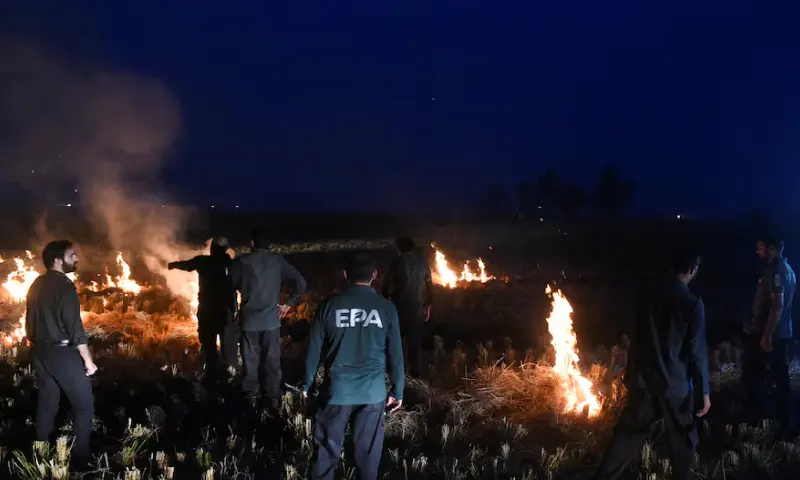
LAHORE: As many as 898 farm fire anomalies were detected across eight districts, with 820 incidents attended and 823 fires reported as extinguished during the last 24 hours, according tothe consolidated district-wise monitoring dashboard of the Environment Protection Agency (EPA) Punjab, updated on Nov 14.
Hafizabad has emerged as the largest hotspot, accounting for 430 farm fire anomalies, representing approximately 47.9pc of the provincial total. Of these, 381 have been attended and 381 fires extinguished, while 49 remain pending. The district has nine QRCs deployed, with an average of 47.8 detected anomalies per crew, indicating the highest operational pressure among the monitored districts.
Sheikhupura ranks second with 172 detected anomalies, of which 154 have been attended and extinguished, while 18 remain pending. The district has 22 QRCs deployed and a response rate of 89.5pc.
Nankana Sahib has reported 120 anomalies, with 95 attended and 95 extinguished, leaving 25 pending. Its response rate stands at 79.2pc, the lowest among the districts with substantial reported activity. Faisalabad has recorded 93 anomalies, of which 90 have been attended and extinguished, leaving three pending and achieving a response rate of 96.8pc.
Kasur has recorded 70 detected anomalies while its dashboard shows 88 attended and 88 extinguished, with no pending cases. Sialkot has reported 10 detected anomalies, 10 attended and 13 extinguished, with no pending cases. Sargodha has recorded two anomalies, both attended and extinguished, while Gujranwala has reported one anomaly, which remained unattended at the time of reporting.
EPA data shows Hafizabad as the largest hotspot with 430 farm fires; directors deployed in the field to supervise anti-stubble burning operations
The district-wise figures show that Hafizabad, Sheikhupura and Nankana Sahib together account for 722 of the 898 detected anomalies, making these districts particularly important for sustained monitoring and deployment of response resources.
Separately, the motorway beat vehicle monitoring report for the latest 24-hour period recorded 20 fire anomalies, of which 13 were attended, while seven remained pending. The response rate stood at 65pc.
A total of 67 quick response crews (QRCs) have been deployed by the EPA in the above-mentioned districts while the overall response rate stands at 91.3pc. However, 96 detected farm fire anomalies remain pending for response.
The EPA has deployed its headquarters-based directors across different divisions of the province to directly supervise anti-stubble burning operations, strengthen field monitoring and ensure an effective response to farm fires during the smog season.
The directors are already present in their assigned divisions where they are monitoring field operations in coordination with agriculture department and district administrations. The initiative is aimed at ensuring accountability of field teams and expediting action against stubble burning, particularly in the hotspot districts.
EPA Punjab Director General Abdullah Nayyer Sheikh emphasised the importance of monitoring the actual situation on the ground, verifying reported fire incidents, identifying operational gaps and ensuring that every detected hotspot receives a timely response.
He said farm fires required coordinated efforts by the EPA, agriculture department and district administrations as effective prevention depended on continuous surveillance and immediate field intervention.
According to an order issued on Nov 13, five directors posted at EPA Punjab headquarters have been assigned specific divisions to supervise anti-stubble burning activities on Nov 14 and 15. Director (P&C) Waseem Ahsan Cheema has been assigned Gujrat Division, Director (L&E) Mian Ejaz Majeed Sahiwal Division, Director (MEAs) Anjum Riaz Faisalabad Division, Director (EMC) EPA Lab Lahore Noor Ahmad Lahore Division and Director (EDH) Nazim Ayaz Alam Gujranwala Division.
The directors would also coordinate with district field officers and relevant line departments for immediate action against violators. They are also required to submit field visit reports to the EPA DG upon completion of their assignments.
The EPA is combining district-level anomaly detection, motorway beat vehicle surveillance and field-based quick response crews to identify fire incidents and ensure their timely extinguishment.
Published in Dawn, November 15th, 2026