
Decisions are not easy, especially when you are a kid and have to choose which subjects to study and which career to pursue. How can anyone know what is right for them at such a young age, with so little experience of the world?
It’s a tough call, usually made by adults, and rarely do children know from the start what they want to be when they grow up. There are so many ways to go about making this decision, and I want to talk about one such method that I discussed with my nephew the other day to help him decide which universities he would be seeking admission to.
So, instead of asking him what he wanted to be, I asked him what he saw himself doing every day in his working life. What kind of regular workday and environment would he want? Through visualisation, I asked him to block out everything else and imagine himself in the different professional options open to him. I asked him to picture himself performing the tasks involved and the environment he would need to work in. In short, to visualise the actual life that comes with a particular profession.
Getting him to actively imagine such scenarios took some time, but he got there. Once he did, I asked him how he felt in those situations. Did he like what he was picturing in his mind? Would he enjoy doing those tasks every day or would they become monotonous?
Choosing a career is about more than picking a profession with a fancy title or a handsome salary. Before settling on a career, try picturing yourself actually doing the job. Maybe you might discover that your dream profession isn’t quite what you imagined
Interestingly, he had a clearer picture of what he did not want to experience every day than what he knew for sure he wanted to do. But that was fine. At least he knew which options he could eliminate. By continuing with this exercise, he could gradually arrive at a clearer picture of a future that felt fulfilling and meaningful to him.
The power of visualisation
Visualisation is simply the act of forming a picture of something or someone in your mind. It is about using your imagination to explore your deepest desires and seeing your life unfold in your mind.
Studies suggest that visualisation is a powerful tool in achieving one’s goals and aspirations, as it helps the brain prepare for actual performance. Top athletes around the world use visualisation to achieve their goals and overcome obstacles along the way, improving their performance.
When faced with multiple career choices, visualisation can help students explore their preferences, identify options that may not suit them and focus on paths that align with their interests and goals.
Visualisation also helps build a roadmap towards one’s goals. Vague dreams can become more concrete when you begin to picture the steps needed to achieve them. Once you have a clearer idea of where you want to go, you can start identifying the skills, qualifications and experiences that will help you get there.
Of course, there will be obstacles along the way, but visualising your roadmap can help you prepare for them. For instance, if you do not get into your desired field or university, what would you need to do to still have the career you want?
So, exploring your options and thinking about how to overcome barriers are both things you can do through visualisation.
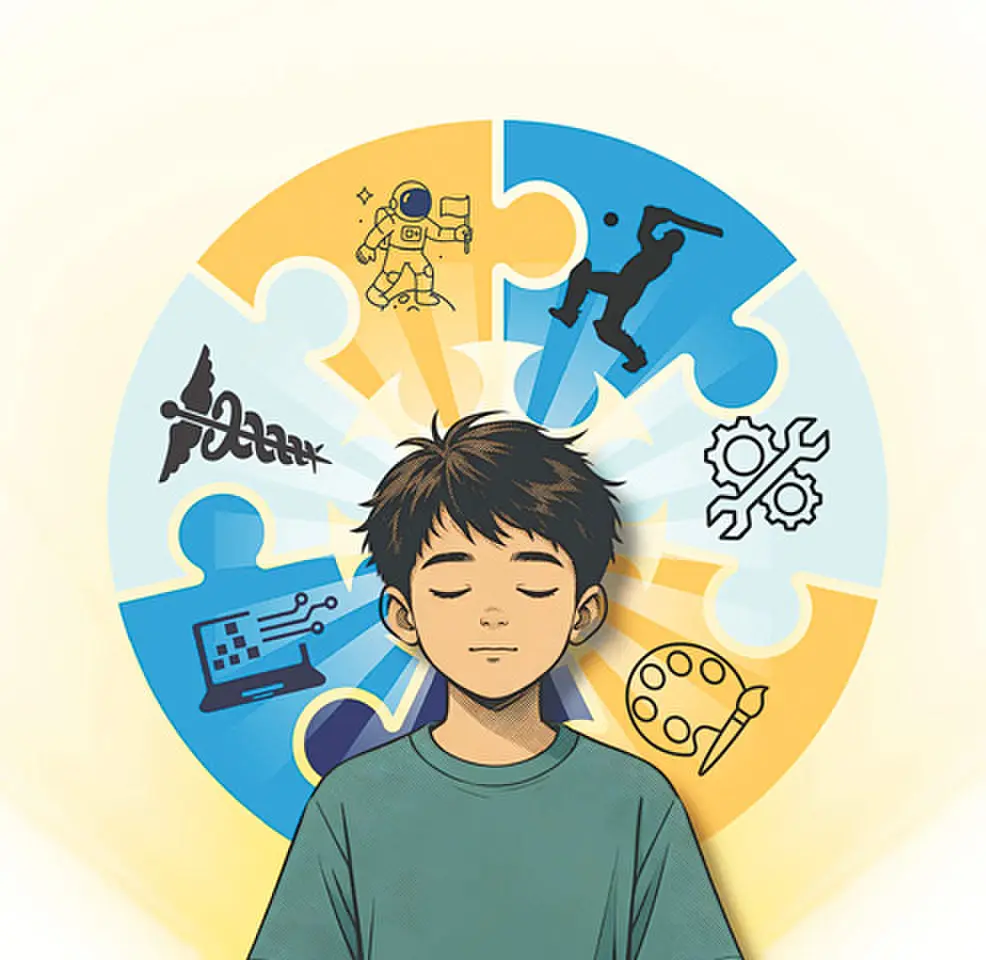
So what do you really enjoy doing?
Mostly, students are told what they should become or follow the latest career trends, without actually finding out what they really enjoy doing. But they need to take some time to reflect and find out what they like and are good at — solving problems, creating things, helping people, organising, experimenting, researching or communicating ideas. Are they dreamers, planners or doers? What makes them so excited that they forget everything else and don’t even consider it work?
Someone wise once said: “Choose a job you love, and you will never have to work a day in your life.” This is important, but knowing how to turn what you really love into a career that is financially beneficial, practically applicable and personally rewarding needs a little more thought.
For instance, if someone is good at drawing and painting, it doesn’t mean they need to become an artist. They can think in practical terms and apply their artistic interests to careers such as architecture, graphic design, engineering, advertising and so on.
Beyond the job title
Psychology uses the term ‘future work self’ to describe how one imagines oneself in one’s future professional life, including the kind of work one sees oneself doing, the environment one wants to work in and the person one hopes to become through one’s career.
So, explore how you see your future work self. For instance, so many youngsters want to become cricketers more out of fascination with the success and lifestyle of cricketing stars than out of an actual love for the game. But becoming a good sportsperson means training for hours each day, following a strict diet and practising in all kinds of weather conditions to develop the skills needed to achieve the success everyone admires.
One needs to look beyond the success and consider the years of hard work, struggles and everyday hardships involved to really understand what it means to be in a certain profession.
In the same way, if someone wants to be a doctor, it entails more than wearing a white coat and treating patients. There are years and years of studying, countless exams, long shifts and treating patients with all kinds of issues, some of which may be disturbing to deal with. There are also difficult procedures where the smallest mistake can lead to someone’s death!
So, before making a career choice, visualise your future work self and ask yourself whether you really like that kind of work.
Another important part of visualising your future work self involves imagining the kind of environment or workplace where you will be spending your days. Do you want to spend your days at a desk in front of a computer, in a laboratory, on a hot and noisy factory floor, outdoors working in the sun or travelling regularly to different locations? Do you want to work in teams and groups or independently? Do you want to work 9 to 5 or can you handle night shifts and long hours?
All these are very important points to consider because they become part of your everyday routine. If you think you will enjoy the work but not the schedule or work environment that comes with it, you need to reconsider your choice or think of ways to make it suit you.
It’s okay not to have all the answers
You don’t have to figure out your entire future at once. Not everyone knows what they want to become in their teens, and that’s perfectly fine. Sometimes, discovering what you don’t want to do is the first step towards finding what you do want. Your interests may change as you grow, learn and experience new things and you may even discover a passion you never knew you had.
You need to not aim for the most impressive career or one that everyone else approves of. You need to find something that suites your abilities, aligns with your interests and gives a sense of fulfilment. Listen to advice from parents, teachers and others with more experience, but also take the time to understand what you want for yourself.
After all, choosing a career isn’t just about deciding what you want to be called; it’s about deciding what you want to spend your days doing. So, picture your future, explore the possibilities and give yourself time to discover a path that feels right for you.
Published in Dawn, Young World, November 14th, 2026