Newsroom bomb threats follow escalating European flight hoaxes
Newsrooms in Ireland and Bulgaria received emailed bomb threats on Friday from a purported “Mikhail Andropov”, claiming responsibility for a widening wave of hoax threats disrupting passenger flights across Europe.
The messages, sent to Bulgaria’s Nova TV and the Irish public broadcaster RTE, which evacuated its offices and suspended programming, were headlined “Message to the West” and portrayed the threats as the prelude to a series of attacks on means of transport across Europe. The British broadcaster Sky also said it had received a security threat.
Reuters was not able to establish the identity of the sender, the origin of the emails, or whether they had in fact come from the same source as the threats to any or all of the dozens of flights affected since Tuesday.
But they added to concern among European officials that the hoaxes are part of a campaign of “hybrid” disruptions, which many have blamed on Russia, aimed at countries that have helped Ukraine. Moscow has denied involvement.
Spanish Foreign Minister Jose Manuel Albares said Europe appeared to be facing “hybrid aggression and a form of psychological warfare”.
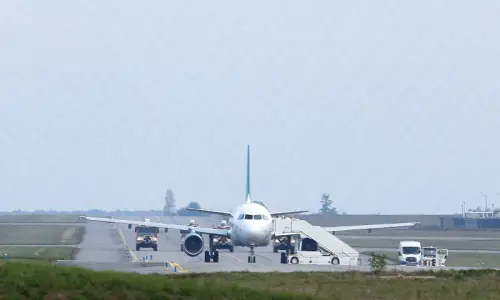
No explosive devices were found and all planes, including those threatened on Friday, landed safely.
Flight disruptions lessen
Security experts said on Thursday that the threats might be intended to punish European nations that have armed or financed Ukraine as it resists the full-scale invasion Russia launched in 2022. It was also possible, however, that individuals were laying false trails, issuing copycat threats or acting on personal grievances.
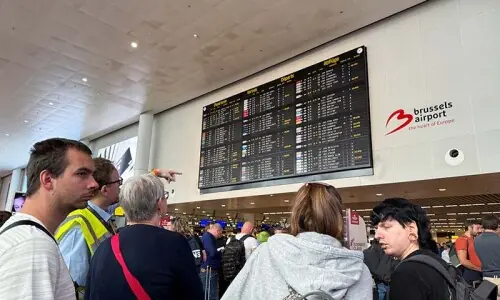
Around half a dozen flights were disrupted in some way on Tuesday and more than two dozen on Thursday, some of them making unplanned landings or being escorted to their destinations by fighter jets.
On Friday, an Italian airport authority source said a Wizz Air flight from Prague to Rome had been diverted to Venice but, despite more than a dozen hoax threats, overall there was far less direct disruption to air travel.
Hungarian jets did, however, escort airliners flying from Brussels to Sofia and from Prague to Bucharest and Cyprus through Hungarian airspace.
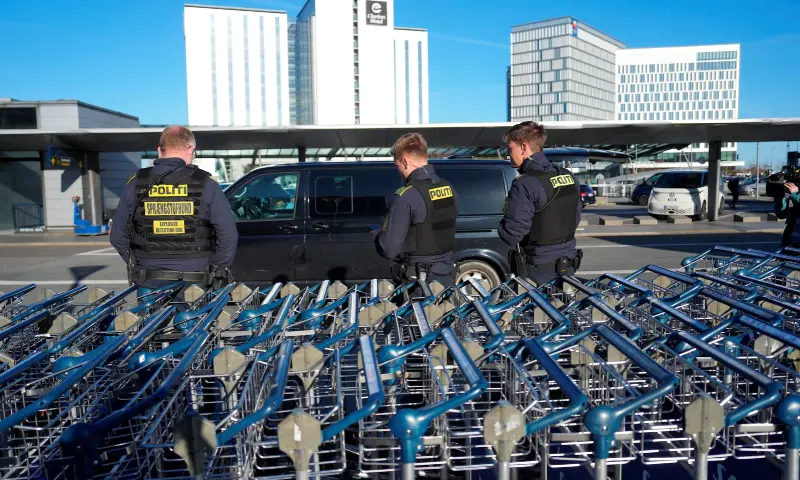
Danish police said on Friday they were investigating threats directed at air traffic at Copenhagen airport, but that their immediate assessment was that there had been no danger to passengers.
The airport said it was “operating normally”.
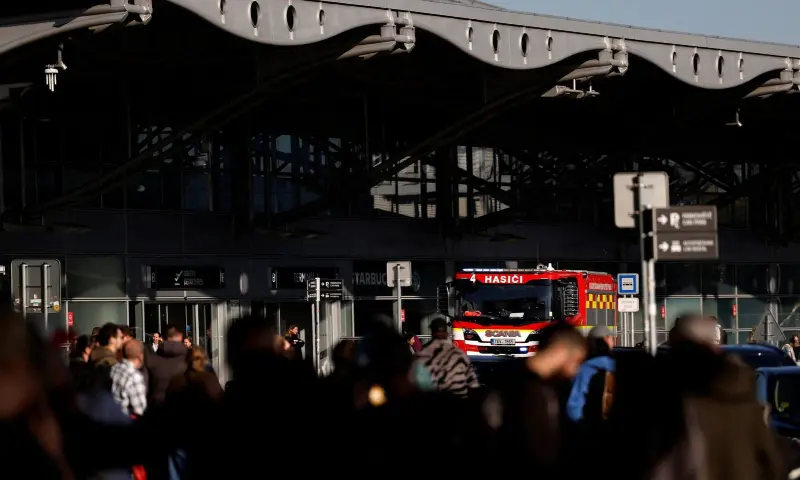
Czech police said they had registered bomb threats to flights departing from and arriving in Prague. An airport spokesperson said they concerned four inbound and five outbound flights, but that no explosive devices had been found and no flights had been cancelled or diverted as a result.
The French prime minister’s office said four new bomb threats had been made to aircraft flying over French territory, and that all had landed safely.
A bomb alert on a Ryanair flight from Rome to Lisbon prompted a security operation when it landed, CNN Portugal reported.
Defence Minister Romulusz Ruszin-Szendi said Nato had ordered some air patrols in the area, the first report that the Western defence alliance had become involved.
While no country attributed blame for the threats, they follow a wave of sabotage attacks and attempts on targets across Europe ranging from German electricity substations to defence-related facilities in the Baltic region, and supermarket refrigerators in France and elsewhere. Germany blamed Russia directly for a drone attack on Leipzig airport.
EU commissioner says Russia is often to blame for attacks
Security experts said on Thursday that the threats had the hallmarks of a coordinated “hybrid attack”, although it was always possible that individuals were issuing copycat threats or acting on personal grievances.
Many officials have linked the campaign to Europe’s support for Ukraine in its war against Russian invasion, accusing Moscow of a campaign of “hybrid” disruptions that are essentially cheap to execute, easily deniable, and not expected to trigger an armed response.
Spanish Foreign Minister José Manuel Albares told the national broadcaster TVE that, while it would take time to determine exactly what happened, “it cannot be mere coincidence that so many incidents with exactly the same modus operandi are happening across Europe”.
“The most reasonable assumption is that we are facing an attempt at hybrid aggression and a form of psychological warfare,” he said, adding that Europe must be prepared for more such challenges.
European technology commissioner Henna Virkkunen told Reuters on Thursday that since 2022 Europe had faced a range of hybrid operations including sabotage of critical infrastructure, drone incursions, cyber breaches and election interference.
“We are under attack all the time,” she said. “The reason behind these operations is to destabilise our societies and create mistrust among our citizens.”
It’s not always Russia who is behind different hybrid operations,” she said, adding: “Quite often it is Russia.”
On Thursday, an airport source in Italy said bomb threats had been sent to several airlines and airport operators in Rome and Milan purporting to be from “fighters of the Male State”, a far-right anti-feminist movement banned in Russia.
Reuters could not confirm who had sent the email. Vladislav Pozdnyakov, a Russian blogger who set up Male State in 2016, said it no longer existed and was not involved in any way.