FCC bars PHC from hearing cases related to PTI workers' preventive detention
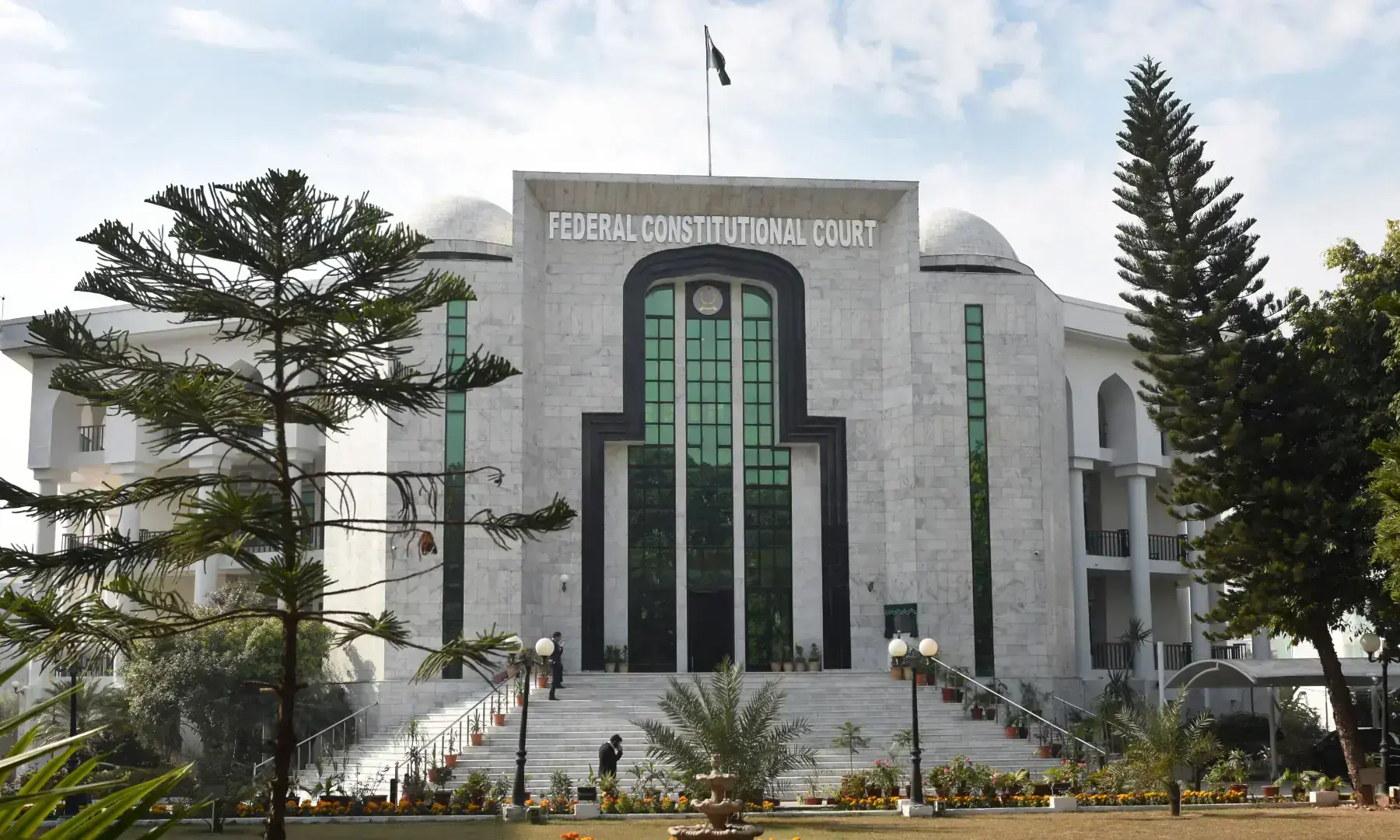
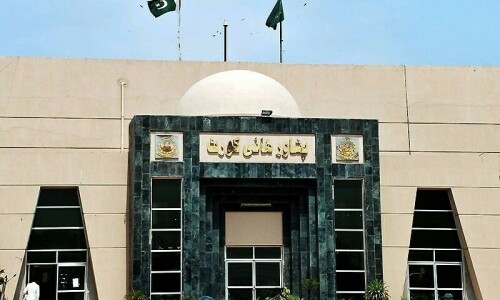
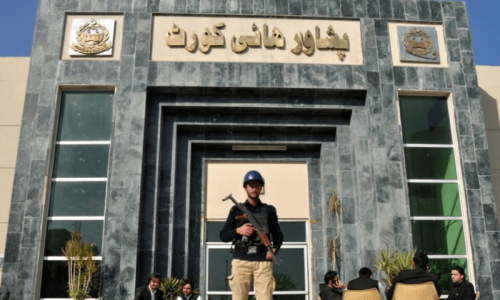
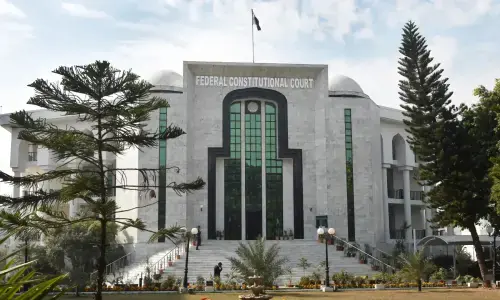
ISLAMABAD: The Federal Constitutional Court (FCC) on Thursday restrained the Peshawar High Court (PHC) from hearing cases related to the preventive detention of PTI workers and activists under the Maintenance of Public Order Ordinance (MPO) following the imposition of emergency and governor’s rule in Khyber Pakhtunkhwa.
The directive was issued by a two-judge bench, headed by Chief Justice Aminuddin Khan and including Justice Aamer Farooq.
The bench took up a set of petitions challenging interim bail of the detainees, granted by the PHC against surety bonds of Rs100,000 each. The PHC had issued the interim orders in the absence of any report by the provincial government explaining reasons and circumstances that led to the detention of PTI activists and also directed that they should not be arrested pending the cases related to their detentions before the high court.
The PHC will next hear the case on Nov 12.
More than 60 appeals challenging the PHC’s interim orders have been fixed before the FCC. The pleas were moved by the KP Home and Tribal Affairs Department additional chief secretary.
The FCC restrained the high court from proceeding further on the cases and decided to issue notices to the parties with a direction that they may also file their pleas before the superior court.
KP Advocate General Sanaullah Khan, who pleaded the case before the FCC on behalf of the provincial government, told Dawn that the PHC’s orders had been challenged under Article 245 of the Constitution, which provides for calling in armed forces in aid of civil forces.
He cited clause 3 of the provision, arguing that a high court could not “directly entertain a case under Article 199 of the Constitution since it cannot exercise its jurisdiction in relation to any area in which the armed forces are acting in aid of the civil power”.
Clause 3 of Article 245 states: “A high court shall not exercise jurisdiction under Article 199 in relation to any area in which the armed forces of Pakistan are, for the time being, acting in aid of civil power.”
When the KP advocate general presented this argument before the FCC, Justice Farooq observed that a high court received several cases under Article 199 on a daily basis.
“Does this mean the high court should not hear such cases?” he questioned.
The advocate general replied that matters such as tenancy disputes could be taken up as the high court was approached for these cases after the matter was referred to appropriate competent forums.
Former additional advocate general Shah Faisal Ilyas, who was representing one of the parties, raised an objection during the proceedings and requested the court to hear the parties before issuing any injunctive order, asserting that the objections raised by the provincial government against the high court’s order were untenable.
CJ Khan then directed the counsel to furnish his formal objections after going through the FCC’s order first and stated that the court was issuing notices to the respondents.
The KP advocate general said while speaking to Dawn that the framers of the Constitution had provided protection to provisions relating to the preventive custody under Article 10 (safeguards as to arrest and detention).
He specifically cited clauses 3 and 4 of the provision and contended that provisions of the MPO were invoked on the basis of “subjective analysis of the government functionary to prevent any action prejudicial to the public safety and law and order”.
The FCC’s directive comes less than a month after the federal government imposed emergency and governor’s rule in KP on Oct 11, citing the provincial government’s “deliberate disengagement” from the fight against terrorism.
The move has drawn criticism from the opposition, including Jamiat Ulema-i-Islam-Fazl chief Maulana Fazlur Rehman, National Assembly Opposition Leader Mehmood Khan Achakzai and Senate Opposition Leader Raja Nasir Abbas.
In the days preceding the imposition of governor’s rule in KP, political tensions between the Centre and the opposition — including the PTI which was in power in KP — had remained high since jailed former prime minister Imran Khan’s party announced a protest march to Islamabad to demand his release. Intense negotiations between the two sides a week before the imposition of governor’s rule had failed to yield any results.
Scores of PTI workers and leaders had been detained following the Oct 11 move, including lawmakers. Sohail Afridi, who has been rendered non-functional as the chief minister after the imposition of governor’s rule, has also been detained.
The PHC remains seized with petitions against these detentions, including that of Afridi.