• Govt updates stakeholders about LG law tweaks
• Outgoing mayors, chairmen allowed to continue as administrators until their elected successors assume office
KARACHI: The provincial government has formally done away with the caretaker or independent municipal set-ups after notifying the changes in the Sindh Local Government Act (SLGA), allowing outgoing mayors and chairmen to continue as administrator until their elected successors take charge.
The development follows the provincial assembly’s passage of the Sindh Local Government (LG) Act (Amendment) Bill 2026, which the government notified in the official gazette last month after the governor assented to it, bringing the changes into force.
The amended law states: “Government shall, one hundred twenty (120) days before expiry of term of office of the Council, immediately send a request to the Election Commission for holding fresh election within 120 days: Provided that, on expiry of the term of a Council, the outgoing Mayor or Chairman, as the case may be, shall continue to exercise the powers and perform the functions of the Council as Administrator until the newly elected Mayor or Chairman assume office.”
Previously, caretaker set-ups, mostly headed by bureaucrats as administrators, took over metropolitan corporations, district committees, towns, etc, after the four-year term of elected local government representatives expired.
The caretakers remained in office until the Election Commission of Pakistan held the local government elections, and they handed over the reins of the LGs after the elected officials took the oath.
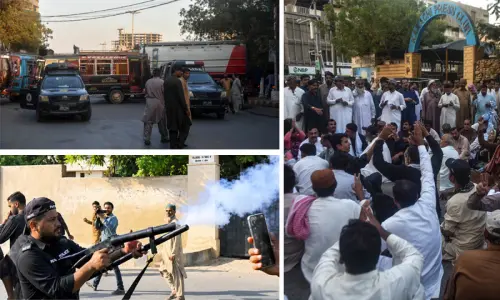
On Sept 13, using its majority in the Sindh Assembly, the ruling Pakistan Peoples Party got the amended bill passed amid opposition protest, allowing outgoing mayors and chairmen to continue even after their terms expire.
Later, on Sept 28, Sindh Governor Syed Muhammad Nehal Hashmi signed the bill, and it was published in the gazette on Oct 9.
On Wednesday, the Sindh government formally informed all relevant stakeholders across the province about the newly amended law.
It sent a letter to mayors, municipal commissioners of Karachi and all other divisions of Sindh, chairmen of towns, district councils and union committees and union councils and other officials across the province.
An official citing key features of the amended law said that it also allowed deputy mayors or vice chairmen to act as conveners of their respective councils and preside over their meetings and “perform such functions as may be assigned by the mayor or chairman”.
“The amended law further requires all UC, town and municipal committees to establish a three-member reconciliation forum within 90 days of the law coming into force. According to the new provisions, the forum, headed by a convener, will help resolve disputes among citizens through mutual consent and provide a local platform for amicable settlements,” he added.
The law also makes it mandatory for local councils to undergo a performance inspection at least once a year, while their meetings must be held every three months. It requires local bodies to allocate funds in their annual budgets for the training of elected representatives and employees, with councils also tasked with developing training programmes to improve decision-making and public service delivery.
The official said the new provisions had expanded the administrative responsibilities of LG institutions, particularly in areas of public service delivery, civic oversight, dispute resolution and coordination with provincial departments.
“For instance, under another provision, local government representatives and the police will be required to coordinate on matters relating to law and order and public safety. However, the amended law makes it clear that the police will retain their existing powers relating to the investigation of criminal cases and prosecution,” he added.
The amendments also place additional responsibilities on local councils regarding women’s empowerment and the welfare of persons with disabilities. Councils will be required to submit comprehensive quarterly reports on measures taken for women’s empowerment, while ensuring the welfare of persons with disabilities and facilitating the provision of basic facilities to them.
Under the revised law, UCs will also be responsible for coordinating with relevant agencies and monitoring matters relating to solid waste collection and disposal within their jurisdictions. They will further be required to identify illegal constructions and violations of building regulations and report them to the Sindh Building Control Authority for necessary action.
Published in Dawn, November 5th, 2026