ISLAMABAD: The Islamabad High Court has questioned the acquittal of the former chairman of Employees Old-Age Benefits Institution (EOBI), the prime suspect in a Rs40 billion corruption case, and summoned him along with other accused to appear in person on Nov 20.
Justice Shahrukh Arjumand, hearing a criminal appeal filed by EOBI against the acquittal, issued notices to all respondents after hearing arguments challenging the trial court’s decision to acquit them in the corruption case.
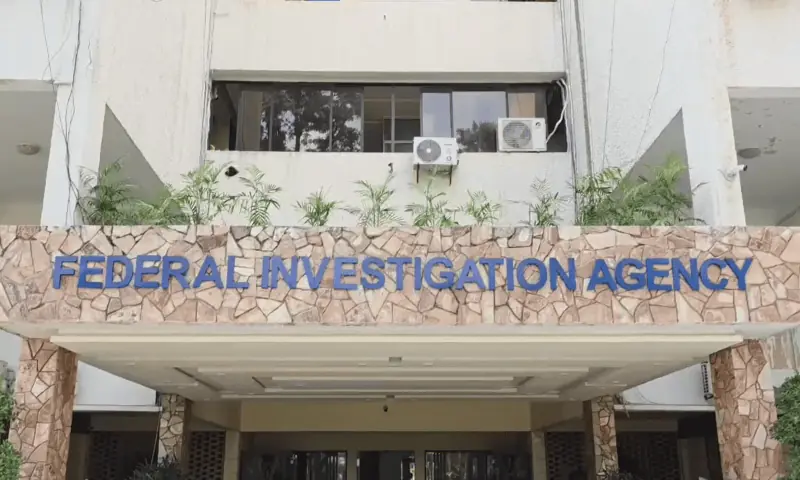
The appeal is directed against a judgment dated April 17, 2025, through which the Special Judge Central-II, Islamabad, acquitted the suspect and the remaining accused under Section 265-K of the Code of Criminal Procedure in a case registered through FIR No. 03/2014 with the FIA’s Special Investigation Unit, Islamabad.
During the hearing on Nov 2, EOBI’s counsel Aftab Alam Yasir argued that the impugned judgment had been passed without proper justification, despite allegations of serious financial irregularities in the institution’s investments.
The counsel submitted that the purchase of plots and villas under an agreement with the Defence Housing Authority (DHA), dated March 15, 2013, had not been preceded by an independent and transparent procurement process.
He contended that no advertisement or competitive bidding had been undertaken, in violation of the Public Procurement Regulatory Authority (PPRA) Rules, allegedly causing a loss of Rs6.82 billion to the national exchequer.
The counsel maintained that EOBI, being a public-sector institution governed by the Government’s Rules of Business, 1973, was legally bound to comply with the applicable procurement rules.
He further argued that subsequent ratification of the transactions by the Investment Committee or an opinion given by the institution’s then legal adviser could neither override mandatory legal provisions nor cure the alleged violations.
Referring to a Supreme Court judgment in the case of Federation of Pakistan through Secretary, Ministry of Petroleum and Natural Resources versus Dewan Petroleum, the counsel argued that a legal opinion could not, by itself, bind the government or provide justification for disregarding statutory requirements.
He also questioned the defence that decisions of the Investment Committee and the Board of Trustees absolved the former chairman of responsibility.
According to the appellant, the position of the head of the department did not allow him to avoid accountability by relying on decisions of institutional bodies.
The counsel further disputed the reliance on a subsequent valuation conducted by NESPAK on the directions of the Supreme Court, arguing that the property’s potential value should have been assessed at the time of the transactions. After hearing the arguments, Justice Shahrukh Arjumand ordered issuance of notices to the respondents, requiring their personal appearance before the court on Nov 20.
Published in Dawn, November 5th, 2026