• Petroleum minister says refiners will absorb Rs15bn, contribute about Rs50 per litre to levy for 30 days to avert Rs15 hike
• Cites windfall profits amid soaring crude import premiums
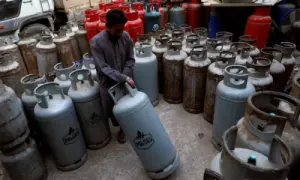
• Assures consumers of gas supplies for November; efforts underway for December and January
• Information minister assures nation country has sufficient petroleum stocks
ISLAMABAD: The government announced on Monday that it had partially curtailed the “unprecedented windfall” profits of domestic refineries to avoid passing on a looming Rs15 per litre hike in petrol prices last Friday, which was driven by an unusual regional crisis.
“They [refineries] earned more profit in the last three months than in a year, with the support of the government in arranging crude oil to operate at maximum throughput. They have now helped the government maintain the petrol price, which was set to increase by Rs15 per litre last Friday due to an international price hike,” Petroleum Minister Ali Pervez Malik said at a news conference.
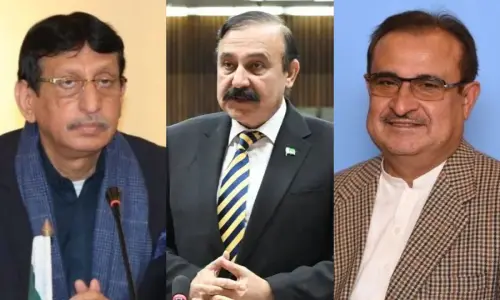
Accompanied by Information Minister Attaullah Tarar, the petroleum minister also assured consumers that arrangements had been made to ensure sufficient gas supplies in November. He added that efforts were underway to avoid any shortages in December and January as well.
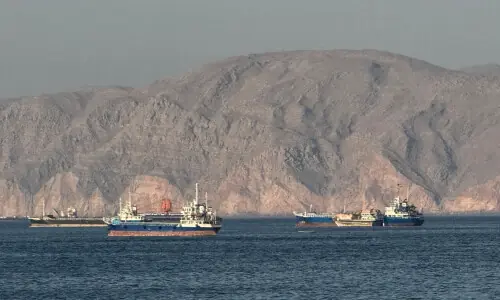
Both ministers parried questions about the reasons behind the blockade of liquefied petroleum gas (LPG) from the Iranian border and the identity of the attackers on an LNG vessel travelling to Pakistan ahead of the Strait of Hormuz.
The information minister advised journalists to avoid speculating on these sensitive matters, saying, “The truth will come out by itself soon.”
The petroleum minister explained that refineries used to operate on a pre-war import premium benchmark of $5-6 per barrel, which had now exceeded $20.
Furthermore, Pakistan State Oil’s latest tenders have even attracted premiums on the higher side of $30 per barrel.
30-day arrangement
The minister noted that refineries would contribute about Rs50 per litre to the petroleum levy, resulting in a monthly cumulative impact of Rs15 billion. This arrangement, he said, was for a 30-day period given the unusual circumstances.
He expressed hope that the situation in the regional market would return to normalcy and that refineries would move forward with their upgrade projects. The refineries still receive an equivalent of around $20 per barrel in refining margins on petrol, he added.
“When they accumulate so much profit while the people face hardships, this change becomes inevitable,” Mr Malik said. “We do not want to be unfair to anyone. If the loss to the nation is fourfold, then the government has to come forward and intervene.”
Responding to a question about protests from refiners regarding changes to the petrol pricing formula without prior consultation, the minister said he would meet them today (Tuesday) to address their concerns.
Recalling similar changes to diesel pricing, he expressed gratitude to the refineries that recognised the public’s difficulties and agreed to reduce the diesel crack to $42 and then $38 per barrel.
Similarly, they agreed to provide relief in fares for Haj pilgrims and extended pre-war rates to the defence sector.
Mr Malik said the public would see further improvements and thanked refineries for supporting the government in providing relief during a difficult period when it was struggling to procure oil at rising international prices.
Asked about formula-based changes to refinery profitability and their impact on customs duty, the minister said he favoured deregulation to improve services and pricing. He opposed price caps such as those introduced by former prime minister Shaukat Aziz.
The petroleum minister added that 13 million consumers were separately benefiting from the prime minister’s fuel subsidy scheme, receiving petrol at pre-war prices.
Information Minister Tarar shared that 15 million users had registered for the prime minister’s fuel scheme so far. The initiative is now entering its fourth week and running smoothly, with petrol stations being refunded the very next day. About Rs27 billion has been disbursed so far, he said.
He added that once the regional crisis ended, the government would make efforts to return to deregulation; however, the current focus remained on public relief. Asked to compare petrol prices during the PTI government’s tenure with those under the current administration, Mr Tarar said there was no comparison.
He said the world had never witnessed a crisis of this scale, citing the ongoing war in the Gulf, which had led to unprecedented increases in insurance and freight charges and attacks on ships. “They [the PTI] came with the slogan of change and introduced destruction,” he said.
No shortage
Addressing concerns about fuel availability, the minister assured the public that Pakistan had sufficient petroleum stocks and urged people to ignore rumours and unverified information. Cargo shipments had continued to arrive even during the most difficult periods, ensuring uninterrupted supplies, he said.
Mr Tarar claimed that many people in Khyber Pakhtunkhwa could not benefit from the prime minister’s fuel scheme because the PTI government had “destroyed” the province and allowed non-customs-paid vehicles and motorcycles to flourish.
Published in Dawn, November 3rd, 2026