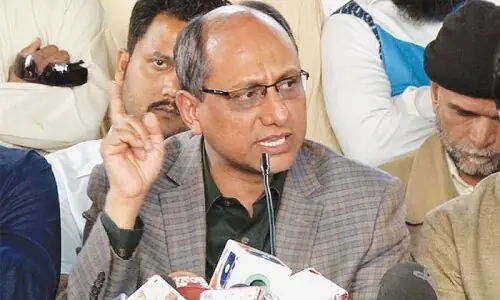
HYDERABAD: Sindh Ombudsman Dr Mohammad Sohail Rajput, who is a former chief secretary of Sindh, has expressed his disappointment over the slow pace of disciplinary proceedings against 64 employees of the Kulsoom Bai Valika Hospital over an HIV outbreak there.
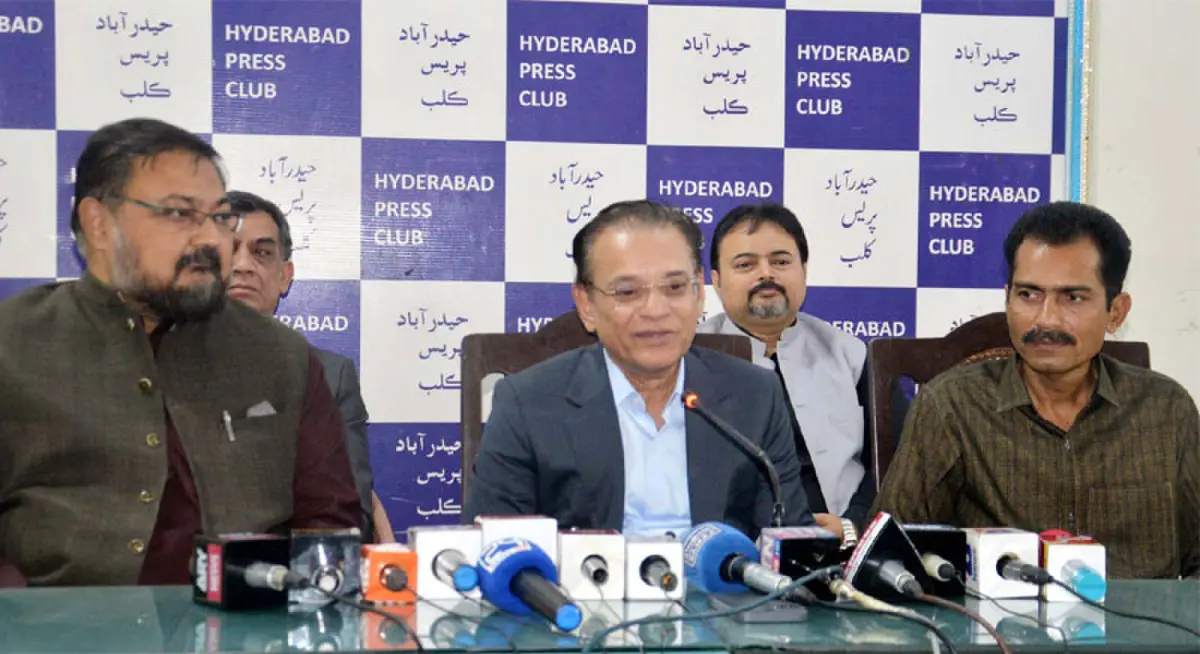
He was speaking to journalists at the local press club on Saturday evening. President Junaid Khanzada and Secretary Ashok Sharma of the club welcomed him and his team.
The ombudsman said that his office had finalised the criminal proceedings against these employees of the hospital [run under the Sindh Employees Social Security Institution], “but it is unfortunate to see the disciplinary proceeding against them at a slow pace”.
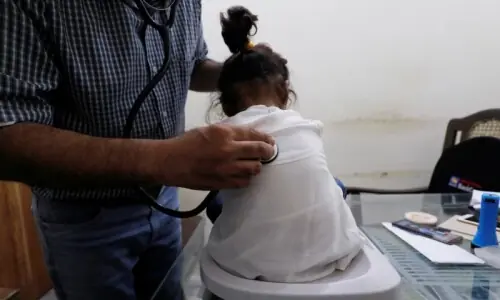
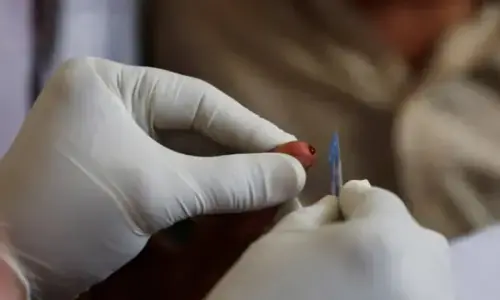
He recalled that 170 HIV cases had been reported from the hospital after which he heard the complaints. Some infected children were socially isolated, rather expelled from the school, but his office ensured that they continue their education. He said these children were infected only because of reuse of syringes at the hospital. Children of one family were all infected and tested positive for HIV, he said.
Says he had finalised hearing of complaints about 170 HIV cases at the facility
The ombudsman said that people need to trust the ombudsman office, which has been addressing their grievances regarding various government departments and agencies. “This is visible from the large number of complaints being disposed of by this office annually,” he said, and stressed that legal reforms could ensure implementation of all its decisions.
He noted that most complaints from rural Sindh pertained to the education and health sectors which he was focusing on considering the fact that loss of education and health were always irreversible. The civic and infrastructure issues could be resolved belatedly, he believed.
Mr Rajput said that there were around 8,000 complaints that used to be handled by this office annually until he took the charge of the ombudsman’s office. “Now the average annual number is around 25,000 i.e. three times higher,” he pointed out. He said 90pc of these complaints are decided within a 90-day timeline.
He said that the ratio of complaint submission had substantially increased because of some initiatives taken after 2024. Still this increase is on a lower side given Sindh’s population i.e. 55 million, he viewed.
Explaining the initiatives, the ombudsman said his office engaged 10 brand ambassadors, from each of Sindh’s universities, for the projection of the office’s working through digital means. He said that now complainants had been given more visibility as they could check the status of their complaints online and remain aware of the relevant proceedings.
Generally, he said, people felt that the ombudsman’s office is after all a government entity thus its intervention would not be that much effective.
Mr Rajput said that in the case of Karachi, complainants come up with grievances against the police department, Sindh Building Control Authority and Karachi Water & Sewerage Board, but the positive aspect which may be noted is the case of rural Sindh, where people appeared to be more concerned about the education sector.
“Teachers are either not available or they lack teaching skills,” he said, and added that if a primary school student loses education in the first five years, the loss would always be irreversible.
The ombudsman said he had personally visited schools in Kharo Chhan and Keti Bunder (Thatta-Sujawal region) where children wouldn’t be able to compete with their counterparts from other areas. He said many of those he spoke to only expressed a desire to seek a government or clerical job. “How can these children achieve something big in their life when they don’t aim for something big in life?” he wondered. To him, he said, it was a disparity.
He said in Sindhri, Mirpurkhas district he was told that teachers were not available and this was in spite of the fact that merit-based appointments were made through the Sukkur IBA. He said that it was a matter of administrative slackness, and not a lack of resources. He said that he would be bringing the situation to the notice of the Sindh chief minister.
Turning to the Liaquat University Hospital (LUH), Hyderabad, the ombudsman said it needed expansion and administrative efficiency to ensure better healthcare services. This hospital, developed by the Liaquat University of Medical and Health Sciences, is a good addition at Jamshoro, he said. “The LUMHS vice chancellor had told me that it would become a 200-bed hospital with provision of more services of specialties,” said Ombudsman Rajput.
Published in Dawn, November 1st, 2026