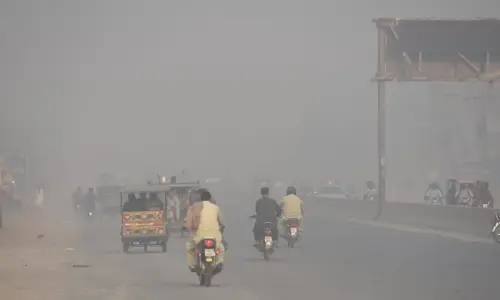
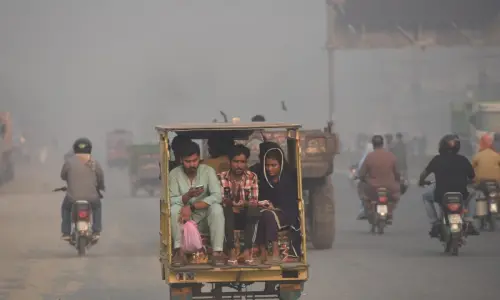
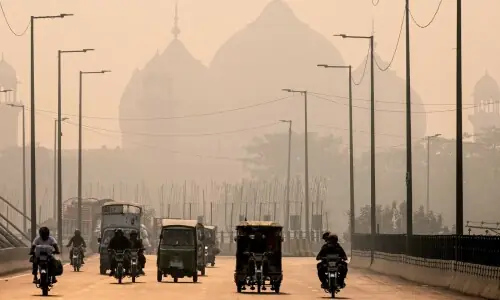
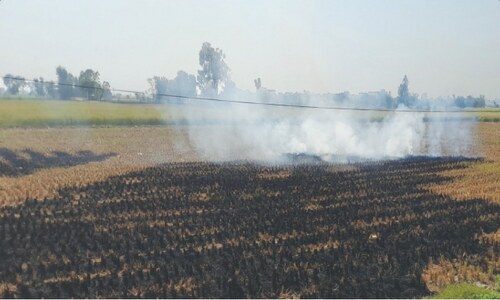
LAHORE: Crop-fire detections in Pakistan’s Punjab were 4.2 times higher than in Indian Punjab during the first 29 days of October, according to satellite data, as the province grapples with worsening smog.
According to an analysis published by environmental monitoring website HamariHawa, Nasa satellites detected 13,241 fire spots in Pakistan’s Punjab between October 1 and 29, compared with 3,158 in Indian Punjab — 4.2 times as many detections.
The report, based on data from Nasa’s Fire Information for Resource Management System (FIRMS), collected through VIIRS instruments aboard the Suomi NPP, NOAA-20 and NOAA-21 satellites, found that 92 per cent of the detected fire spots in Pakistan’s Punjab were located on farmland and were likely associated with crop burning.
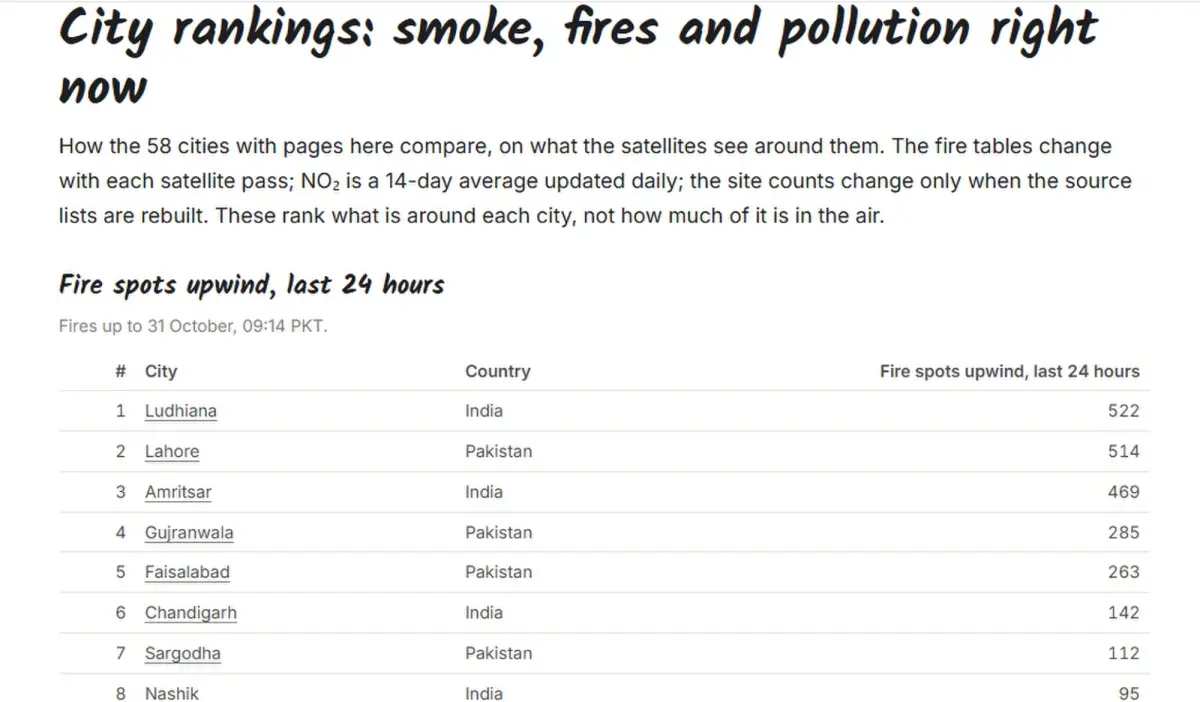
The analysis also found that 6,655 fire spots, around half of the monthly total, were detected during the last seven days of October, indicating an increase in burning activity. October 29 was the busiest day, with 1,327 fire spots recorded in Pakistan’s Punjab.
A comparison based solely on data from the Suomi NPP satellite, which provides a consistent basis for examining trends over different years, showed that 4,562 fire spots were detected in Pakistan’s Punjab, compared with 918 in Indian Punjab, between October 1 and 29.
The findings mark a reversal of the situation in 2019, when Indian Punjab recorded almost five times as many fire detections as Pakistan’s Punjab during the same period, with 14,002 compared with 2,908.
HamariHawa’s historical analysis showed that Indian Punjab reduced its satellite-detected crop fires by 95 per cent between 2021 and 2025, while detections in Pakistan’s Punjab increased by 33 per cent between 2019 and 2025. In 2025, Pakistan’s Punjab recorded 12,364 fire spots, compared with 3,714 in Indian Punjab — 3.3 times as many.
The latest data showed that agricultural burning in Pakistan’s Punjab was concentrated in the rice-growing belt around Lahore. Okara recorded the highest number of fire spots, at 2,144, followed by Gujranwala with 1,011 and Nankana Sahib with 1,003 between October 1 and 29.
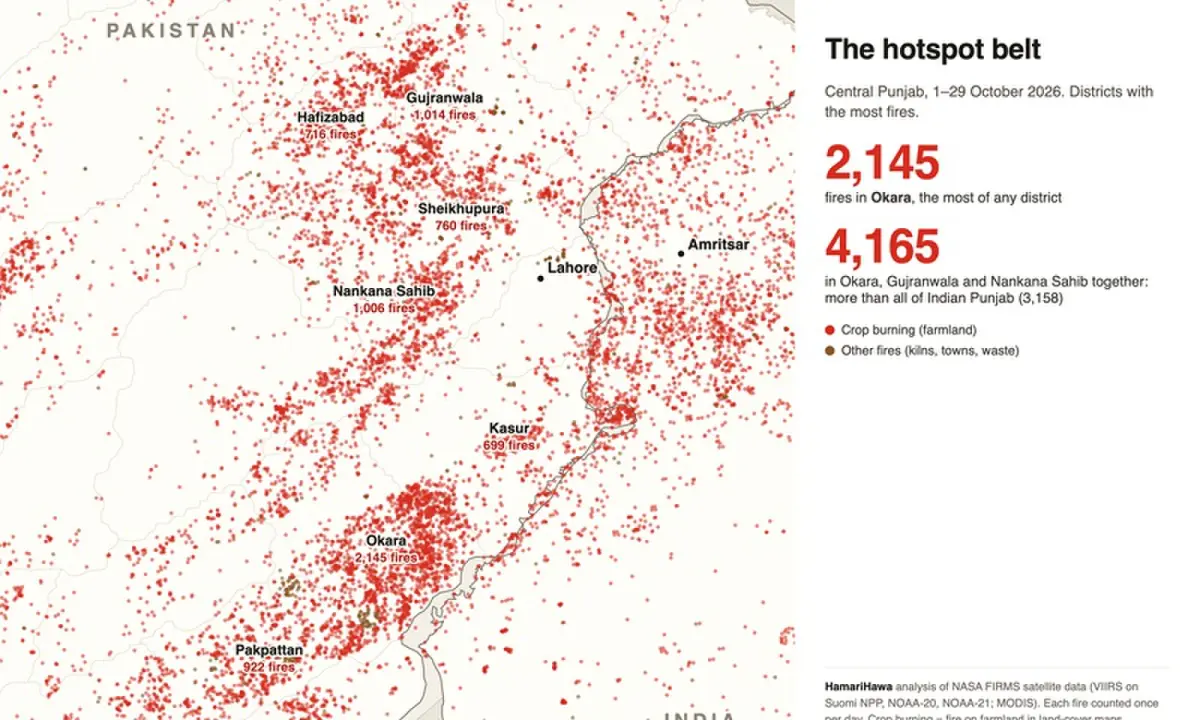
The three districts collectively recorded 4,158 fire spots, exceeding the total of 3,158 detections recorded across Indian Punjab during the same period.
Pakpattan recorded 922 fire spots, followed by Sheikhupura with 756, Hafizabad with 713, Dera Ghazi Khan with 710, Kasur with 699, Khanewal with 682 and Jhang with 676.
The report noted that these districts lie around Lahore, meaning smoke from agricultural fires across different parts of the province could contribute to the city’s deteriorating air quality, depending on wind direction.
However, the website cautioned that satellite detections indicate locations where fires were burning when satellites passed overhead and do not measure the area burnt or the volume of smoke produced. Fires occurring between satellite passes, or those obscured by clouds and thick smoke, may also go undetected.
HamariHawa said it had used the same methodology on both sides of the border and cross-checked its figures for Indian Punjab against official Indian fire counts, finding a strong correlation between the two datasets. It also pointed out that Pakistan had no comparable publicly available official daily fire-count series.
The satellite findings come as the Punjab Environment Protection Agency (EPA) intensifies its pre-smog enforcement campaign across the province, combining action against brick kilns, industrial pollution, plastic burning and construction dust with measures to prevent agricultural fires.
According to official figures for Sept 28 to Oct 27, the agency inspected 11,580 brick kilns, demolished 197 non-compliant kilns, sealed 163 units and registered 162 cases. Fines amounting to Rs40.7 million were also imposed during the operation.
Industrial pollution was another target, with 6,650 industrial units inspected, 22 demolished and 191 sealed. Officials issued 333 smog notices, registered 15 cases and imposed fines totalling Rs28m.
The agency also conducted 6,064 inspections targeting plastic burning, sealed 152 sites and confiscated 45,100 kilogrammes of plastic. In a separate exercise to monitor the installation of suction hoods at industrial facilities, 4,204 units were inspected, of which 1,863 had installed the required equipment. A total of 333 non-compliant sites were sealed.
To control dust from construction activities, operations were conducted in 397 union councils, with mist sprinklers installed at 49 locations.
In agricultural areas, the Punjab government has deployed 67 Quick Response Units (QRUs) to identify and prevent crop-residue burning through satellite-based fire detection and field monitoring. The teams are tasked with reaching fire hotspots, extinguishing fires and taking action against those responsible.
The department has also deployed drones, special night squads and field teams to identify pollution sources and enforce environmental regulations. Anti-smog guns are being operated at selected locations across Lahore to suppress suspended dust particles.
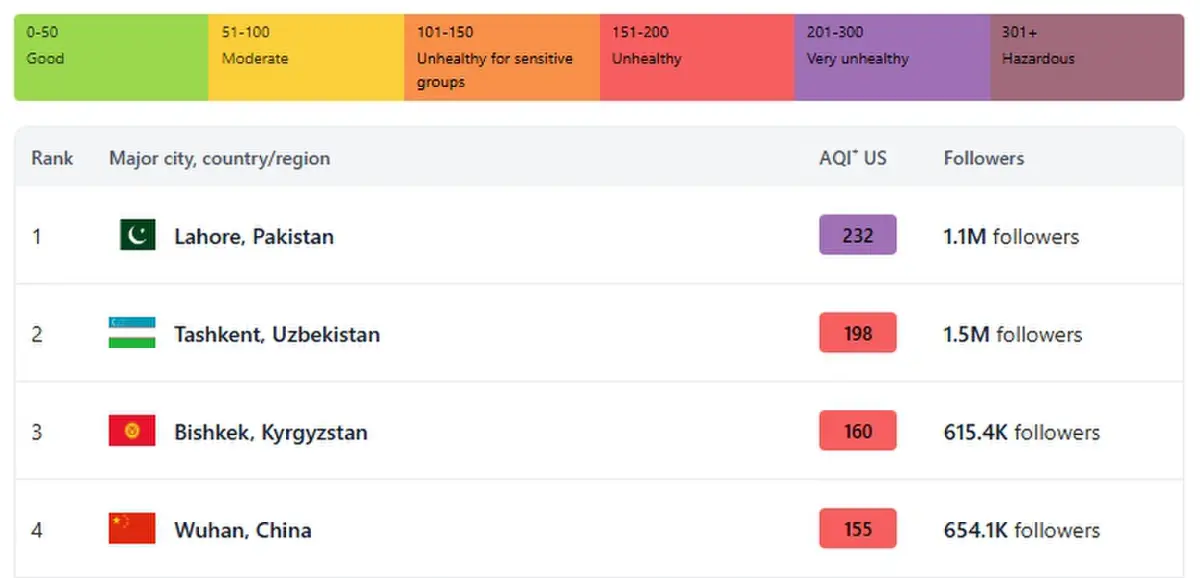
Meanwhile, according to the live air quality ranking published by Swiss air quality monitoring platform IQAir, Lahore recorded an Air Quality Index (AQI) of 232 at 1pm on October 31, placing it at the top of the list of the world’s major cities. The readings placed Lahore in the ‘very unhealthy’ category .
Director General Environment Abdullah Nayyar Sheikh said the department was implementing a zero-tolerance policy against pollution, with enforcement teams remaining active during the day and at night.
He said action through fines, registration of cases and sealing of premises would continue against those violating environmental laws.
The satellite findings, meanwhile, highlight the challenge of controlling agricultural fires, particularly in districts surrounding Lahore, as the province enters the period when crop-residue burning and other pollution sources can combine to aggravate winter smog.