NA adopts resolution stating workplace harassment not only sexual in nature, may manifest in gender discrimination

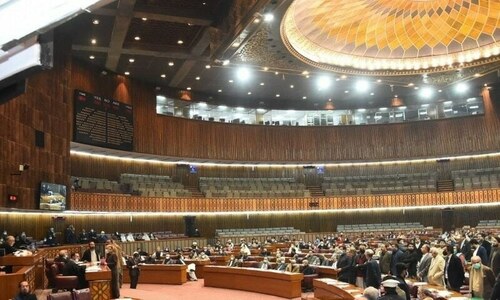
ISLAMABAD: The National Assembly on Friday approved a resolution reaffirming that workplace harassment was not limited to conduct of a sexual nature but may also include intimidation, humiliation and gender-based discrimination.
The resolution was presented by MNA Dr Shahida Rehmani, who is also the secretary of the Women’s Parliamentary Caucus (WPC).
The resolution reaffirmed Parliament’s commitment to protecting the dignity, equality and rights of every individual against all forms of workplace harassment and gender-based discrimination, in accordance with Articles 14 (inviolability of dignity of man, etc.) and 25 (equality of citizens) of the Constitution.
It underscored that workplace harassment was not limited to conduct of a sexual nature, but “may also manifest through gender-based discrimination, intimidation, humiliation, degrading treatment, hostile behaviour and misuse of authority, whether sexual or non-sexual in nature”.
The resolution reaffirmed the legislative intent and protections enshrined in the Protection against Harassment of Women at the Workplace Act, 2010, as amended in 2022, which expressly recognises discrimination based on gender, both sexual and non-sexual, to fall within the statutory framework of harassment.
It further emphasised that the absence of a sexual advance or demand does not diminish the seriousness of gender-based harassment or discrimination.
The resolution said that the dignity of individuals “cannot be subjected to narrow distinctions between different forms of harassment” and all conduct falling within the scope of the law “must be addressed with equal seriousness, fairness and accountability”.
Through the resolution, the NA was called on to urge the federal government and all concerned institutions to ensure the effective implementation of existing legislation in its full scope, ensuring that no individual would be deprived of statutory protection merely because the harassment or gender-based discrimination reported was non-sexual in nature.
The resolution concluded by reaffirming that a workplace free from harassment, humiliation and gender-based discrimination was “not a privilege, but a fundamental requirement of human dignity, equality and justice”.
Although the resolution did not refer to any specific incident, lawyers and journalists have recently raised concerns about a ruling by the Federal Constitutional Court (FCC), in which it set aside an Islamabad High Court judgement in a workplace harassment case filed by a National Bank of Pakistan employee in 2012.
Authored by Justice Ali Baqar Najafi, the FCC order reproduced the definition of harassment stated in the Protection against Harassment of Women at the Workplace Act 2010.
The 2010 Act describes harassment as “any unwelcome sexual advance, request for sexual favours or other verbal or written communication or physical conduct of a sexual nature or sexually demeaning attitudes, causing interference with work performance or creating an intimidating, hostile or offensive work environment, or the attempt to punish the complainant for refusal to comply to such a request or is made a condition for employment”.
Interpreting that definition, the FCC ruling said that an “act, conduct or attitude has to be sexual in nature, if it is to be covered under the definition of harassment for the purpose” of the 2010 Act.