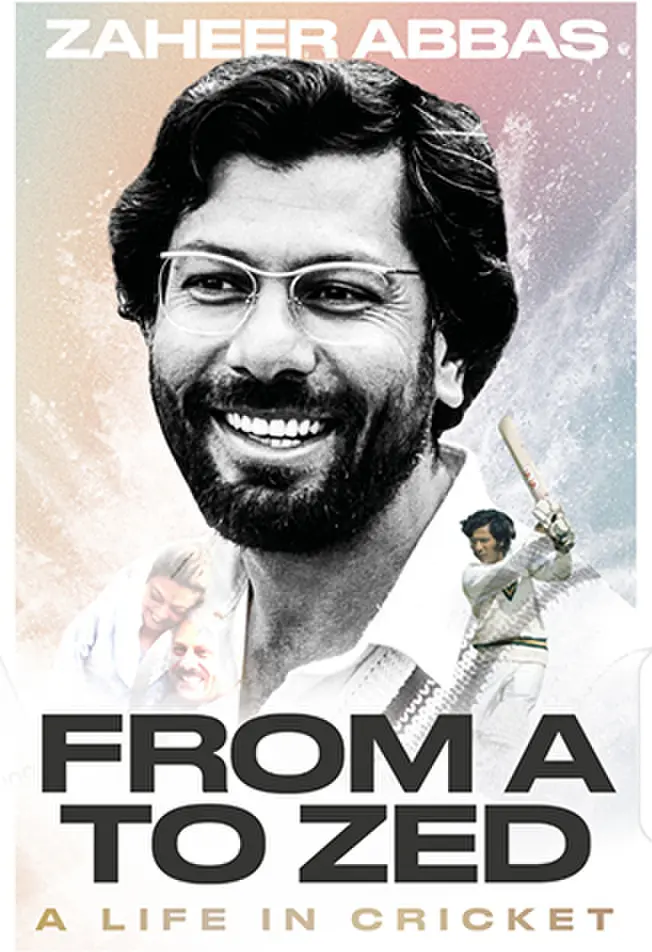
From A to Zed: A Life in Cricket
By Zaheer Abbas
Fairfield Books
ISBN: 978-1915237828
160pp.
Pakistan has produced several world-class cricketers but Zaheer Abbas remains among the finest. Known as the ‘Asian Bradman’ for his run-scoring prowess, the elegant right-hander terrorised bowlers across continents and became the first Asian and the third non-Englishman to score more than 100 first-class centuries. His achievements merit a book that fully captures his greatness. Unfortunately, From A to Zed falls short.
The problems begin with its presentation. At 160 pages, divided into just nine chapters, the book feels too brief for a life so rich in cricketing history. The large font makes it look more substantial than it is, while its price of over Rs14,000 will make it inaccessible to many readers.
Even fully illustrated coffee-table books aren’t priced this high these days and, with the decline of the library culture, the book might end up just in the hands of a few collectors. That is sad. In fact, a recent biography of Sir Garry Sobers — one of Abbas’ idols — costs less than half this book. For a younger generation hoping to discover one of Pakistan’s greatest batsmen, From A to Zed is a missed opportunity.
The question of originality also arises. Abbas’ 1984 autobiography, Zed, was a limited circulation publication, and much of the new volume revisits familiar territory, particularly his playing days. Some photographs and information are new but, overall, it extends the earlier book rather than offering a fresh, comprehensive account of his life. A more rigorous editorial process could have eliminated repetition, corrected inconsistencies and given the narrative greater direction.
From remarkable batting records to memorable encounters with cricketing greats, ‘Asian Bradman’ Zaheer Abbas has plenty to recount. But the bat of his latest autobiography doesn’t quite middle the ball
Abbas seems to be speaking directly to readers from a chair in his London residence, but autobiographies need more. They need honesty, clarity and, above all, the ability to deliver on the reader’s investment. Sadly, the treatment of his personal life is particularly frustrating. Najma, his first wife, is prominently featured in Zed, where Abbas acknowledges her contribution to his success, especially during his years in England. In From A to Zed, she is mentioned only once. His later life and marriage to Sameena receive some attention, but the circumstances of the earlier relationship remain unexplained.
Readers don’t need sensational revelations, but an update on his family would have been fair. In his autobiography, Wasim Akram showed that complicated personal circumstances, including marrying twice, can be discussed candidly and respectfully. Abbas’ story deserved the same openness.
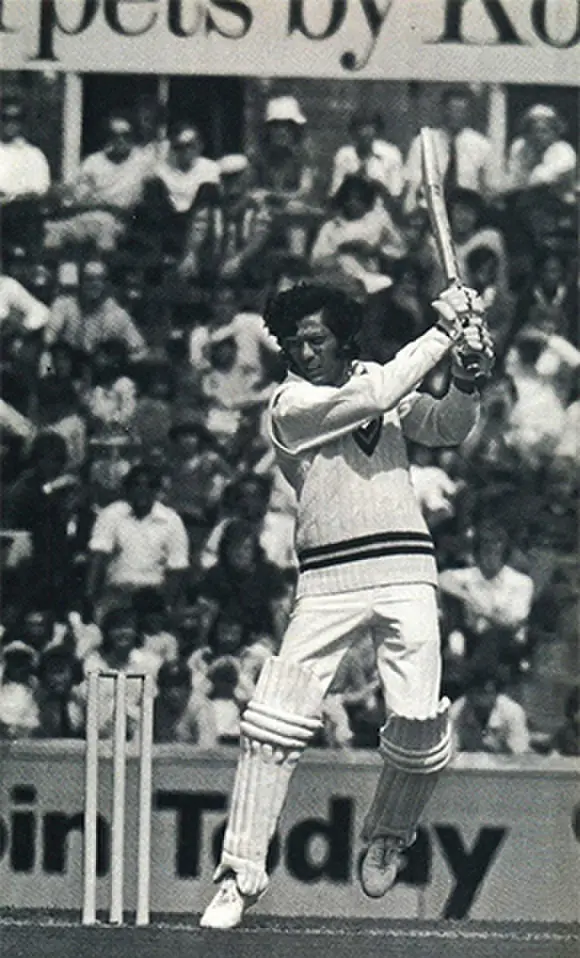
Yet, there is plenty to enjoy. Born in Sialkot and raised partly in Karachi, Abbas developed his love for cricket early. Long before Dennis Lillee reportedly called Faisalabad a graveyard for fast bowlers, Abbas grew up playing cricket in his ancestral village’s graveyard. There, he learned patience and the importance of watching the ball since the surface he played on was uneven.
His childhood anecdotes are among the book’s most entertaining passages. On a train ride, his father lectured him that ordinary people travelled in non-air-conditioned compartments, while educated people earned the privilege of an air-conditioned berth. Thankfully, the lesson did little to alter the course of his life. His mother, meanwhile, occasionally punished his lack of attention to his studies with a heated spoon. This led Abbas and his friends to devise a code that let him sneak out to play during her afternoon nap.
Born in Sialkot and raised partly in Karachi, Abbas developed his love for cricket early. Long before Dennis Lillee reportedly called Faisalabad a graveyard for fast bowlers, Abbas grew up playing cricket in his ancestral village’s graveyard. There, he learned patience and the importance of watching the ball since the surface he played on was uneven.
While other children gazed at the stars and imagined constellations, Abbas imagined wickets. This memory captures the single-mindedness that would eventually make him a great batsman. He even mentions his earliest supporters, including Saadat Ali, a club cricket organiser, who helped his early progress by introducing him to cricket clubs including his own Park Crescent Club, which signed him for grade-level cricket.
Abbas recalls watching greats such as Wes Hall, Hanif Mohammad and Rohan Kanhai in action, unaware he might one day share the dressing room with them. He also recalls realising he needed glasses and that, during his playing days, many people, including Prime Minister Zulfikar Ali Bhutto, urged him to try lenses.
He says that, although his international journey began with disappointment, he soon became a regular in the Pakistan squad after scoring 274 against England in 1971. That innings helped him a lot, as his name appeared in newspapers in both England and Pakistan, and it helped him meet his idol, Sir Garry Sobers. He also recalls meeting Sir Don Bradman, who said he had never seen another batsman less likely to lose his wicket.
Such anecdotes are delightful, but they also reveal the book’s central weakness: they are often too brief and too straightforward. A good editor would have polished these passages so that revisiting them would have been a treat. Sadly, that’s not the case here, as the narrative jumps from one place to another, then back to the old one.
The achievements themselves are remarkable. In 1976, Abbas had scored 2,000 first-class runs by early August, breaking a decade-old county cricket record . In 1977, he became the first batsman to score a hundred and a double hundred in the same match on three occasions. His first encounter with Ian Botham and the lighter stories from county cricket, including a car accident involving five Gloucestershire players, offer welcome glimpses of life beyond the scorecard.
The book also touches on the players’ stand against inadequate match fees, which preceded Kerry Packer’s intervention in world cricket. Abbas explains the reasoning behind World Series Cricket, as well as the decisions that led to star Pakistani players missing a home series against England but returning to play against India. These episodes deserved considerably more space, given their impact on the players’ international careers and the future of professional cricket.
Abbas’ county career receives more coverage than his international career. The 1978 India-Pakistan tour gets only four paragraphs, while the book discusses only one World Cup innings: his celebrated 93 against the West Indies at the 1979 World Cup. His batting slump from 1979 to 1981, when he struggled against India, the West Indies and Australia, also warranted more attention.
His account of the 1982 Australian tour and the captaincy controversy involving Javed Miandad mirrors what he wrote in Zed. The episode offers an intriguing glimpse into dressing room politics, though it could have gone deeper, especially since he is no longer an active player. Yes, he mentions his stints as ICC president and match referee (only briefly), but he says nothing about the most important event of his post-retirement career: his involvement, or lack thereof, during Pakistan’s 2006 tour of England, when he was the manager and the team forfeited a Test match.
Had the book been written in collaboration with a proper cricket journalist, he might have started there, with Abbas reflecting on his career in England and how the players representing the country agreed to an action that left a black mark on cricket relations between the two countries. But it goes directly ‘from A to Zed’, just as the title mentions.
The biggest revelation in this book is regarding Abbas’ retirement from the game in October 1985. After 78 Tests and 16 years at the highest level, he eventually felt his body could no longer withstand the demands of Test cricket. He wanted to focus on one-day internationals but, as he reveals, the captain, Imran Khan, reportedly made it clear that leaving Test cricket meant leaving the game altogether.
Ultimately, From A to Zed is an enjoyable reminder of Zaheer Abbas’ extraordinary achievements, but it is not the definitive account his career deserves. His memories provide enough material for a compelling autobiography. What is missing is the depth, editorial care and personal candour that was needed to make it truly memorable.
The reviewer is a broadcast journalist who also writes on sports, film, television and popular culture. X: @omair78
Published in Dawn, Books & Authors, November 1st, 2026