Fazl accuses govt of 'misusing' Constitution when imposing emergency, governor's rule in KP
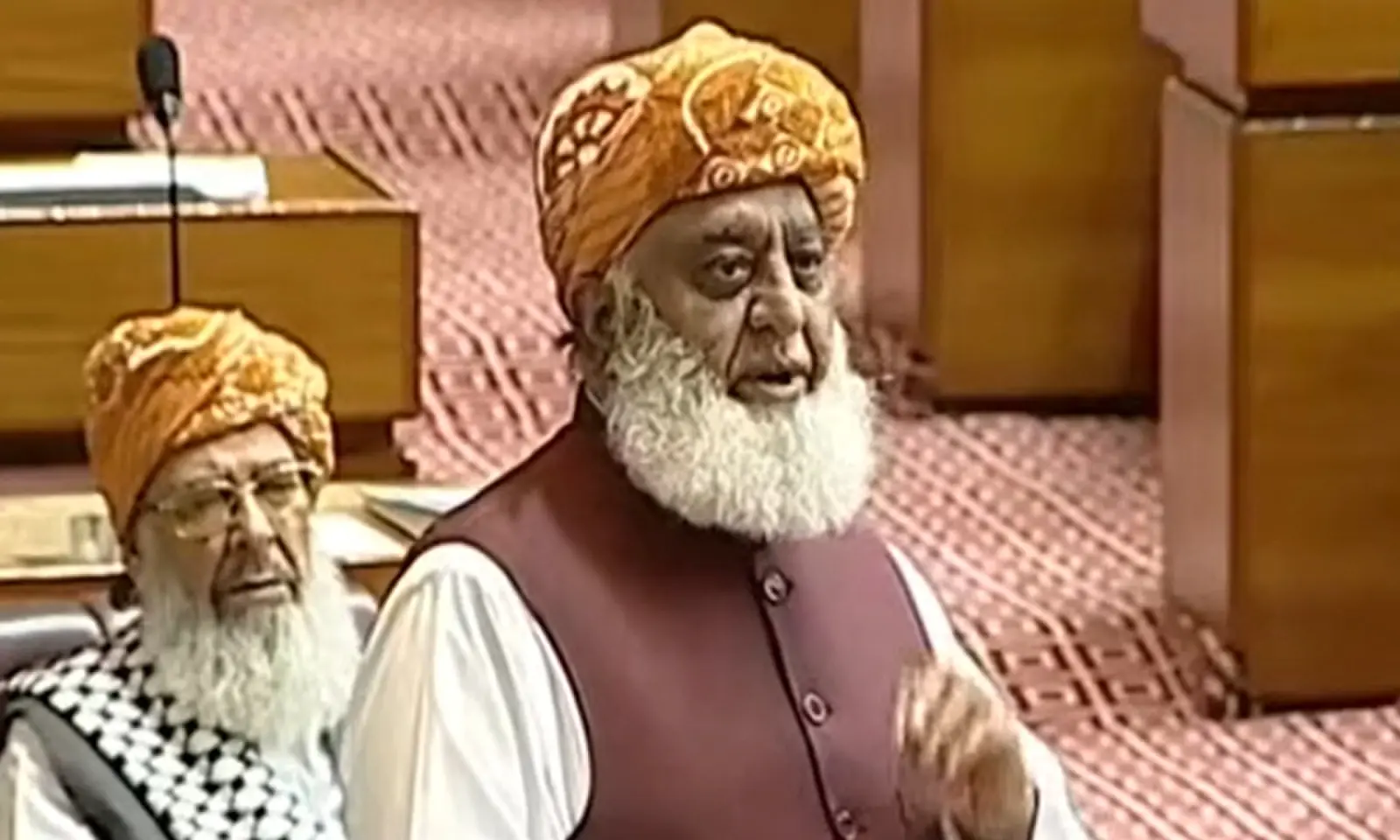
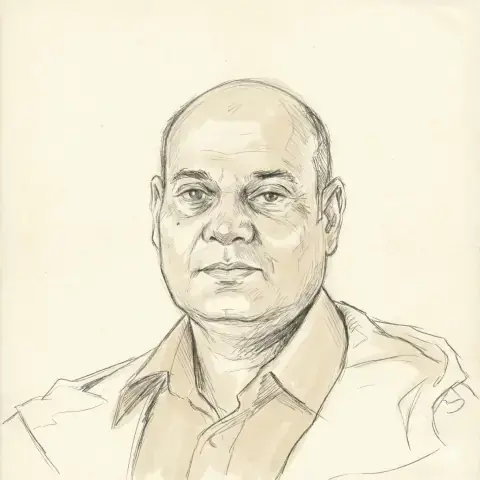
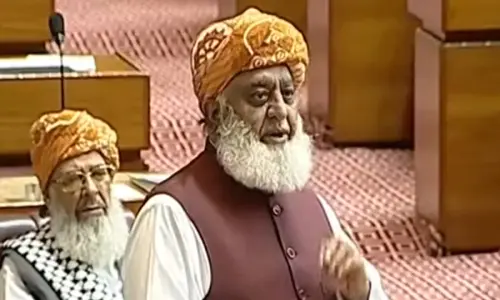
ISLAMABAD: Jamiat Ulema-i-Islam—Fazl (JUI-F) chief Maulana Fazlur Rehman on Wednesday accused the government of misusing the Constitution and resorting to unconstitutional measures in imposing governor’s rule and an emergency in Khyber Pakhtunkhwa.
The Centre imposed governor’s rule and emergency in KP on Oct 11, citing the provincial government’s “deliberate disengagement” from the fight against terrorism. The move had drawn criticism from the opposition, as well as Fazl, who had made efforts to reduce tensions between the federal and the KP governments.
Speaking on the floor of the National Assembly on Wednesday, Fazl noted the Centre’s stance was that it took the measures according to the Constitution.
He alleged, “The government has misused the Constitution […] Here, just as the law is misused, the Constitution was misused.”
The senior politician asserted that by imposing governor’s rule in KP, transfer of power took place “by force”, rather than by public opinion.
“I may have my reservations about the [KP] government, but this is not the way to enact change, by bringing about a revolution and upending everything. You must go to the people for that.”
He also blamed Defence Minister Khawaja Asif for failing to protect the sanctity of the Constitution and the Parliament.
Responding to the JUI-F chief’s accusations, Parliamentary Affairs Minister Dr Tariq Fazal Chaudhary said that governor’s rule in KP was only in place for six months, and the emergency was imposed in only a few districts affected by terrorism.
“You have to be on one side, either remain with the state of Pakistan or be supportive of the Tehreek-i-Taliban Pakistan and Afghanistan,” the minister said.
He noted that the situation in Balochistan was different to that of KP, where he said the chief minister, PTI’s Sohail Afridi, was using provincial resources to march on Islamabad. Chaudhry alleged that Afridi “even defended the terrorists”.
Fazl calls for ‘Charter of Democracy’
While criticising the government in his speech, Fazl called for establishing a new Charter of Democracy to save the country from “unconstitutional” actions and potential violence.
“This Parliament is a representative institution of the people, but the capacity for tolerance has ended and matters are deteriorating,” the veteran politician contended.
Fazl said the simultaneous imposition of governor’s rule and an emergency in KP might be the first instance in history that such provisions were applied but only in certain areas of the province.
“Governor’s rule [is in force] in half of the province, emergency in the other half,” he said, apparently referring to the special emergency measures in 12 districts that are overseen by a council.
Fazl also recalled his efforts to defuse political tensions during the PTI’s long march towards Islamabad and said that the party’s leaders had asked him to play a role in resolving the matter.
He said that after subsequent discussions with senior PML-N and PTI leadership, he held a meeting with Prime Minister Shehbaz Sharif, who asked for the PTI’s long march to be called off.
“The following day, [Deputy Prime Minister and Foreign Minister] Ishaq Dar called me and said that the cabinet was not agreeing to the proposal and that governor’s rule must be imposed in KP,” Fazl recalled.
Narrating the events of Oct 11, Fazl said he received a phone call at around 9:30am wherein he was told that his efforts were being discussed in the cabinet meeting, which later decided to impose emergency and governor’s rule in KP.
“At 10:30am, I received a phone call from Ishaq Dar saying that the cabinet is not agreeing to this. And they are saying that governor’s rule must be imposed there at all costs,” the JUI-F leader said.
“So I said that all the effort made since yesterday was being negated. I was hoping that you brought about a consensus, but the government negated it.”
Maintaining that all of his efforts had been aimed at “preventing bloodshed”, Fazl questioned the government’s ability to maintain law and order, particularly in Balochistan, asking whether the situation there was worse than in KP with the reported kidnapping of commissioners.
“How can the federal government claim that it has succeeded in maintaining law and order?” he asked.
Fazl responds to those ‘doubting his patriotism’
Fazl also said those who doubted his patriotism should know that his party had made significant sacrifices in the fight against terrorism and regretted that its martyrs and contributions were being ridiculed.
Days after the Centre imposed emergency in KP, the JUI-F chief accused it of depriving the provinces of their rights and raised doubts over its reasoning that there was a lack of cooperation by the KP government on counterterrorism.
The next day, following rebuke from several federal ministers, Fazl stressed that his party’s criticism of the government was directed at policies, not institutions, and was intended to bring about corrective action rather than undermine the sacrifices made in the fight against terrorism.
“My party is a party of martyrs. You do not see our martyrs, and our sacrifices are being mocked,” Fazl told the House.
The JUI-F chief said Pakistan belonged to all its citizens and not to any one person, while questioning the government over the debate on mineral resources.
He added that his party was mobilising its political strength to resist what he described as “government encroachments”, insisting that the JUI-F had not violated any limits.
“If the government is prepared for a confrontation, we are also ready to confront it,” he said, reminding the government of times when he stood at the forefront to support efforts to protect the country from political turmoil.
Urging the government to refrain from pursuing a policy of force, he warned, “We are prepared to die. We are prepared to die at your hands, but we are not prepared to die at the hands of history. If you are prepared for a confrontation, we are sitting here ready for it.”
He went on to say that the state was like a mother, “but this mother is not treating all her children fairly”.
The federal government on Oct 11 imposed an emergency and governor’s rule in KP under Articles 232 and 234 of the Constitution following the president’s approval of the recommendations by the federal cabinet.
The move drew criticism from the opposition, including Fazl, as well as Mehmood Khan Achakzai and Raja Nasir Abbas of the Tehreek-i-Tahafuz Ayin-i-Pakistan.
In the days preceding the imposition of governor’s rule in KP, political tensions between the Centre and the opposition — including the PTI which was in power in KP — had remained high since jailed former prime minister Imran Khan’s party announced a protest march to Islamabad to demand his release.
On Oct 16, Interior Minister Mohsin Naqvi said that the “head of a party” was “extremely upset over being denied a role in the new setup in KP and not getting the governorship”, seemingly referring to Fazl.
This politician, Naqvi told journalists in Lahore, had remained “dependent on the establishment for decades to advance his political career”.
The next day, Fazl termed the allegations levelled against him by federal ministers as character assassination.