JERUSALEM: Israel’s election appeared deadlocked on Tuesday with neither Prime Minister Benjamin Netanyahu nor rival Gadi Eisenkot showing a clear path to power, exit polls showed, after record turnout in a wartime vote that raised the prospect of prolonged coalition bargaining or another election.
The stalemate could work in Netanyahu’s favour, allowing the prime minister to remain in power in a caretaker capacity while parties try to forge a governing coalition.
Final results could take days, and Israel’s fragmented political system leaves smaller parties potential kingmakers. No single party has ever won 61 seats outright in the 120-seat Knesset, making coalitions the norm.
The vote drew record turnout as Israelis passed wartime judgement on Netanyahu in the first election since the Hamas raid of Oct 7, 2023, and the ensuing wars in Gaza, Lebanon and Iran.
Major TV networks show the Eisenkot-led bloc winning between 52 and 53 seats, and Netanyahu-led alliance around 50 seats
Current opposition head Yair Lapid said in a statement: “Don’t let anyone confuse you. The Netanyahu bloc has suffered a crushing defeat. This is a total collapse and the public has told them to go home.”
The major networks showed the Eisenkot-led bloc winning between 52 and 53 seats, and the Netanyahu-led bloc winning around 50 seats. The remaining 17 to 18 seats were allocated to unaligned Arab parties in the exit polls.
Some Israeli media outlets, including pro-Netanyahu Channel 14, projected far stronger showing for Netanyahu and his parties, saying they would collectively win 60 seats.
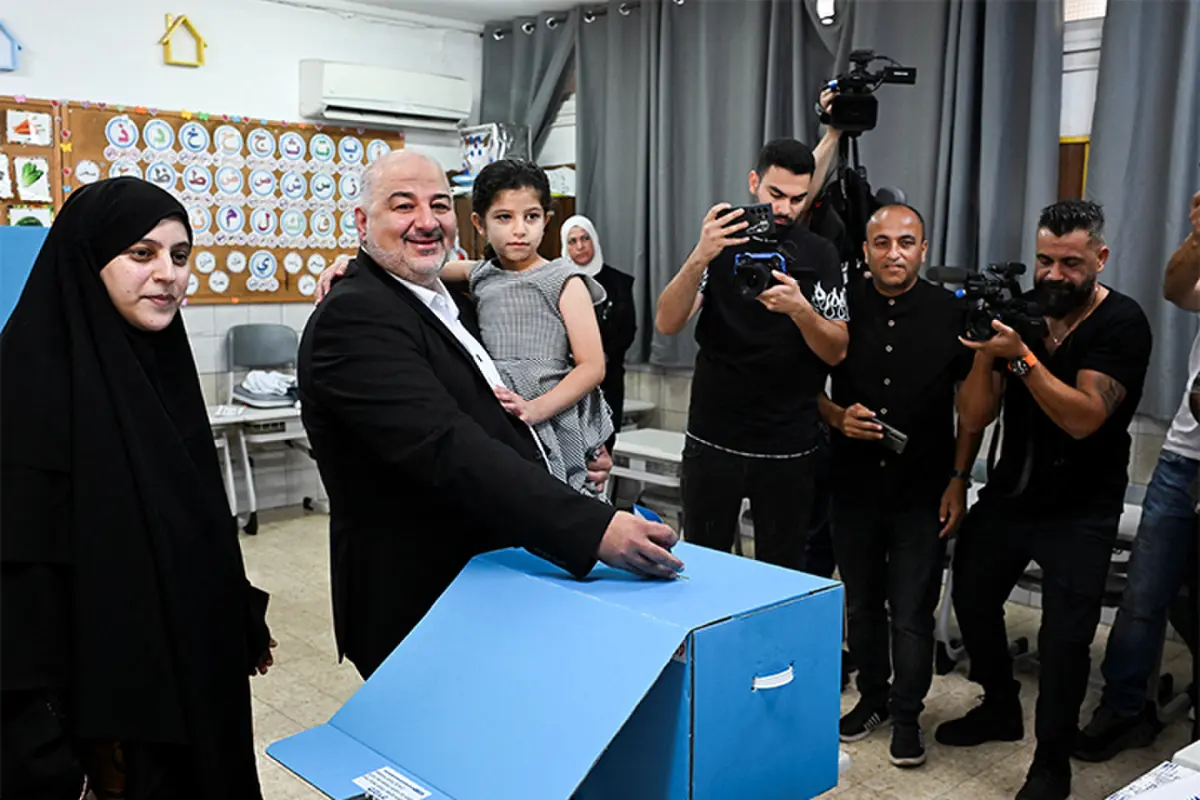
Long lines had formed outside polling stations as voters turned out in record numbers, grappling with the trauma of Israel’s deadliest day and the wars that followed.
The policies of Netanyahu’s right-wing coalition have been divisive at home and deepened Israel’s international isolation, but he has portrayed himself as the leader with the mettle to face down Israel’s foes.
The headquarters of the Joint List, an alliance of several Arab parties, burst into whistles and applause as results were announced as polls closed in what was a historic night for participation for Palestinian citizens of Israel.
Netanyahu, 77, has served as prime minister for nearly 19 of the past 30 years and has repeatedly survived political crises. His opponents have managed to wrest the premiership from him only once since 2009, after four inconclusive elections in two years. Eighteen months later, he was back.
He entered the election facing longstanding corruption charges, which he denies, and criticism over intelligence failures that led to the Oct 2023 raid.
Eisenkot, 66, a hawkish former military chief who lost a son and two nephews in the Gaza conflict, emerged as Netanyahu’s strongest challenger, stressing his security credentials while positioning himself as a centrist domestically.
He entered politics only four years ago and joined Netanyahu’s war cabinet after the Hamas raid, but quit eight months later, criticising the prime minister’s leadership.
For many Netanyahu opponents, the election turned on accountability for the security failures of Oct 7. Opposition groups have promised a national inquiry, which Netanyahu has resisted.
Netanyahu’s nationalist brand of politics is deeply entrenched, and Israel’s fragmented system makes it difficult for an array of opponents to force out his coalition of right-wing, far-right and ultra-Orthodox parties.
Netanyahu had urged supporters to come out to vote to balance high turnout among his opponents on the left and Arab Israelis. “You all need to stream to the polls,” he said.
“This is a fateful moment. I think these elections are the most important of all the ones Ive known,” said Ruth Epstein, an 81-year-old longtime left-wing voter in Ramat Gan near Tel Aviv, who voted for the opposition Democrats.
Netanyahu campaigned on an endorsement from US President Donald Trump, his ally in the war against Iran, who has said they should “finish the job”.
Israeli Arabs vote in big numbers
Israeli Arabs voted in large numbers, prompting Netanyahu to raise fears that Arabs were trying to “steal the election”, leading members of the minority community to allege intimidation.
“We cannot leave this battle here in the hands of the left and the Arab parties that want to bring an end to the Jewish state,” a visibly tense Netanyahu told supporters as he tried to bring up turnout in a Likud stronghold.
“So no barbecues, don’t go to the beach — go to the polling station and vote Likud,” he said. Nationwide turnout as of 6pm was 66.7pc, the highest at that point in the day since such statistics were first recorded in 1973, the Central Elections Committee said.
The close-fought vote comes as Israel looks increasingly isolated on the world stage, driven by the war in Iran and the devastating military campaign in Gaza, soaring settlement construction and violence in the occupied West Bank.
The last opinion polls to be published showed Netanyahu, Israel’s longest-serving prime minister, running neck and neck with his main rival.
Published in Dawn, October 28th, 2026