Cultivation of Rabi crops, including wheat and oilseeds, has begun in lower Sindh amid a 22pc irrigation water shortage forecast by Irsa.
Farmers in Sindh are increasingly turning to oilseed crops, particularly mustard, for quicker economic returns. Greater domestic production could help reduce Pakistan’s dependence on imported edible oil, which consumes substantial foreign exchange.
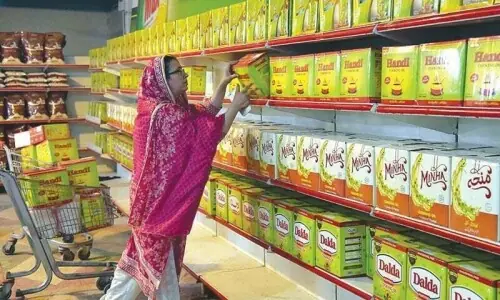
Pakistan imported a record 3.48 million tonnes of palm oil worth $3.78 billion in FY26, compared with 3.21m tonnes costing $3.4bn in FY25. The average import price rose to $1,078 per tonne from $1,056.
Data from the Pakistan Oilseed Department (POD) and Pakistan Bureau of Statistics (PBS) shows that Pakistan’s edible oil import bill reached $5.86bn in 2025 for 4.52m tonnes. This included 3.671m tonnes of imported oil and 0.853m tonnes extracted from 3.848m tonnes of imported oilseeds.
The trend shows a shift from traditional wheat to oilseed crops, mainly mustard
Domestic edible oil production stood at just 531,000 tonnes in 2025, up from 474,000 tonnes in 2024. Mustard contributed 229,000 tonnes, followed by cottonseed at 216,000 tonnes. Officials warn that, without a significant change in domestic production, the import bill could reach $9-10bn by 2036, deepening the country’s dependence on foreign supplies.
According to a POD official, domestic oilseed production increased by 30pc, while acreage grew by just 4pc, mainly because wheat growers shifted to mustard. However, declining cotton output has reduced the oil extraction ratio from cottonseed from 55pc in 2023 to 40pc recently. Despite improved production, local supplies meet only around 10pc of domestic demand. Including sesame exports in the calculation raises this share to 13pc.
The POD implemented the National Oilseeds Enhancement Programme (NOEP) from 2019 to 2023, extending it until June 2026 to promote import substitution. The federal government contributed 40pc of the funding through the Public Sector Development Programme (PSDP), with provinces providing the remaining 60pc.
The programme delivered encouraging results in sesame, particularly in Punjab, where acreage, production and export value increased by 457pc, 439pc and 353pc, respectively. According to a POD official, the initiative achieved import substitution worth $1.62bn over seven years against a target of $584m.
The Ministry of National Food Security and Research has revised the programme for 2026-29, allocating savings from the PSDP to promote sesame on 200,000 acres, alongside castor beans. Pakistan’s sesame exports to China reportedly reached 103,000 tonnes in the first seven months of 2026. In Sindh, sesame acreage increased from 34,420 acres in 2021 to 38,730 acres in 2025, while production rose from 6,313 tonnes to 7,183 tonnes.
The revised programme will focus on Sindh and Balochistan, where cultivation can expand. Punjab already accounts for 1.1m of the country’s 1.2m acres under sesame. Of the proposed 200,000 acres, 40pc will be allocated to Balochistan and 30pc to Sindh, with the remainder shared between Punjab and Khyber Pakhtunkhwa.
The programme also aims to promote castor beans on 150,000 acres and introduce canola intercropping with sugarcane on around 10,000 acres. An estimated Rs2bn-Rs3bn from the original Rs11bn programme will finance these initiatives.
The Economic Survey of Pakistan 2025-26 says POD aims to raise national edible oil self-sufficiency to 27pc in the short term, 40pc in the medium term and 70pc in the long term. An official says the programme will require government approval in phases.
Sunflower, once a major oilseed crop in Sindh, has suffered a sharp decline. Its acreage fell from 266,934 hectares in 2010 to 33,266 hectares in 2025. Following the 2010 super floods, many farmers shifted to sunflower, but the expansion proved short-lived.
Sindh agriculture department figures show mustard acreage rising from 51,870 hectares in 2021 to 61,165ha in 2025. Canola cultivation also increased, from 2,589ha to 2,942ha. Farmers attribute sunflower’s decline largely to high input costs and poor returns compared with mustard.
“We import cheap edible oil to meet domestic cooking oil needs. The import duty has remained unchanged since the early 1990s, while inflation continues to raise production costs, leaving farmers economically vulnerable,” says a government official. “Given their per-acre costs, sunflower no longer offers reasonable returns because cheap imported oil, mainly palm oil, makes local production unviable.”
Mustard is increasingly replacing sunflower in farmers’ fields because it requires fewer inputs and offers better returns. Rural households also value its cooking oil, which is often extracted locally.
Nabi Bux Sathio, a farmer from Tando Mohammad Khan in lower Sindh, expects mustard acreage to rise further this year. He has increased his own cultivation from 28 acres to 110 acres, saying the crop requires little beyond seed and urea fertiliser.
Sunflower costs around Rs100,000 per acre to cultivate, including imported seed, DAP and urea fertilisers, land preparation, drilling and water lifting. Multiple ploughing alone costs about Rs24,000 per acre. Mustard, by contrast, can be sown directly into the residual moisture left after the rice harvest. Farmers broadcast seed when the soil is still muddy, helping it germinate quickly. October dew also supports germination, alongside urea application.
Sathio says sunflower seed costs Rs16,000 per acre, while hybrid mustard seed costs only Rs800, with half a bag of urea also used. Diesel-powered pumps for irrigation add to sunflower’s costs.
Mustard yields nine to ten maunds per acre and sells for around Rs6,000 per 40kg. Sunflower yields 13-14 maunds per acre and fetches Rs10,000 per 40kg, but its higher production costs reduce profitability. Mustard matures in 120 days, allowing Sathio to plant moong afterwards and harvest it before the Kharif season.
Nadeem Shah, another grower with land in Sujawal and Matiari, has also doubled his mustard acreage because of lower input costs. He says heavy investment in sunflower no longer guarantees satisfactory yields, prompting him to shift towards mustard.
Published in Dawn, The Business and Finance Weekly, October 26th, 2026