Equities fall 2.4pc as oil prices, geopolitical tensions unsettle investors

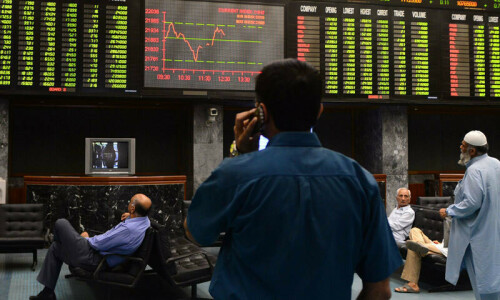
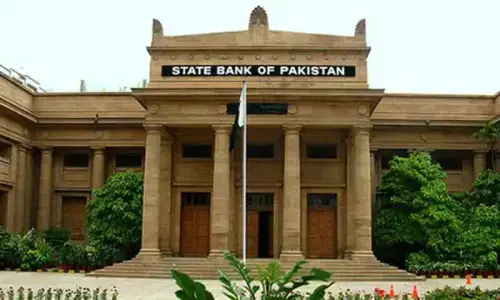
KARACHI: Rising oil prices and persistent geopolitical uncertainty kept the Pakistan Stock Exchange (PSX) under selling pressure during the outgoing week, as investors booked profits ahead of the State Bank of Pakistan’s (SBP) monetary policy announcement on Oct 26.
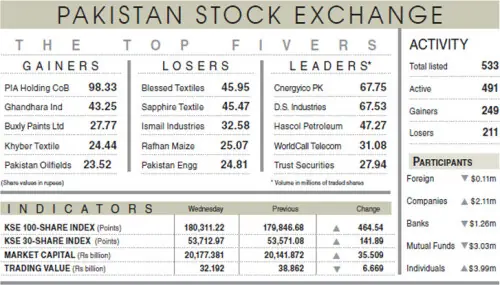
The benchmark KSE-100 index fell 2.4 per cent week-on-week (WoW), shedding 4,045 points to close at 162,375.
AKD Securities attributed the volatility to continued Houthi attacks on Saudi Arabia and reports of a possible US attack on Iran after the midterm elections. Brent crude rose 6.4pc WoW to $114.9 per barrel by Friday, adding to concerns over imported inflation and the economic outlook.
According to Arif Habib Ltd (AHL), banking, technology, investment banking, cement and power stocks were the biggest drags on the benchmark, collectively weighing heavily on sentiment. Banks contributed a negative 925 points, followed by technology (512 points), investment banks (507 points), cement (459 points) and power (266 points).
Benchmark sheds 4,045 points; monetary policy decision and corporate results likely to steer market
Among individual stocks, Engro Holdings, Systems Ltd, Lucky Cement, Attock Refinery and Hub Power Company were the largest negative contributors. Positive contributors included Pakistan Stock Exchange Ltd, Thal Chemical, Unilever Pakistan Foods, Bestway Cement and Nestle Pakistan.
Average daily volume fell 12.6pc to 393 million shares, while the average value traded increased 7.3pc to $69.7m.
On the macroeconomic front, Pakistan’s FY26 gross domestic product growth was revised down to 3.65pc from the provisional estimate of 3.7pc, compared with revised growth of 3.11pc in FY25. The World Bank projected growth of 3.8pc for FY27 and inflation of 8.2pc, against 7.1pc in FY26.
The country’s liquid foreign exchange reserves fell by $30.3m to $26.83bn as of Oct 16, providing an import cover of 3.01 months. However, the SBP reserves rose by $19.1m to $21.49bn, while commercial banks’ reserves declined by $49.4m to $5.34bn.
The rupee appreciated marginally by 0.03pc against the dollar, closing at Rs276.82.
Domestic petroleum prices fell during the week, with petrol easing 3.2pc to Rs377.71 per litre and high-speed diesel (HSD) dipping 1.3pc to Rs391.75. Lower ex-refinery prices drove the reductions, while the petroleum levy and margins remained unchanged.
Separately, the Oil and Gas Regulatory Authority revised the HSD crack spread to $38 per barrel from $41.89, according to Topline Securities Ltd.
According to AHL, the power generation rose 5pc year-on-year to 13,217 gigawatt-hours in September, supported by higher hydel, coal and wind output. However, average generation cost rose 32pc to Rs9.35 per unit, reflecting a larger share of regasified liquefied natural gas, high-speed diesel, and furnace oil, along with elevated oil prices. Distribution companies have sought a Rs2.56 per unit fuel cost adjustment for September.
In other economic developments, cotton arrivals increased 8pc YoY to 4.08 million bales by Oct 15, with Sindh accounting for 2.44m bales and Punjab 1.64m. Sowing reached 82.8pc of the 2.16m-hectare target, while the government set an FY27 production target of 9.64m bales, up from 7.05m in FY26.
The government also advanced the draft Auto Policy 2026-31, which seeks to promote exports, encourage new energy vehicle adoption and strengthen competition through tariff reforms, localisation requirements and mandatory export targets for original equipment manufacturers.
Other developments included a 16pc YoY increase in banking sector deposits to Rs40.8 trillion by end-September and a 33.6pc rise in consumer auto financing to Rs407bn.
Urea offtake climbed 42pc YoY to 611,000 tonnes in September ahead of the Rabi season, while DAP offtake fell 30pc to 68,000 tonnes amid higher domestic prices.
According to AKD Securities, the finance minister also sought Fitch Ratings’ assessment of the steps Pakistan needs to attain a BB rating.
Meanwhile, 10 bidders were pre-qualified for the privatisation of Islamabad Electric Supply Company, and power-sector circular debt reached Rs1.7tr, while gas-sector liabilities rose to Rs3.6tr by June 30.
Analysts expect the SBP’s monetary policy decision and the ongoing September-quarter corporate results season to shape market direction. AHL noted that the KSE-100 was trading at a price-to-earnings ratio of 7.02 times, with a dividend yield of 7pc.
Published in Dawn, October 25th, 2026