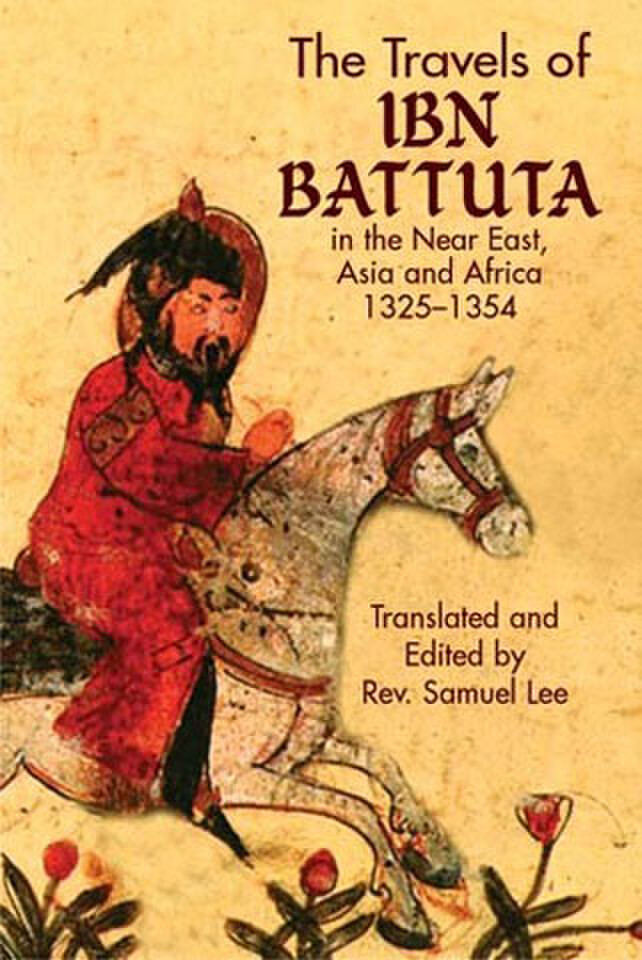
Of all the things that unsettled the famous Moroccan traveller Ibn Battuta on his travels across Sindh in the 14th century, one was surprisingly small.
No lion, no crocodile, no monster of the river — just a lizard, dug out of the sand, cleaned, stuffed with turmeric and cooked. The people of the region ate it happily. The Moroccan traveller, who had crossed deserts and kingdoms and sat at the tables of sultans, flatly refused. The Ibn Battuta passage on the lizard eaten in Sindh is discussed in M.H. Panhwar’s account of Ibn Battuta at Sehwan.
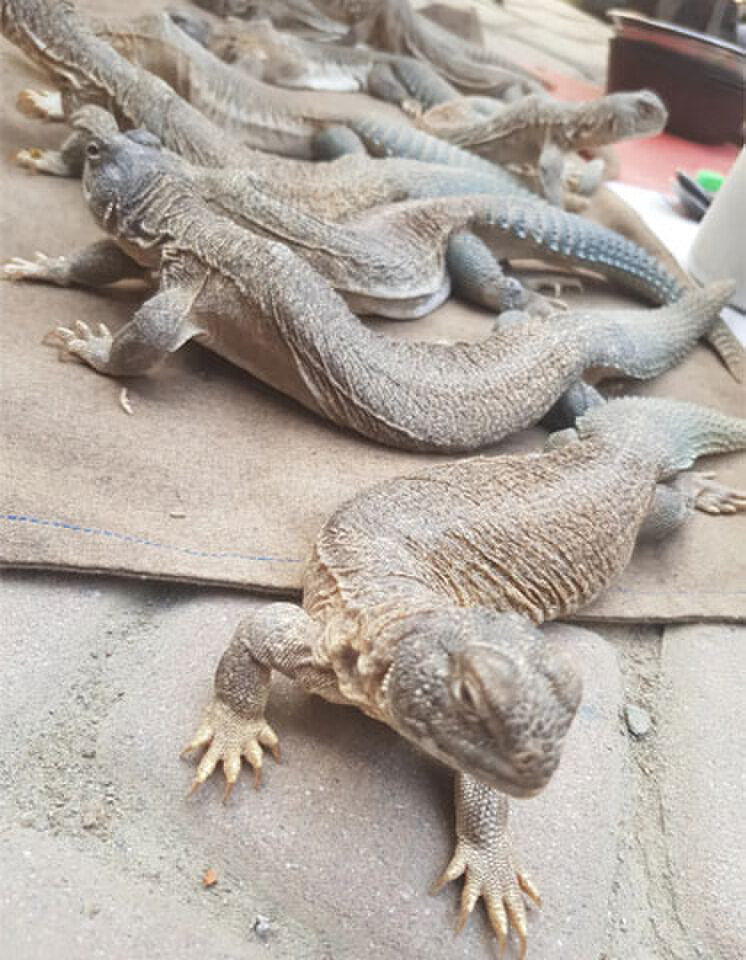
The animal Ibn Battuta describes is almost certainly the spiny-tailed lizard, known across Pakistan and western India as sanda or sandha. In Sindh it carries stranger, gentler names too: patt machhi [ground fish] and reg mahi [sand fish] — as if the desert, having no rivers of its own, decided to grow its fish in the dunes.
It is a squat, dusty, short-legged creature, sand-coloured and thick-tailed, a grazer of desert grasses and leaves. It lives in burrows and suns itself with the patience of an old resident. Its range stretches from Sindh, Punjab and Balochistan into Rajasthan, Kutch and Cholistan.
From a dish that horrified Ibn Battuta to sanday ka tail, the humble desert lizard has acquired an extraordinary place in South Asian food, folklore and folk medicine
Nothing about it is glamorous. Yet, in the folk imagination of the region, this plain creature has carried an extraordinary weight of meaning.
Desert communities ate it for centuries — for taste, for perceived strength and medicinal value, and also for the reputation that surrounds its oil. In villages of Sindh, lower Punjab and Cholistan, the sanda was spoken of as warm food, power food, something that put heat into the body. Older systems of medicine sorted every food into hot or cold, strengthening or weakening, and the sanda, like much that survives the desert, was placed firmly on the hot side of the ledger.
That belief carried it far beyond the cooking pot. Fat rendered from its body became the famous sanday ka tail [lizard oil] sold in old bazaars, at bus stands and roadside stalls, in small bottles wrapped in loud claims: a cure for male weakness, a tonic for vigour and virility, an oil for massage.
The seller mattered as much as the oil. He sat among bottles, roots, dried herbs, talismans, sometimes a half-dead lizard laid out as proof, and talked like a street performer, healer and psychologist rolled into one — bold, comic, conspiratorial. Men gathered around, pretending to listen casually while absorbing every word. The subject was intimate, the setting public; shame and curiosity stood shoulder to shoulder.
That is how the sanda slipped into folklore — into jokes, whispers, truck-driver tales and village remedies. In a society where men rarely spoke openly about sexual health, a bottle of lizard oil worked as a coded language, a promise in glass. Whether it actually worked came second to the faith placed in it.
There is no reliable scientific evidence behind the aphrodisiac claims; the oil’s reputation lives in folk medicine, kept alive by secrecy, repetition and the human hunger for a simple cure to a private fear. The more hidden the problem, the more powerful the remedy appears.
Ibn Battuta, then, caught half the story. He watched people eat the reptile, recorded his disgust and moved on. He could hardly have guessed the long career the animal would go on to have — food, medicine, joke, desire and business all at once.
Even the cooking he described says something. The creature was dug from the sand, its belly slit and emptied, and turmeric packed inside before it went on the fire. Turmeric was purifier, colour, medicine and deodoriser in one — the ingredient that turned a desert reptile into acceptable meat. In an arid landscape where water could be scarce and harvests uncertain, people learned to eat what the land offered, and learned how to make it palatable.
Nor was Sindh alone in this. Among Bedouin communities of Arabia, the dhab — another spiny-tailed lizard — served as survival food and, occasionally, a delicacy. In Rajasthan and Kutch, too, the animal became associated with strength and medicinal oil, carried along by hakeems [practitioners of herbal medicine], hunters, nomads, herders and bazaar men.
What was once ordinary use has now become a conservation worry. The lizard has been hunted hard for its meat and oil, while cultivation, grazing, roads and expanding settlements eat into its habitat. A creature once common enough to be dug up for dinner is under real pressure. There is a bitter irony here: people believed the sanda contained strength, and that very belief has weakened the species. The louder the myth of the oil grew, the more dangerous life became for the animal.
Still, it would be unfair to look back at mediaeval Sindh with urban distaste. Ibn Battuta reacted as an outsider, and food is always cultural; what shocks one table is ordinary at another. The people who ate the sanda were drawing on their own ecology and inherited food traditions — a world of sorghum bread, buffalo milk, acacia shade, hot winds and sand-burrows.
The real story was never simply that people ate a strange lizard. It is how a small reptile came to sit at the crossing point of hunger and desire, desert and bazaar, folk belief and bodily anxiety — and stayed there.
Ibn Battuta pushed the plate away, perhaps wisely. But had he lingered a little longer in the bazaars of Sindh and Punjab, he might have seen the creature’s second career waiting in the wings: not on the dinner plate, but in the whispered world of virility, where sanday ka tail would outlive the traveller’s disgust by many centuries.
The writer is a researcher with a focus on history and anthropology.
He is also the founder of the Clifton Urban Forest, Karachi.
X: @masoodlohar
Published in Dawn, EOS, October 25th, 2026