Shajar clinches thrilling 100m final as National Athletics Championship starts
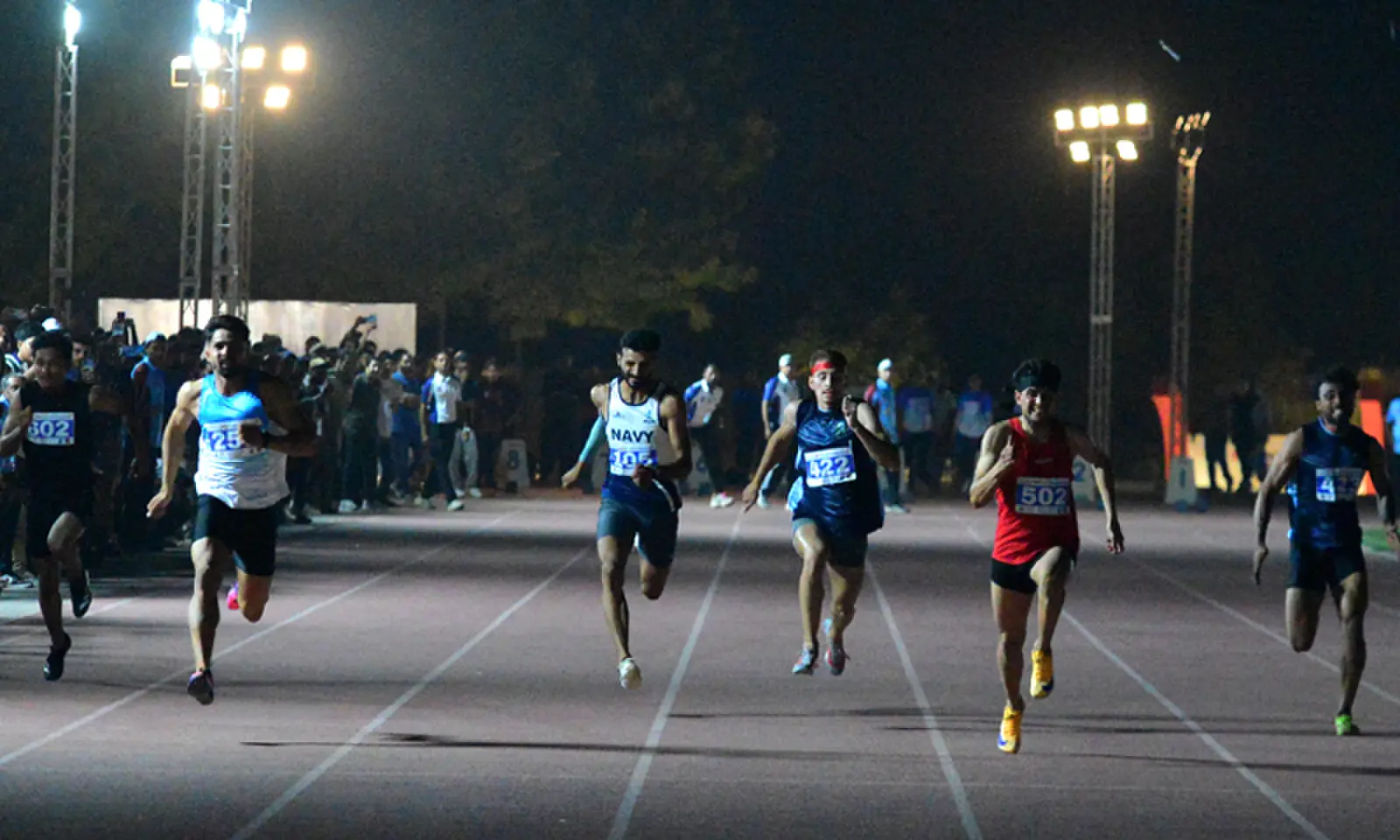
KARACHI: The flame went from Shajar Abbas’s hands into Ghazala Ramzan’s and then into Arshad Nadeem’s and when Pakistan’s Olympic javelin champion touched it to the cauldron and the fireworks went up over the NED University sports complex on Thursday, the sparse crowd forgot, for a moment, that this was just the 54th National Athletics Championship and not something grander.
The cultural dancers came out next, and before long the athletes had wandered off the track and into the performance, trading their blocks and spikes for a few minutes of unchoreographed movement alongside the professionals — competitors and spectators both, turning a modest opening ceremony into something that looked, briefly, like a celebration.
Then the flame cooled, the dancing stopped, and the track did what it always does: it turned ceremony back into competition.
The men’s 100m went first, and it needed only 10.20 seconds to produce the day’s defining image — Wapda’s Shajar crossing the line a hundredth of a second ahead of 19-year-old Ataullah of Khyber Pakhtunkhwa, with Haseeb Ahmed (HEC) a further four-hundredths back in third.
It was a photo finish for a title that, on paper, Shajar had no business making close.
He holds both the national 100m and 200m records, calls himself simply “Pakistan’s fastest man,” and a little over a year ago was lying in a hospital bed recovering from surgery on a tumour in his shin bone, uncertain whether sprinting again was even realistic.
“He [Ataullah] ran pretty good, it got pretty close,” Shajar told Dawn afterwards, with the understatement of a man who knows exactly how much closer it could have gone. “Hopefully we get more competitions like this so the other athletes get more opportunities.”
He still feels pain from the injury, he admitted, and his rehabilitation is technically still ongoing — he competed anyway, because competing is the only part of the comeback he can actually control.
His next target is the South Asian Games, hosted on Pakistan soil next year.
“I will give my best to win a medal for my country on home soil,” he said.
For Ataullah, the margin was a lesson rather than a defeat. The Nowshera-born sprinter, fresh off representing Pakistan at this year’s World Athletics U-20 Championship and still the reigning champion of his own age group, spent the race watching the wrong thing.
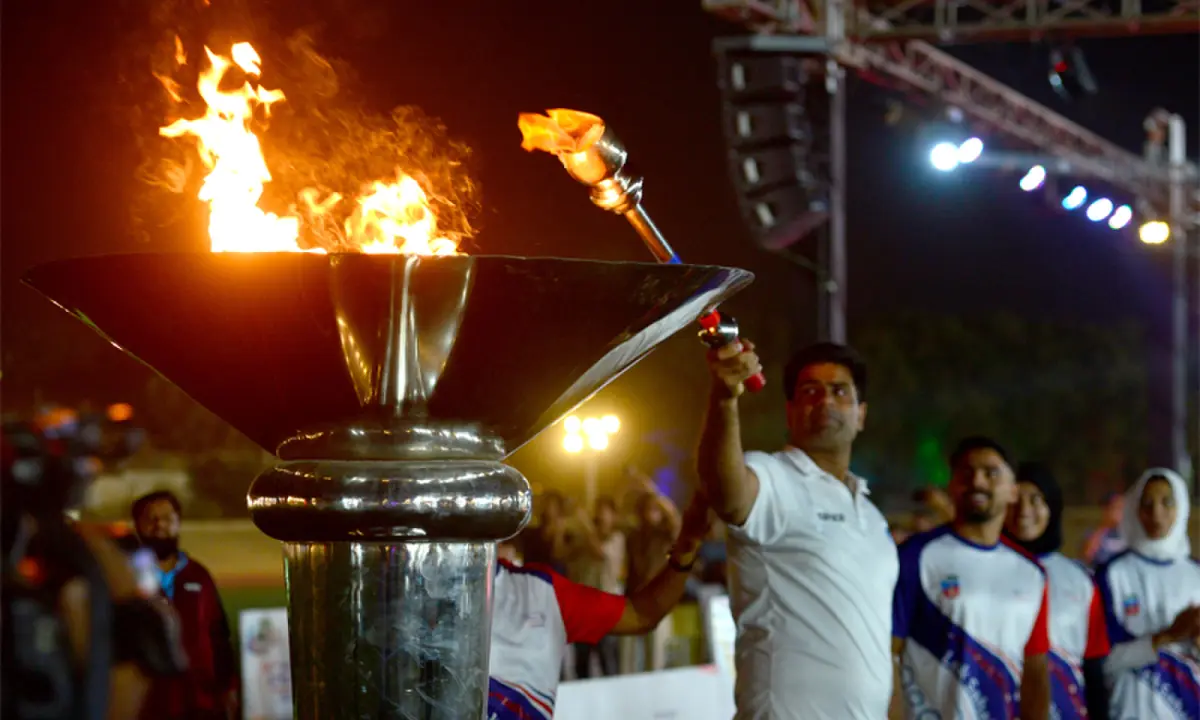
“I felt he was a bit slow, but when I looked towards him at the end of the race he upped the pace and there I felt he edged me,” Ataullah told Dawn, with the particular clarity of someone replaying the final 20 metres on a loop.
He has decided, with the pragmatism of a 19-year-old who has already dominated every junior field put in front of him, that the gap to the seniors is a matter of time rather than talent.
“My time will come,” he said. “I have to achieve a lot, hopefully.”
Faiqa Riaz, representing Wapda, needed less drama to keep her own crown, winning the women’s 100m in 11.56 seconds, well clear of HEC’s Khoula Omer (12.22) and Iqra Riaz (12.24) of Sindh — though her year has supplied drama enough without the home crowd’s help.
She arrived in Karachi having competed at both the Commonwealth Games and the Asian Games in the same year, the latter while fighting food poisoning that hit the day after she landed in Japan. She ran through it anyway, clocking 11.96.
“My health deteriorated. I got food poisoning,” she said. “But I played my competition in that condition… so that was also a good time.”
Karachi brought its own, smaller complaint — dust in the air, a world away from Faiqa’s training base in Lahore — but she wasn’t about to let the setting dim the result.
“We have a National Championship once a year, so because of that we are very pleased,” she said.
Her sights are already on next year’s South Asian Games, and on home advantage doing what Karachi’s dust and Japan’s food poisoning couldn’t.
“I’ll try to set a Pakistan record at home and win a gold medal,” she said, before turning the credit over entirely to her corner.
“All the responsibility for this achievement is on them, and I would like to dedicate this to them,” she said of coaches Gauhar Shahbaz and Fayyaz Ahmed. “They saved me from injury and brought my peak at the right time.”
The opening day also passed without Pakistan Army or Pakistan Railways, with the organising committee confirming both departments were absent.
In a statement, it said the Army had “conveyed its readiness and willingness to participate” but that “the necessary departmental approval remained pending,” while Railways “was unable to field an athletics contingent for this year’s championships.”
The action kicked off earlier on Thursday with Sindh’s Mahnoor Fatima winning the women’s 5,000m race walk in 32 minutes 32.40 seconds ahead of Wapda’s Ammara Manwar and Punjab’s Savera, while Wapda’s Mohammad Waqas took the men’s 20,000m walk in 1 hour 50 minutes and 04.1 seconds.
HEC’s Khadija Mehreen won the women’s shot put with a throw of 10.85m, and the middle distances went to Wapda’s Nazia Ehsan (women’s 1,500m, 5:09.78) and Sohail Amir (men’s 1,500m, 3:55.40) — four more champions crowned before the lights came up on the complex’s first night.
Published in Dawn, October 23rd, 2026