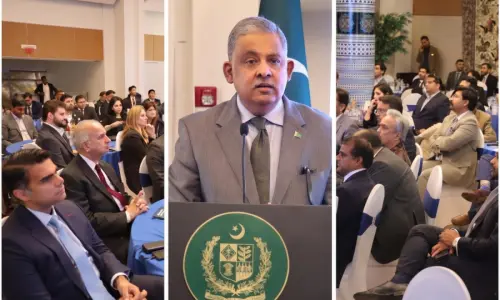
ISLAMABAD: Gallery Zaal Contemporary hosted the inauguration of a group exhibition, In Another Life, featuring works by Alishba Binte Faysal, Hassan ‘Churchill’ Nasir, Rabbia Khalid Khan and Rida-i-Zainab. The exhibition was curated by Churchill, a contemporary artist who graduated from the National College of Arts in 2024 with a major in painting.
Churchill said the exhibition brought together four artists whose practices converged around a sustained engagement with the material and perceptual conditions of the image. Working across painting, each artist approached the pictorial field as a surface that was layered, negotiated and continually redefined during the creative process.
“At the core of the exhibition is an inquiry into image-making as an accretive act,” he said, adding that despite a coherence in visual language, muted tonalities, softened edges and a shared sensitivity to texture, each artist navigated these strategies differently. Figures and forms were shaped by the conditions of the space around them, which was not a passive backdrop but an active force directing how the figure was perceived.
Churchill’s paintings explored depth, texture, and the interplay of light and form. Drawing from the shadows of his subconscious, his works presented figures as emotionally charged presences and bodies arranged within space, much like still-life compositions.
Focusing on men of the subcontinent, his practice explores emotional estrangement and how inherited social scripts shape identity. Through paint, light and form, he examines the complexities of being and becoming.
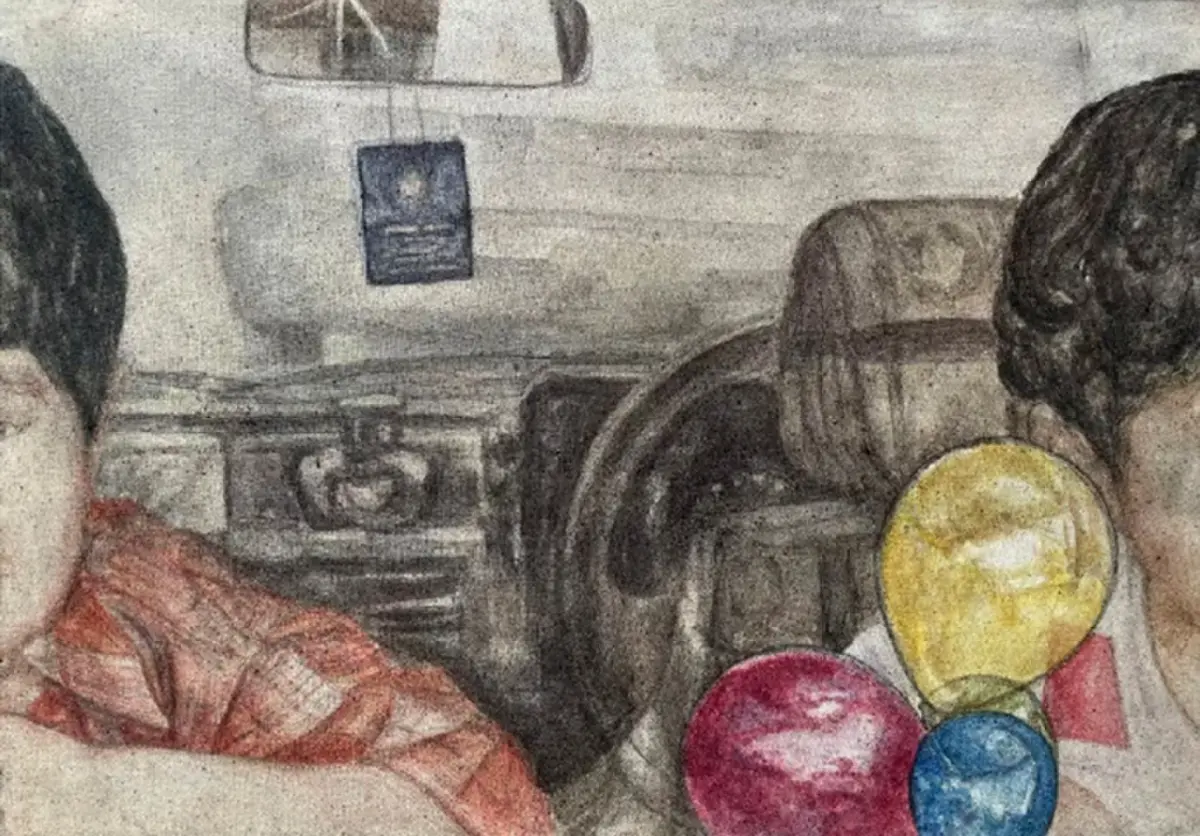
Rida-i-Zainab works across painting, sculpture and installation, drawing inspiration from dreams and everyday observations. Her practice often explores the space between the familiar and the uncanny.
“I have always been drawn to the uncanny, particularly the feeling that something familiar is not quite right. I often think about childhood and the idea of innocence, and whether children are ever as unaware of the world around them as adults would like to believe,” she said.
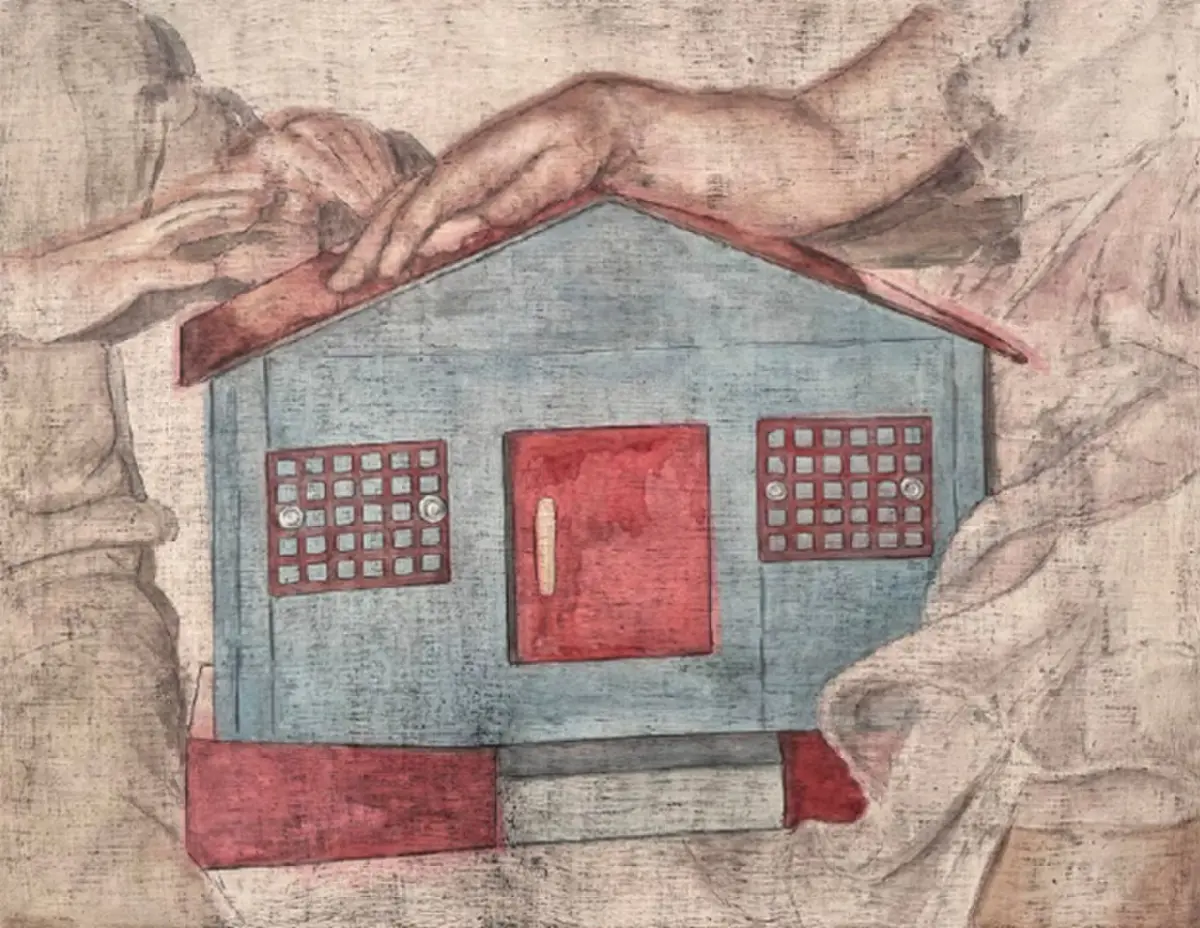
Children, she added, observe adults closely and notice things without always having the language to understand them. She said she repeatedly returned to this space between seeing and understanding in her work.
Zainab said her visual language was shaped by cinema and illustrated storytelling, particularly the works of Hayao Miyazaki, Junji Ito and Yoshitomo Nara, as well as the strange and unsettling worlds of R. L. Stine’s Goosebumps novels, which she read while growing up.
She said she was drawn to portrayals of childhood as something both tender and unsettling. Miyazaki’s worlds contained a quiet strangeness, Ito found horror in the familiar, while Nara’s children often seemed to know more than they revealed.
“I think of my own work as being a little creepy in a candy way,” she said.
Her cinematically framed canvases use blurriness to evoke moments remembered, with certain details remaining clear while others become difficult to recall.
Alishba Binte Faysal’s practice revolves around memory, process and materiality. Working primarily with oil paints and charcoal, she explores memory, materiality and belonging.
Drawing on old family photographs of herself, her parents, friends and familiar spaces, her work examines history, context and identity. Treating these images as both personal and collective archives, she explores how memories shift when revisited and reinterpreted.
Rabbia Khalid Khan’s works feature mixed-media drawings and alternative photographic processes, including cyanotype and salt printing. Through layering, abstraction and experimentation, she explores human presence within landscapes.
By layering negatives and everyday objects, she allows images to merge, dissolve and transform, translating these discoveries into drawings and stop-motion works.
Churchill said bringing the four artists into dialogue allowed for a concentrated examination of shared formal concerns without erasing their differences. The exhibition did not seek to unite their practices under a single thesis but traced shared material, visual and conceptual concerns across their works.
He said the exhibition offered a focused consideration of how images were constructed, interrupted and sustained through the treatment of the surface.
“Each piece brings specific space with it and it hasn’t been invaded during curation. With that space among them, the works behave in a manner to bring the composition into the consideration of the audience’s consciousness,” he said.
Published in Dawn, October 23rd, 2026