• Lavrov meets Araghchi in Tehran; Moscow offers mediation as Iran-US talks remain deadlocked
• Araghchi blames US, Israel for insecurity in Strait of Hormuz
• China urges all sides to resume negotiations
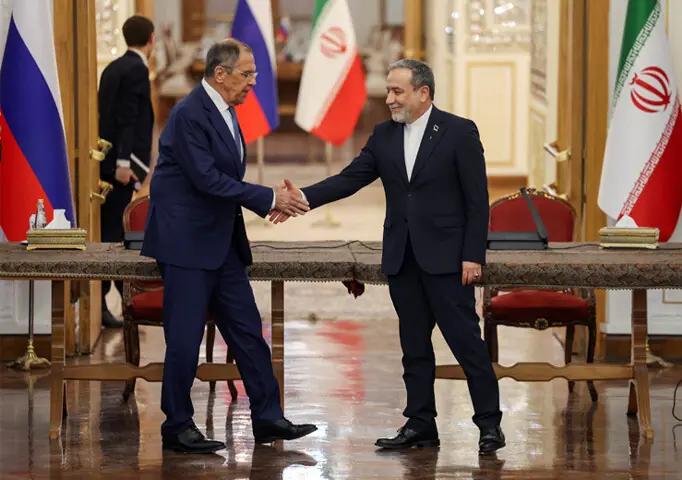
TEHRAN: Russian Foreign Minister Sergey Lavrov arrived in Tehran on Monday as Moscow seeks to play a mediating role in the Middle East war, while Iran’s top diplomat accused the United States of driving insecurity in the Strait of Hormuz.
Lavrov’s trip marks his first visit to Iran since the outbreak of the Middle East war in February, with Moscow seeking to broker a diplomatic breakthrough as negotiations between Tehran and Washington remain deadlocked.
The veteran diplomat has said Russia’s efforts are “aimed at preventing the return of a large-scale war”.
Lavrov met his Iranian counterpart Abbas Araghchi on Monday, telling him that Russia has no interest in volatile energy prices and needs to plan its development for the long term.
According to the Russian Foreign Ministry, Lavrov was also scheduled to meet Iranian President Masoud Pezeshkian.
The Russian Foreign Ministry stated the talks were expected to focus on “ways to resolve the acute international crisis triggered by the unlawful aggression of the US and Israel against Iran”, adding that the conflict has dealt a blow to stability and security “not only in the near and Middle East, but also on a global scale”.
Lavrov’s arrival follows an early October pledge from Russian President Vladimir Putin to Pezeshkian that Moscow stood ready to assist in mediation efforts.
Russia and Iran, two of the world’s most heavily sanctioned nations, have steadily deepened their military and economic cooperation since Moscow launched its invasion of Ukraine in 2022.
Speaking alongside Lavrov during a joint press conference in Tehran on Monday, Araghchi blamed Washington and Israel for the volatility in the Gulf and the Strait of Hormuz, which sits at the centre of the standoff.
“The war imposed by the United States and the Zionist regime [Israel], combined with the economic blockade, constitutes the principal source of insecurity in our region,” Araghchi said.
Meanwhile, in Dushanbe, Chinese Premier Li Qiang echoed calls for de-escalation during a meeting with Iranian First Vice President Mohammad Reza Aref on the sidelines of a Shanghai Cooperation Organisation summit on Monday.
According to China’s state-run Xinhua News Agency, Li emphasised that the sovereignty and security of all nations must be respected and affirmed Beijing’s readiness to expand cooperation with Tehran across various fields.
Li urged “all parties concerned” to choose peace, return to negotiations, and resolve their differences through political and diplomatic channels to restore regional stability as soon as possible, Xinhua reported.
The war erupted on February 28, when US-Israeli airstrikes on Iran assassinated Supreme Leader Ayatollah Ali Khamenei and several senior officials.
Published in Dawn, October 20th, 2026