Partners and equals
IT has been nearly a year since I last wrote an opinion piece. This was not really intentional, just a result of a feeling of hopelessness and helplessness that made me question whether writing is an exercise in futility. But recently, I was surprised when an educationist told me that my last piece on the threat to the Margalla Hills wildlife corridor, was put up in their school for students to read.
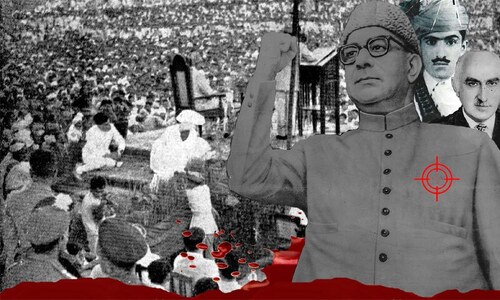
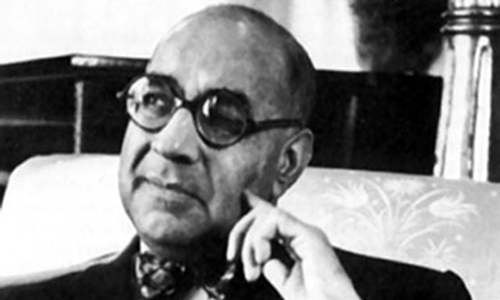
I decided then, that I need to return to writing. And what better day to voice my thoughts than today. Oct 16, 2026, marks the 75th death anniversary of Shaheed-i-Millat Liaquat Ali Khan, the first prime minister of Pakistan, the Quaid-i-Azam’s close friend and supporter, and a stalwart of the independence movement.
On that fateful day, he left behind his life partner, Ra’ana, and their two sons, Ashraf and Akber, in their home in Karachi, to fly to Rawalpindi to address the nation. His speech was being aired live by Radio Pakistan. He had been told his life was in danger, but he believed that the message he wanted to give was important enough to face the danger head-on. He never got to address the nation — and his written speech was never allowed to be published. To this day, we can only speculate at what he was going to reveal. His assassination created a vacuum in the political and civil life of the newly birthed Pakistan, the plan of those who stood in the shadows, having plotted to acquire this land for themselves. It also upended the lives of his family, but the resilience of his wife, although tested to the limit, helped them to move forward.
Reflecting on the way my grandparents lived, and the values they instilled in their children, helps me to engage more deeply with one of the profound spiritual questions of our human existence — what is our purpose on this earth? Their values, courage, independence of thought, and intentions that led to right action, are beacons of hope, not only for me, but also for my younger compatriots searching for their truth. We don’t find this learning in the history taught in our educational institutions or in textbooks. These subjects treat history as a test question needing to be memorised, rather than as the outcome of lived choices, decisions, actions, and consequences.
On that fateful day, he left behind his life partner, Ra’ana, and their two sons, Ashraf and Akber, in their home in Karachi, to fly to Rawalpindi to address the nation.
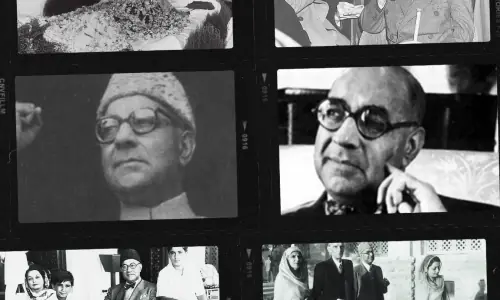
Integrating historical record with personal and familial insights into who my grandparents were, has allowed me to better understand them as individuals. We live in interesting times, and so did they, but they bore greater hardships than us. My grandfather was the son of a nawab, yet refused to follow the system, disobeying his father to study at Oxford, much to the horror of the nawab and his courtiers. He joined the independence movement very soon after his return. My grandmother was the only girl in her class at the University of Lucknow where she graduated with an MSc degree in economics. She was a professor in economics when she met and married my grandfather. For him, she changed her religion, and her name. And became his equal partner in the independence movement.
Colonial oppression and resistance were a daily affair, as was the burden of responsibility that each carried, when they became founders and role models for their new nation and its beleaguered citizens. Their personalities were moulded by the events of their time — but this moulding led not to the hardening of hearts, nor to an inability to accept adversity. Rather, in each was developed a sense of empathy towards others regardless of their station in life, compassion that resulted in positive action, and the courage and tenacity to stand for what was right and just.
After they married in 1933, Liaquat and Ra’ana visited England for their honeymoon and to persuade Mr Jinnah to return, as the time was ripe for independence. On his request, they returned to tour the provinces so that they could describe to Mr Jinnah the state of affairs of the Muslims of India, and did so in such a way that he was persuaded to return from England to lead the Muslim League. Described by the Quaid as his “right-hand man”, Liaquat was appointed by him as the secretary-general of the Muslim League. My grandmother not only advised the party on economic matters but also learned to type so that she could assist my grandfather with his official correspondence. Their marriage flourished as it was based on mutual love, mutual admiration, and mutual support.
When Partition occurred, my grandparents left all their wealth behind in India. My grandfather refused to claim any evacuee property until after each migrant to this land had been compensated for what they left behind. The day he died, he owned no property and had a paltry amount of money in his account. On the flip side, they gifted their mansion in Delhi, named Gul-i-Ra’ana, to the government of Pakistan and it remains the residence of the Pakistan high commissioner. Neither of my grandparents sought to keep any wealth or property for themselves. They gave because, in my view, they were living Islam. Their purpose on this earth was clear to them — live full lives in giving to others, love and be loved, have patience, persevere even in the face of the greatest adversity, remain steadfast even though others try to tear you down, and last but not least, trust in Allah to show you the true path. I pray that more of us can live as they did.
The writer is a development professional and impact adviser with over 25 years of experience in designing and managing programmes to improve people’s lives.
Published in Dawn, October 16th, 2026