Houthis vow more attacks on Saudi airports, oil facilities after claiming they targeted Aramco
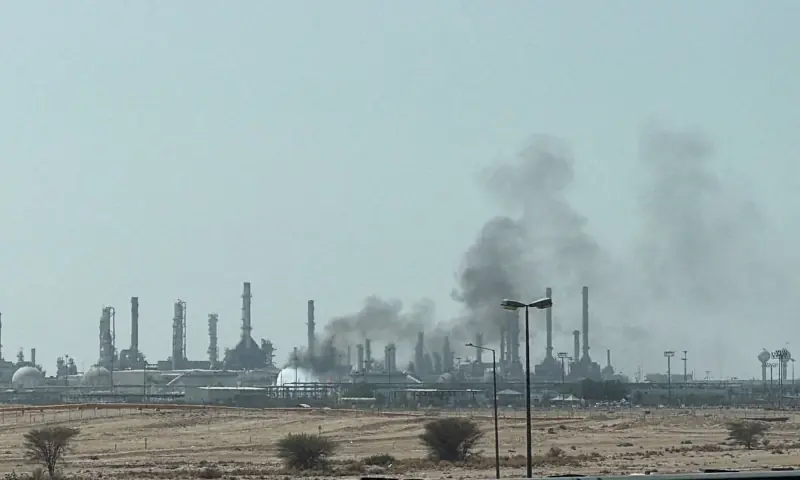
Yemen’s Houthi rebels said on Wednesday they had targeted facilities belonging to Saudi Aramco, after Saudi officials reported a strike on a building in an area in Riyadh housing the energy giant’s operations centre.
Powerful explosions meanwhile rattled the Saudi capital, as the coalition fighting the Houthis said it had intercepted a missile fired by the group towards Riyadh.
Saudi Arabia, the world’s top crude oil exporter, has in recent days come under sustained attack in a dramatic escalation in the war with the Houthis.
It has hit back with strikes against the group’s stronghold in the Yemeni capital Sanaa, which for years has been under their grip.
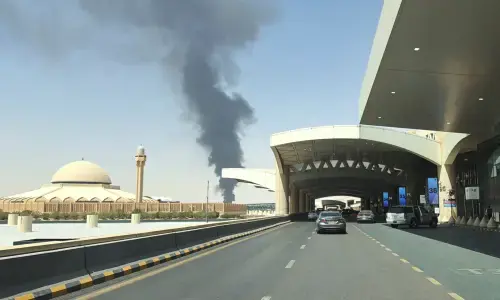
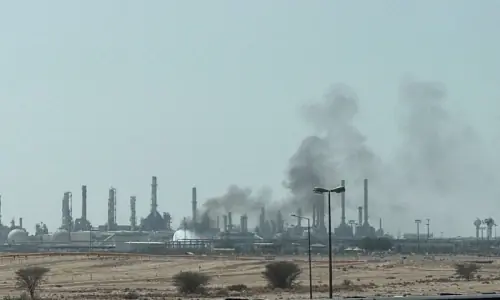
Yahya Saree, Houthi military spokesman, said their forces had conducted “a high-quality military operation targeting Aramco in Dhahran” as well as strikes targeting Riyadh airport and a refinery in the capital.
“This was carried out using a large number of ballistic missiles, cruise missiles and drones,” he said, adding that “operations toward Saudi depths will continue in the coming days, targeting Saudi enemy airports and oil facilities”.
Earlier, a Saudi energy ministry official said a building belonging to Aramco in Dhahran was struck, resulting in a “limited fire” but “no casualties or fatalities”.
Dhahran is home to Aramco’s headquarters, a vast complex comprising numerous buildings and residential compounds.
‘We heard an explosion’
More blasts were heard on Wednesday, AFP journalists in Riyadh reported, as messages were received on phones warning of an “aerial threat” and urging people to take shelter.
The alert was lifted a few minutes later.
Most strikes on Saudi Arabia have targeted infrastructure on the outskirts of the capital, but the barrages appear to be getting closer to the city centre.
In the city’s downtown, residents have been seen parking their cars to stop and look up at the sky, an AFP journalist said.
On Tuesday night, the white plumes of air defence missiles could be seen streaking across the sky followed by explosions.
While walking down a major avenue, a witness told AFP he “saw a projectile cutting across the sky” above a mall, saying it left “a yellowish trail of light followed by a trail of smoke. Then, we heard an explosion”.
“People were calm; no one was speaking. We were scared and all looking up at the sky,” he added, requesting anonymity.
Strikes on Yemen
The Saudi-led coalition meanwhile struck oil sites across western Yemen, with spokesman Turki Al-Malki claiming that the attacks targeted facilities used to supply the Houthis’ effort to “threaten the kingdom, Yemen, the southern Red Sea and waterways”.
An AFP correspondent in Sanaa reported an explosion, while a breaking news alert on the Houthi-affiliated Al-Masirah TV channel said “Saudi aggression” targeted an oil firm.
The coalition has supported Yemen’s government militarily against the Houthis since 2015 in a long-running civil war that has created a humanitarian crisis.
Many civilians in the Houthi-controlled Yemeni capital, fearing shortages, have rushed to queue in front of fuel stations, an AFP journalist said.
Renewed threats
The latest escalation follows a strike on Riyadh’s international airport on Saturday that left 13 people dead in the worst attack on the kingdom since 2015.
The Saudi cabinet vowed in a meeting led by Crown Prince Mohammed bin Salman that it “will not allow its security or freedom of navigation in the Red Sea and Bab al-Mandab strait to be threatened”.
Many countries have issued travel warnings to their citizens in Saudi Arabia, with France telling its nationals on Tuesday to avoid Riyadh, Jeddah and Dammam airports.
Traffic in perennially gridlocked Riyadh was noticeably lighter this week as remote learning for all schools and work-from-home orders for some companies took effect, according to AFP journalists.
Saudi Arabia faces a major economic contraction this year, with GDP expected to shrink 3.3 per cent, the International Monetary Fund said on Tuesday, predicting a regional drop over Iran’s blockade of the Strait of Hormuz.
The kingdom was already facing headwinds from Iran’s chokehold on Hormuz since the start of the Middle East war in February, when the United States and Israel attacked Iran.
But the restart in July of Yemen’s frozen war has further roiled the kingdom and brought the fight to its own soil.
Houthi attacks have also targeted oil tankers in the Red Sea — Saudi Arabia’s alternative export route.