Pakistan's room for improvement in T20Is has not shrunk in size after Sri Lanka series win
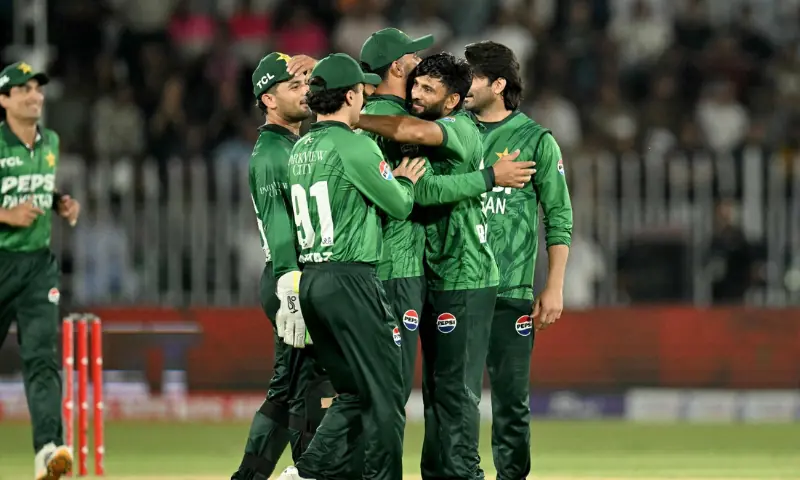
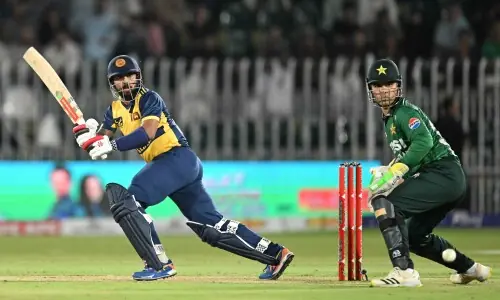
Sri Lanka beat Pakistan by eight wickets in the third of three T20 internationals on Tuesday night, on the back of a stellar 87-not-out by Kusal Mendis that ensured Sri Lanka aced the chase, after having restricted Pakistan to a total of 168.
Pakistan’s squad for the series was excluding previous mainstays from the T20 squad - there was no Babar Azam, no Shaheen Afridi, no Haris Rauf. The team had just come off the back of a silver-winning Asian Games campaign - a squad that, as per coach Hesson’s pre-tournament conference, was a mix of newer and more experienced players.
Prior to the games, Salman Ali Agha, who took over Pakistan’s T20 side in 2025, was relieved of his duties as captain, and Sahibzada Farhan was appointed in his place. For all intents and purposes, the Pakistan T20 side is in some form of a restructuring, if not a rebuild.
And though it would be unreasonable to expect one three-match series to be decisively formative for Pakistan’s T20 roadmap leading up to the T20 World Cup in 2028, it still gave insight into what can be made of it.
Prior to Tuesday night’s fixture, Pakistan had already sealed the series in a thumping 82-run win on Sunday. However, more than the two wins, it was the loss that can provide Pakistan a better skeleton of what to work on.
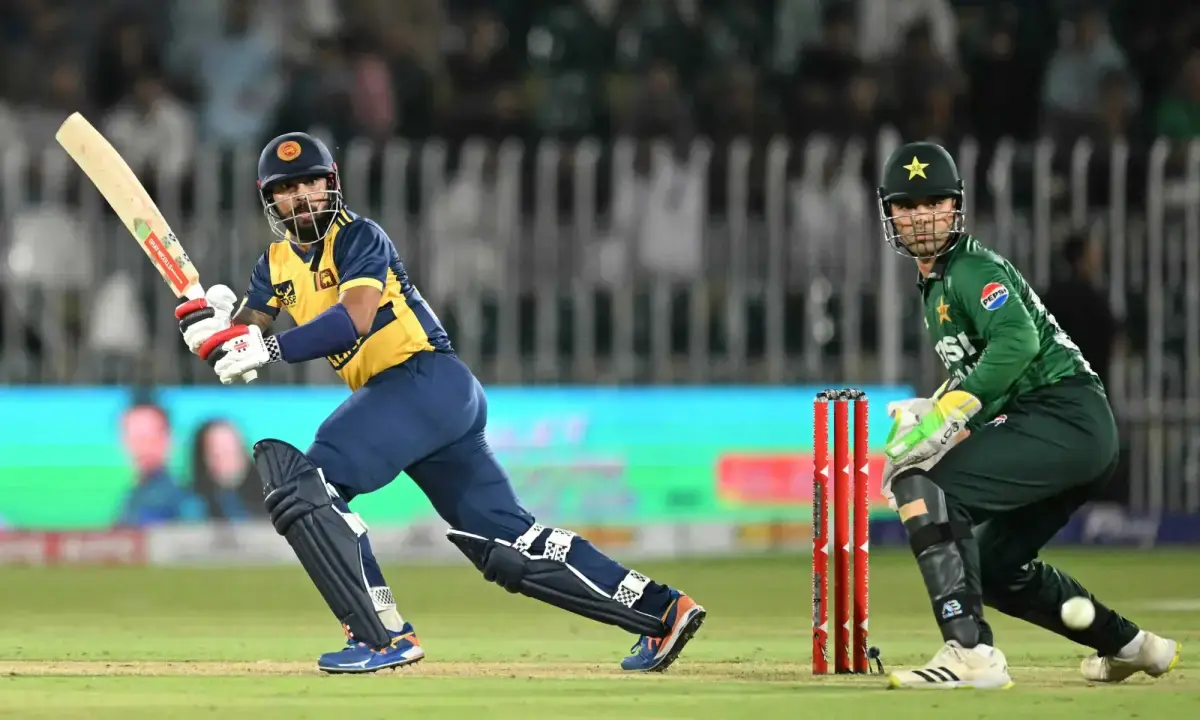
“Look, today we certainly weren’t at our best. We made a few changes and lost our way a little bit in the middle order. We probably left ourselves 20 or 30 runs short,” said coach Mike Hesson during the post-match press conference.
Pakistan had also made changes to the XI - Saim Ayub, Shadab Khan, Naseem Shah and Abrar Ahmed were left out to make room for Arafat Minhas, Sufiyan Muqeem, Razaullah and Abdul Samad.
Hesson added that Pakistan has had a “100pc win ratio in the last 18 months,” and that it mean the side “earned the right to expose our squad to some opportunities like we did today”.
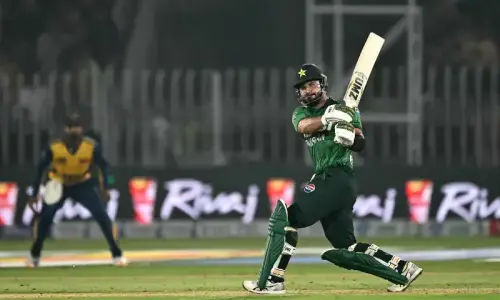
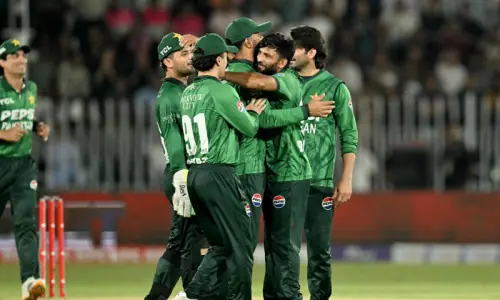
Pakistan started off briskly, with Farhan and Fakhar Zaman posting 34 runs in the first three overs, replicating the strong top-order performances shown in the series so far. However, Eshan Malinga’s double-wicket maiden for the fourth over, dismissing Fakhar and the in-form Maaz Sadaqat meant that, for the first time this series, Pakistan’s middle order would truly be tested.
And tested it was: after Malinga’s double strike, though Farhan kept the runs more or less flowing, Hasan Nawaz took some time to settle in. The batter has often been noted for his slow starts, which can hamper a team’s scoring momentum, and eventually this is what happened. Though he scored a couple of convincing boundaries against Malinga, the Sri Lankan bowlers maintained just enough pressure for Hasan to ultimately fall for a 17-ball-16.
Khawaja Nafay was sent in with Pakistan at 67-3, but a miserly outing saw him return to the dugout having scored just 3 runs in 5 balls. Imran Randhawa, who starred with the ball in the second T20I, did not prove to be as prodigal with the ball and holed out to Chamindu Wickramsinghe in the deep after chasing to relieve some pressure after a stilted start. Abdul Samad started with a lot more impetus but could not solidify his start.
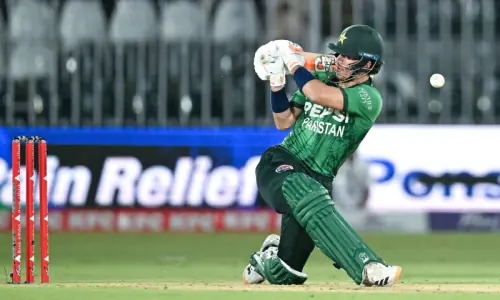
Arafat Minhas, however, proved to be a valuable addition to the side, supplementing Farhan’s firm innings with an unbeaten 34 0ff 20 balls, and the 66-run partnership was Pakistan’s longest of the innings. Farhan continued his excellent run in the series, during which he accumulated 238 runs across the three matches.
Perhaps the issue is not with the mettle of the batters in Pakistan’s middle order, but how they are used. Khawaja Nafay, for example, has a much stronger record whilst batting in the top three than outside of it - in a sample of 32 innings, he has scored 713 runs with 8 half-centuries at an average of 24 and a strike rate of 137 whilst batting at the top. Outside the top 3, those numbers take a dip - 234 runs in 19 innings, averaging at 14 and striking at 131. It is possible that at a different entry point - coming in to bat earlier in the innings, would have provided better returns.
It is possible that Pakistan has again fallen into an old pattern of having too many top-order batting options and not enough for below it, causing some of the middle order to comprise of batters not batting in their ideal spots.
Another issue is Pakistan’s lack of a clear wicketkeeping option. With Mohammad Rizwan no longer in the side, Mohammad Haris currently not being considered, and Nafay’s and Usman Khan’s performances behind the stumps passable but not necessarily sharp or incisive, this remains something for the side to look out for.
However, if Pakistan are to be a more flexible T20 side, they will have to learn to adapt to the situation and resources at hand.
This is also a reason why a singular series cannot provide enough insight to what Pakistan needs to tweak exactly if they are to compete at the top.
Captaincy and, as an extension, decisions like the sort of bowling combinations the team puts in front of opponents are also elements that will need to be finetuned as this Pakistani side progresses.
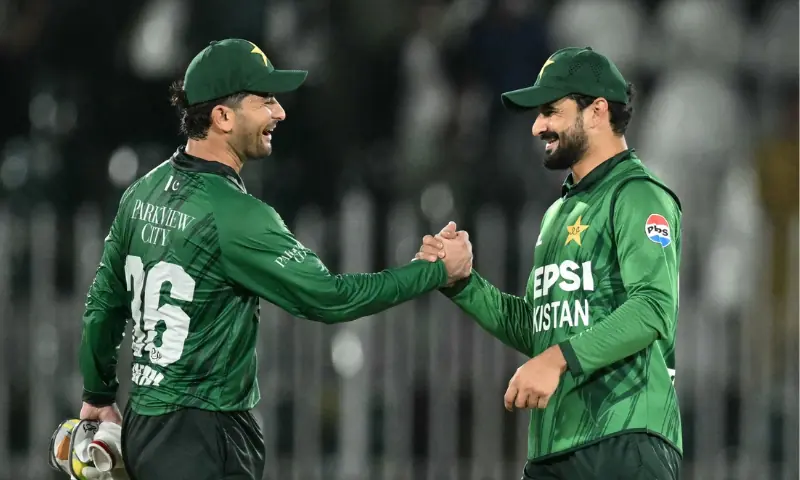
“I think he has made a really good start. As you gain confidence, you begin to trust your instincts more, and I think he’s starting to do that,” said Hesson of Pakistan’s new captain in Farhan.
“In T20 cricket, the game moves fast, and you have to stay ahead of it. You can look like a genius one minute if the bowlers execute what you want, while the opposite can make things look pretty tough if they don’t,” he said, adding that Farhan’s captaincy will continue to develop with time, especially if he has “experienced heads” around him to consult with.
Pakistan’s bowling resources are also something to keep an eye on. Pakistan’s spin stocks have Sufiyan, Abrar, Arafat and, potentially, Usman Tariq, all of whom have made cases for themselves at various points over the last year. The question of whether Shadab still deserves a place in the XI after less than ideal international returns with the ball (despite strong league performances) is also a question, and so is whether he makes the side simply as a middle-order batting option.
Hesson also spoke of pace sensation Razaullah, - “he’s fresh, and he’s raw, but he’s got genuine pace.”
“He will get better with opportunities, and we have to work with him,” he added, which could ultimately be Pakistan’s working thesis coming out of this series.
The coach also added that Sri Lanka simply “played better” in the third match, which again should be taken into account while assessing Pakistan’s performance in the series.
Whilst the Green Shirts had encouraging performances throughout, there were also moments of luck they benefitted from, incurred by Sri Lanka’s lapses in the field.
Whilst Pakistan has come out of this series with a decent idea of what the team is doing right - the top order is working, the bowlers in form are effective - the list of things the team needs to improve on has certainly not shrunk in size. With two years to the next T20 World Cup, one can hope that it starts to do so with time.