ISLAMABAD: Prime Minister Shehbaz Sharif directed the Federal Board of Revenue (FBR) on Monday to complete digital monitoring of production in major industries by the end of December 2026 as part of efforts to narrow the gap between actual and potential tax collection.
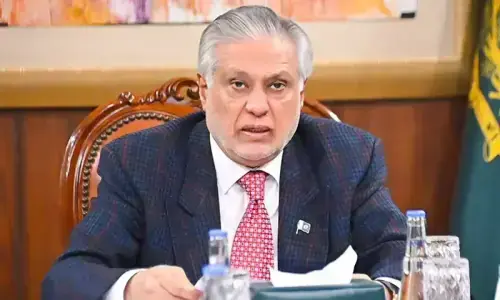
Chairing a review meeting, the prime minister asked tax authorities to ensure that production monitoring for sales tax covered all manufacturing sectors by the end of the year.
Officials gave a detailed presentation on the results achieved so far through digital monitoring of industrial production.
According to an official announcement by the Prime Minister’s Secretariat, the meeting was informed that the digital monitoring system had been fully installed in the sugar, cement, tobacco, tiles and fertiliser sectors.
System fully installed in five sectors, tax authorities inform PM
The system was being installed in the textile, packaged water, packaged juice and packaged milk sectors, and the purchase of equipment for these industries had been completed.
The meeting was informed that the purchase of equipment for the steel, poultry and tyre sectors would be completed by Oct 15, while equipment for tea, household electronics, leather, paper and board, and oil and ghee would be procured by Oct 30.
The monitoring systems in all these sectors are expected to be fully operational by Dec 31, 2026.
Voluntary installation
The meeting was also informed that several textile companies had voluntarily installed the monitoring system despite resistance from some industries. These included Nishat Mills, Al-Karam Textile, Al-Karam Cotton Mills, J.K. Spinning Mills, Soorti Enterprises, Interloop Ltd, Faisal Spinning Mills, Ibrahim Fibres Ltd, Sapphire Textiles Ltd and Nishat Chunian.
The prime minister commended the companies for their initiative.
A review report on the gap between tax collection and tax potential was also presented to the prime minister, providing an estimate of the country’s tax potential.
The meeting was informed that government measures over the past three years had resulted in an additional Rs1.3 trillion in tax collection, representing a 40 per cent increase. The additional revenue had been generated through enforcement measures.
Briefing the prime minister, the FBR said production monitoring was being strengthened through cameras under the faceless system.
The premier directed that obstacles to installing automated production monitoring systems equipped with cameras be removed.
Published in Dawn, October 13th, 2026