ISLAMABAD: Forecasting global merchandise trade to grow faster by 3.9pc and 4.1pc in 2026 and 2027, respectively, than the previously estimated 1.9pc and 2.6pc at the start of the US-Iran conflict on Feb 28, the World Trade Organisation (WTO) has found that some nations, including Pakistan, are also benefiting from trade disruptions in unexpected ways.
“WTO economists have upgraded their forecasts for world merchandise trade volume growth to 3.9pc in 2026 (up from 1.9pc in the baseline scenario in the March 2026 forecast) and 4.1pc in 2027 (up from 2.6pc in the previous forecast)”, the Geneva-based global trade watchdog said in its Global Trade Outlook Update 2026 released on Thursday. Despite the conflict in the Middle East, the global economy has remained resilient, reflecting a stronger-than-expected surge in AI-related capital investment and increased supplies of fuels and fertilisers from countries outside the Middle East, it explained.
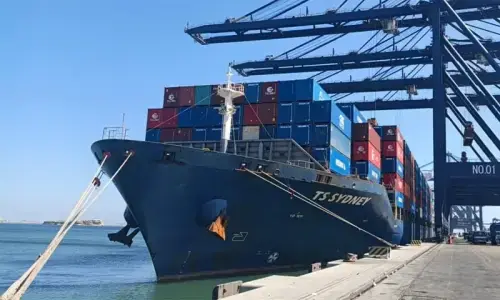
It said many countries faced traffic disruptions because of the closure of the Strait of Hormuz; the redistributed traffic also created opportunities for other economies. “For example, Pakistan’s exports of sea freight transport services rose by 73pc year-on-year in the first half of 2026, as its transport operators benefited from increased traffic,” the WTO said. In July, vessel calls at major container terminals in Karachi were still 14pc higher year-on-year, it added.
US exports to the European Union, the largest market, continued to expand, while exports to Asia and the Pacific decreased by 2pc in the second quarter. Meanwhile, computer services exports expanded rapidly in several smaller and emerging exporters. In the second quarter, computer services exports rose 34pc in Malaysia and 23pc in Pakistan, and 13pc in Brazil.
The WTO also noted that rerouting vessels and containers to alternative ports and trans-shipment hubs has squeezed capacity in South Asia, driving up charges. In July, the Mediterranean Shipping Company (MSC) introduced a $ 500-per-container congestion surcharge on shipments from Northern Europe to India, Pakistan, Sri Lanka and Bangladesh. Longer waiting and transit times are increasing costs for carriers and traders, some of which may ultimately be passed on to consumers.
Published in Dawn, October 9th, 2026