Irsa okays 22pc lower water share for Rabi
ISLAMABAD: Expressing serious concern over infinite delays in the completion of key projects aggravating shortages, the Indus River System Authority (Irsa) on Tuesday approved a 22 per cent lower water share for the Rabi season (Oct 1-March 31).
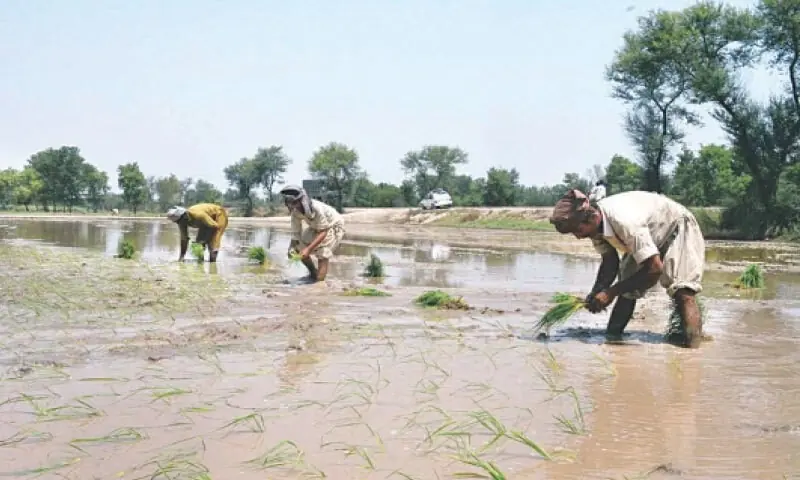
As a result, the water regulator allocated provincial water shares under a de facto 3-tier formula that applies water shortages only to Sindh and Punjab, while exempting Balochistan and Khyber Pakhtunkhwa from supply cuts. This magnitude of water shortage raised concerns about next year’s food security, given that wheat is the season’s main crop.
“Based on the agreed inflows and other system operational parameters, overall system shortage worked out at 22pc for both Punjab and Sindh, which was approved” by the Irsa’s Advisory Committee (IAC), which may be periodically reviewed as the season progresses, said the water regulator after the IAC’s meeting, presided over by Irsa Chairman Amjad Saeed.
Informed sources said that even the approved shortage estimates were under-reported at Sindh’s insistence, as both Punjab and Wapda had projected a 26pc shortage, while Irsa’s in-house calculations also put shortages at 26pc. Sindh reiterated its opposition to the use of the 3-tier distribution formula.
It said the meeting ‘unanimously approved the anticipated Rim-Station inflows of 21.268 million acre feet (MAF)’ along with 4pc and zero conveyance losses for the Indus and Jhelum-Chenab zones, respectively. Total water availability for Rabi was anticipated at 29.18MAF, against 38MAF envisaged under the 1991 Water Accord. Of this, 15.564MAF was allocated to Punjab and 11.748MAF to Sindh. Balochistan and KP would receive 1.171MAF and 0.71MAF, respectively.
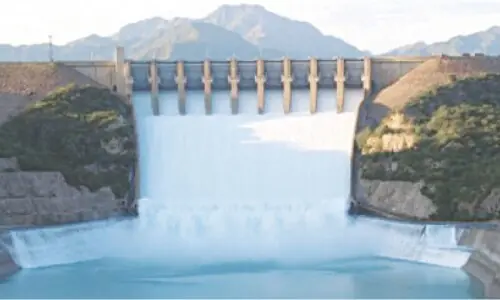
The sources said that more than three million acre feet of water could not be stored at Tarbela dam because of filling restrictions imposed by the Water and Power Development Authority (Wapda) for ongoing construction works. Irsa reprimanded Wapda and recorded its displeasure.
The Irsa statement said the meeting “reviewed the progress of ongoing works on Wapda’s T4 LLO (tunnel-4 low-level outlet) and Tunnel-5 Hydropower Project (T5 HPP) and urged that they should be completed as early as possible as they were already substantially delayed and causing shortages to the provinces during Kharif seasons.”
T4 and its LLO were due for completion four years ago (in 2022), while T5 was supposed to be finished by July 2025, after a 33-month deadline expired. These projects remain unfinished, and the delay may reportedly extend into early 2028. Despite repeated reminders, Wapda has not provided conclusive updates on their completion timelines but hinted on Tuesday that full Tarbela capacity would not be available in the next two Kharif seasons, in 2027 and 2028. Informed sources said that Tarbela constraints also compelled the authorities to increase discharges from Mangla dam, hampering its filling ahead of Rabi.
The last Rabi season faced no water shortage at all, and yet the country is estimated to have faced a wheat shortage of over two million tonnes.
This forced the government to order one million tonnes of imports, including 750,000 tonne in the first phase for delivery in November. Against a production target of 29.7 million tonne and a consumption requirement of 31.9m tonnes, the country is estimated to have produced around 27.5m tonnes as farmers faced challenging times owing to changes in wheat policy.
Last year, Rabi had begun with a healthy 13MAF carryover in dams — almost 27pc higher than this year. Wheat is the largest crop in the Rabi season. Gram, lentil, tobacco, rapeseed, barley and mustard are some of the other Rabi crops.
Total water requirement for Rabi crops, under the Water Apportionment Accord of 1991, is about 37-38MAF. The accord empowers Irsa to determine water availability in the country and the provinces’ share twice a year.
The 1991 Water Accord works well only in rare cases of sufficient water availability. Because shortages of more than 10pc have become routine, Irsa is using a de facto 3-tier formula for distribution of water shares among the provinces, to the dissatisfaction of Sindh, which had been pushing for application of Para 2 of the accord.
Published in Dawn, October 7th, 2026