In Punjab, the discussion around milk is usually framed as a quality question. Adulteration is treated as a policing failure, and consumers are told they need more awareness. This has led to regular sampling, raids, and now the installation of trackers on tankers coming into Lahore. However, the framing misses the real problem.
The stakes are real. In Pakistan, milk is the most widely consumed source of animal protein. According to the Pakistan Dairy Association, almost 98 per cent of the sector remains informal. At the same time, more than 40pc of children under the age of five are stunted, and the Global Alliance for Improved Nutrition estimates that malnutrition costs Pakistan around 3pc of GDP every year.
Recently, the Chief Minister’s Special Assistant on Food Safety said the province plans to register and track the milk tankers coming into Lahore. According to her, 550 to 600 tankers arrive daily, but it is difficult to pinpoint where most of the milk began. The Punjab Food Authority already uses lacto-scanners and mobile laboratories that detect adulteration within a minute. As far as it goes, this is sensible.
However, the informal milk trade keeps expanding, for reasons of price rather than enforcement. An 18pc general sales tax on packaged milk was imposed in the FY25 budget and retained in the Finance Act 2026. The association’s chairman says this produced a 27pc contraction in the formal sector.
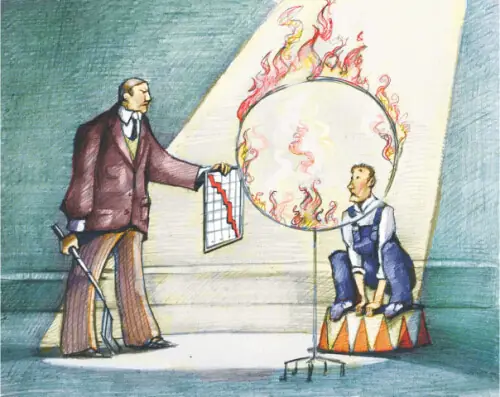
Punjab is spending to make loose milk safer while federal tax policy makes it the only milk most families can afford
The revenue case is weaker than it looks. Milk moving out of the formal chain is still sold, but into a market that pays no tax. The association proposed cutting the rate to 10pc while bringing part of the informal economy into the tax net and costed that at up to Rs250 billion. The Global Alliance for Improved Nutrition argued for 5pc. The federal food security minister has said that softening the tax regime could raise both production and revenue. The budget delivered no change.
Compare this to household prices. In Lahore, a litre of packaged milk costs around Rs100 more than loose milk, which becomes the deciding factor for a family facing a difference of several thousand rupees by the end of the month.
The closing of collection centres deserves more attention than it receives. A collection centre is the one point at which milk is tested and paid for according to its quality. Once it closes, that signal disappears. The dhodhi who replaces it pays the same for clean milk as for watered-down milk, so a farmer who invests in feed and cooling recovers nothing, while one who adds water is rewarded. Adulteration then is less a moral failure than what a market produces when quality has no price.
Nor does the farmer have a reference price. He sells to whichever collector arrives, at whatever price is offered, with nothing against which to judge the deal. Monitoring Annual Development Programme schemes for the Livestock Department left me with a related impression: most public investment goes into breeds, feed and animal health, and very little touches the point of sale. A farmer can be given a healthier animal and still sell where nothing more is paid for cleaner milk.
In Lahore, a litre of packaged milk costs around Rs100 more than loose milk, which becomes the deciding factor for a family facing a difference of several thousand rupees by the end of the month.
Awareness is not worthless, but it is often asked to solve the wrong problem. There is value in telling households that boiling kills pathogens but does not remove added water or chemicals. What it cannot do is change which milk a family buys. Households in Lahore are not uninformed; they buy loose milk because the alternative sits outside the budget.
Punjab has correctly identified the core issue. The Punjab Innovation for Value, Opportunity and Transformation programme rests on the observation that the province produces at scale without capturing value at scale, and dairy is the clearest case. Its dairy component funds processing, cold chain and collection centres, which is the right intervention, since collection capacity is how quality reaches the farmer’s price. However, the province is promoting processing plants at a point when federal tax policy has been closing them.
India shows what an alternative model can look like. Their Operation Flood has been collecting and paying farmers on the basis of fat content in the milk. Even after fifty years, only a quarter of the marketable surplus has been handled by them.
This shows that sequence and strategy matter more than spending money. The government needs to bring the tax rate down by 10pc and rebuild collection centres and processing plants, along with teaching consumers the ways to verify milk quality, rather than urging families to purchase milk at a rate they cannot afford. This can significantly improve the purchase rate of safe milk. In short, lacto-scanners and trackers can’t deliver safe milk while unsafe milk is still an affordable option.
The writer is a senior research analyst at The Urban Sector Planning and Management Services Unit (The Urban Unit), Lahore.
Published in Dawn, The Business and Finance Weekly, October 5th, 2026