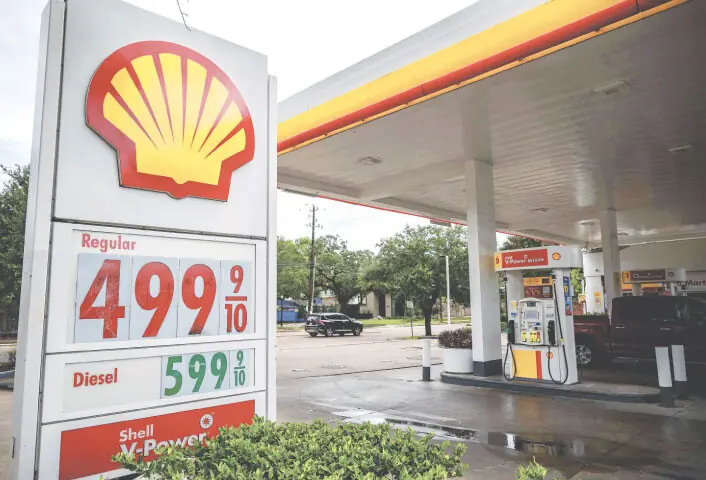
The war in the Middle East has turned a regional conflict into a global economic shock. Prolonged disruption in the Strait of Hormuz has pushed up oil, gas, freight and insurance costs, adding to inflation and squeezing growth.
Rich economies can absorb part of the shock. Developing countries such as Pakistan cannot. They face larger import bills, weaker external balances, higher inflation and less room for monetary or fiscal relief. What happens in Hormuz is no longer just a Middle Eastern security crisis. It is an economic threat to countries far beyond the battlefield.
Seven months after the first US-Israel strikes on Iran, the Strait of Hormuz still sets the mood of the world economy. Roughly a fifth of the world’s oil and gas supplies pass through it. Brent traded below $68 a barrel in mid-February. It now sits around $100.
The diplomacy has been real, and it has been squandered. Pakistan hosted US and Iranian delegations in April after the two sides agreed to a two-week ceasefire. An interim agreement collapsed shortly after it was announced in June. More recently, Iran tabled a revised plan on the sidelines of the UN General Assembly. It asked for frozen funds to be released, oil sanctions lifted and the naval blockade ended in four to five days, with nuclear talks starting within seven.
Seven months after the first US-Israel strikes on Iran, the Strait of Hormuz still sets the mood of the world economy
Tehran ties any reopening of Hormuz to those steps. President Donald Trump called the plan unacceptable. Washington has since replied through Qatari mediators, and Trump denies offering sanctions relief.
Both capitals are gambling with other people’s money. Washington believes the blockade will exhaust Tehran first. Tehran believes a shut strait will exhaust Americans. Each may be partly right. Neither calculation counts the cost to importing economies that had no say in the war.
The global numbers look calm only on the surface. The International Monetary Fund’s July update projects world growth of three per cent this year but raised its inflation forecast to 4.7pc. The damage shows up in prices rather than output, and it lands hardest on commodity importers.
Developing Asia shows how. The Asian Development Bank’s (ADB) September outlook has regional growth slowing from 5.5pc last year to 5pc in 2026. Inflation is held at 4.2pc only because governments are absorbing higher energy costs through costly subsidies, and someone will pay for those later. Earlier ADB modelling warned that if disruption lasts beyond a year, the region could lose up to 1.3 percentage points of growth over FY27, with South Asia facing the sharpest price pressure.
Pakistan sits squarely in that group. Consumer prices rose 10.26pc year on year in September, and the State Bank held its policy rate at 11.5pc, leaving little room to ease. Petroleum makes up about a third of imports, and each $10 per barrel adds an estimated $1.8-2 billion to the annual oil bill. The cushion is the Gulf. Overseas Pakistanis remitted a record $41.6bn in FY26, and Saudi Arabia and the UAE supplied $18.6bn of it. That cushion holds only if the war does not spread.
Diplomacy is the cheaper option, and two capitals have invested in it. Islamabad has kept channels open to Washington, Tehran and the Gulf. Pakistan’s push to renew US-Iran talks had Chinese backing. Beijing has its own reasons. It is Iran’s largest trading partner and a big buyer of Gulf crude, and a closed strait hurts it.
After their Beijing summit in May, Trump said China’s President Xi Jinping had offered to help end the war and wanted Hormuz reopened. The White House added that Xi opposed any toll for using the strait. At the White House on 24 September, he said he supported a return to the interim agreement. No breakthrough was reported, and China’s readout discussed the Middle East without naming the Iran war.
The war has also exposed the limits of American power. Trump wanted it over by the end of March, according to the US media, and on 9 March he claimed the strait had reopened. Seven months on, it has not. The world’s strongest navy has not forced Hormuz open, and the blockade of Iranian ports has not made Tehran concede. Washington asked allies to help secure the waterway, and most were reluctant to enter an active war zone.
Before the Beijing summit, Trump said he did not need help on Iran. He then pressed Xi for it, and in September he greeted the Chinese leader at Joint Base Andrews. Brookings concluded that Xi held the upper hand. The mediators that matter are Pakistan, Qatar and Oman. Force alone has not delivered what Washington wanted, and other capitals now hold pieces of any settlement.
Both sides now need to concede something small to gain something big. Washington should accept sequencing: a verified reopening of Hormuz in exchange for easing the blockade, with nuclear questions in a separate, time-bound round. Tehran should drop transit tolls, which even its largest trading partner opposes, and accept independent verification.
Neither side has shown it can win outright. The US has the strongest navy afloat and has not reopened the strait. Iran has absorbed seven months of strikes and has not broken the blockade. Middle Eastern crude exports have climbed to their highest level since the war began, a sign that markets are ready for peace. The mediators in Islamabad and Doha are ready. The principals are the missing piece.
Five months remain before the war’s first anniversary and the ADB’s worst case. That is enough time for a deal, if Washington and Tehran sit down and stay there.
The writer is a Dawn staffer
Published in Dawn, The Business and Finance Weekly, October 5th, 2026