UN urged to ensure rights of Kashmiris, Palestinians
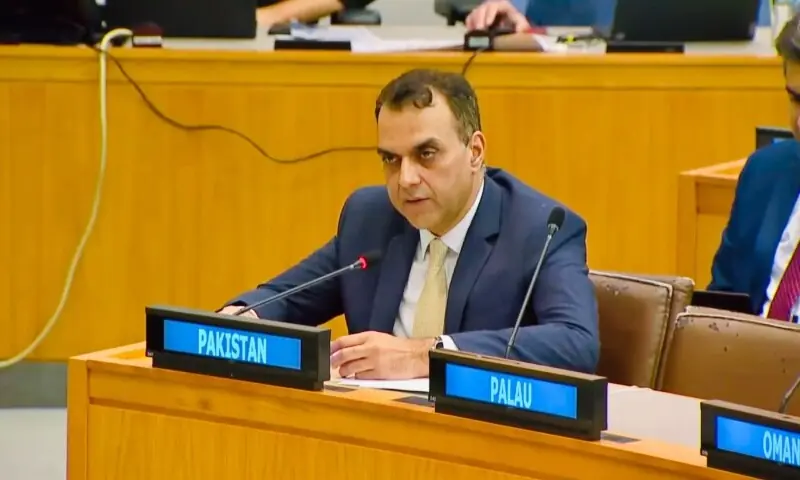

UNITED NATIONS: Pakistan has called on the United Nations to implement its long-standing resolutions guaranteeing the right of self-determination to the people of Kashmir and Palestine, while urging consistency in the application of international law.
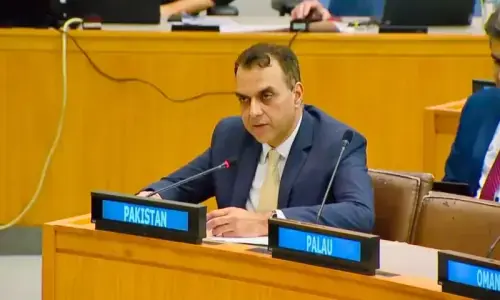
“International law cannot be invoked vigorously in one situation and disregarded in another,” Ambassador Usman Jadoon, Pakistan’s deputy permanent representative to the UN, told the General Assembly’s Third Committee.
Mr Jadoon said Kashmiris had awaited implementation of UN Security Council resolutions for nearly eight decades, including provisions for a free and impartial plebiscite under UN auspices. He accused India of intensifying repression and restrictions on fundamental freedoms in Jammu and Kashmir since Aug 5, 2019, as well as attempting to alter the territory’s demographic and political character.
“Arbitrary detention, enforced disappearances, restrictions on expression and peaceful assembly, and demographic engineering cannot become acceptable merely because they persist over time,” he said. “Rights delayed for generations do not become rights denied.”
An Indian delegate, exercising the right of reply, described Kashmir as an “internal matter”. A Pakistani representative countered that Jammu and Kashmir remained an internationally recognised disputed territory whose final status was to be determined in accordance with the wishes of its people and relevant UN resolutions.
Mr Jadoon also highlighted the plight of Palestinians, describing it as a “defining test of our collective conscience”. He called for protection of civilians, unhindered humanitarian assistance, respect for international law and accountability, saying the Palestinian people must realise their “inalienable right to self-determination”.
Addressing broader human rights concerns, Mr Jadoon said developing countries faced shrinking fiscal space, unsustainable debt, climate shocks and widening technological divides. He called for the right to development to receive greater attention, describing it as an inalienable human right and a condition for realising other rights.
Pakistan, he said, remained concerned about the normalisation of Islamophobia through hate speech, discrimination, desecration of sacred symbols and attacks on Muslims and their places of worship. He called for sustained UN action following the designation of March 15 as the International Day to Combat Islamophobia.
On AI and technology, Mr Jadoon said these could expand access to education, healthcare and opportunity, but technology must remain human-centred, inclusive and accessible, with developing countries participating equally in shaping and benefiting from it.
During another right of reply, Indian delegate Bhavika Mangalanandan accused Pakistan of involvement in terrorism and mistreating minorities while reiterating India’s position that Kashmir is an integral part of the country.
Pakistan’s first secretary to the UN, Sarfraz Ahmed Gohar, rejected the claim, saying Jammu and Kashmir “never was, neither is, nor will ever be” an “inalienable part of India”. He accused India of suppressing rights in Kashmir and alleged discrimination and violence against religious minorities.
Mr Gohar also accused India of supporting militant groups, while reiterating Islamabad’s commitment to dialogue, diplomacy and peaceful settlement of disputes under the UN Charter.
“India would be well advised to also follow that path,” he said, in the interest of regional peace, security and stability.
Published in Dawn, October 4th, 2026