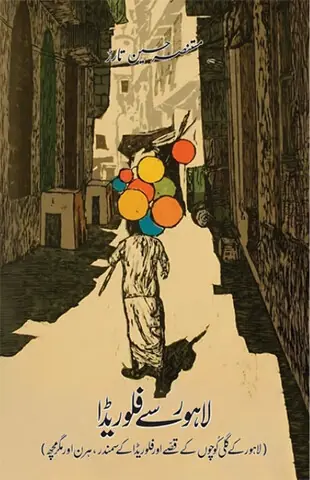
Lahore Se Florida
By Mustansar Hussain Tarar
Sang-e-Meel Publications
ISBN: 969-353719X
265pp.
Mustansar Hussain Tarar is a well-known name in Pakistani television — an actor in the 1970s, a dramatist in the 1980s and a host throughout the 1990s and 2000s. Yet, the thread connecting all these phases of his career has always been his numerous and popular travelogues, even though some writers question the authenticity of his history.
Any book by Tarar is worth reading. His prose is so vivid and visual that, a few days later, you may remember a scene perfectly but forget whether you first encountered it in one of his books or watched it unfold on television.
For more than five decades, Tarar has transformed the Urdu travelogue, taking it beyond descriptions of landscapes and turning it into a rich blend of history, memory, culture and personal reflection. Reading him feels like you are listening to a family elder taking you along on a journey — pointing out an old building, pausing to tell you its story, recalling someone who once lived there, and then moving on as naturally, as if the conversation had never been interrupted.
His latest book, Lahore Se Florida [From Lahore to Florida], carries the same warmth and effortless storytelling. Whether reflecting on history and notable landmarks, meeting strangers or talking about films, each of the book’s six chapters carries its own distinct character and rhythm.
Forgotten towns and vanished histories turn a new Mustansar Hussain Tarar travelogue into something much more than sightseeing
Although the title promises a journey from Lahore to Florida, the book begins much closer to home. Tarar wanders through the forgotten corners of Lahore and its surrounding towns, where history is often found not in grand monuments but in neglected gateways, decaying mansions, narrow streets and forgotten shrines. Under his gaze, these places become witnesses.
Among the book’s memorable episodes is Tarar’s visit to Satghara, near Renala Khurd, where he recounts the history of the mausoleum of the Baloch warrior Mir Chakar Khan Rind. His writing technique, in ‘flashback’, becomes particularly effective when he passes through places such as Chiri Maran and the almost forgotten Mori Gate, allowing the present to suddenly give way to the past.
Those who know his work are aware that Tarar’s imagination can transport almost anything back in time. What begins as an observation about an old tree gradually unfolds into a meditation on history. Tarar recounts the story that Anandpal, the Hindu Rajput ruler defeated by Mahmud of Ghazni, is believed to have immolated himself beneath this tree after his defeat. In actual fact, it was Anandpal’s father Raja Jaipal who self-immolated after his second defeat by Mahmud of Ghazni in 1001 CE. Whether viewed as erroneous documented history or enduring local memory, the anecdote transforms the tree into a silent witness to one of the Subcontinent’s early mediaeval tragedies.
After reading Peshawar Awargi [Peshawar Wanderings, 2025], I have begun noticing the extensive Bollywood connections in Tarar’s recent writing — links that seemed far fewer in his earlier books. If Dilip Kumar was brought vividly back to life in that book, it is Rajesh Khanna, Bollywood’s first superstar, who seems to step out of the pages of Lahore Se Florida.
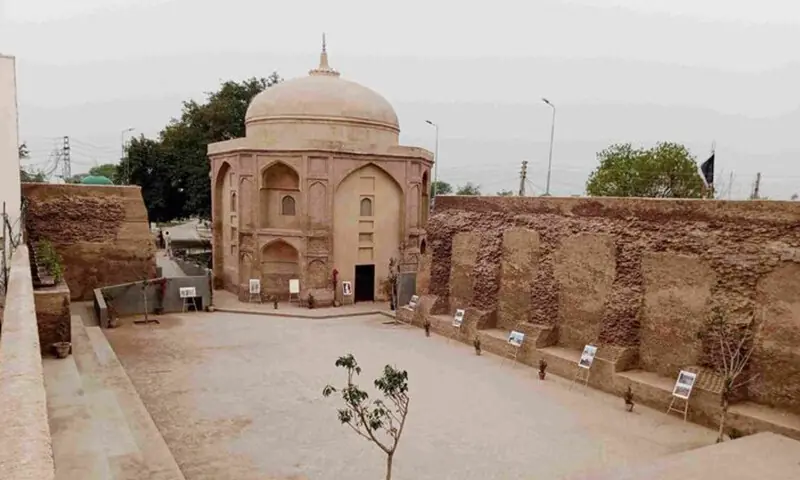
Tarar traces the connection to the ancestral family of the Indian film icon, affectionately known as ‘Kaka’. Even today, he observes, many residents of Satghara continue to associate the town with its celebrated former connection. For many readers, this forgotten link will come as an unexpected revelation.
Yet, what makes the episode memorable is not simply the fact itself. Tarar reconstructs Kaka’s abandoned haveli [traditional mansion] so vividly that one can almost imagine a documentary unfolding before the eyes. The crumbling walls seem to carry voices from another era, reminding us that places do not necessarily become empty when their inhabitants leave.
Eventually, the journey leaves Lahore behind and Florida emerges as an equally engaging destination. Travelling with his wife to visit their daughter, Tarar observes America with the same curiosity with which he observes an old Lahore street. Airports, highways, neighbourhoods, restaurants, museums, places of worship and everyday customs all become a part of his wanderings.
He does not approach America merely as a tourist collecting attractions. He notices small details, makes comparisons with Pakistan and allows himself to be surprised. Florida becomes another place through which Tarar examines people, culture and his own relationship with the world.
One of the most poignant encounters is his meeting with Kesha Ram Hinsdale, a Vermont state senator and a great-great-granddaughter of Sir Ganga Ram, the visionary engineer and philanthropist whose contribution to Lahore remains immense. Tarar regards Ganga Ram as one of the city’s great benefactors, making the meeting particularly meaningful.
Yet, the encounter carries a quiet sadness. Kesha herself knows relatively little about her illustrious ancestor. What begins as a personal meeting becomes a reflection on migration, memory and identity. Families move across borders, generations grow up in different countries and, with time, the geography of one’s ancestors can become almost as distant as their stories.
Tarar’s conversational ease remains intact throughout the book. Gentle humour frequently appears, particularly when he turns the joke towards himself and his advancing age. He affectionately refers to himself as Baba Bagla [Old Man Heron], a playful nickname inspired by his white hair. Even when discussing history or ageing, he resists solemnity, allowing humour to emerge naturally.
History, however, remains one of his deepest passions. One particularly absorbing chapter focuses on Katri Bawa, a historic Lahore building that once echoed with the performances of legendary musicians. After Partition, several distinguished musical families found temporary refuge there, including Master Ghulam Haider, Master Abdullah and Sain Akhtar, whose compositions profoundly influenced South Asian music.
Today, the building survives largely as a fading memory. But this is precisely where Tarar’s writing becomes important. He does not allow the place to disappear quietly. By recording its history and the people who once occupied it, he gives the building another life. The walls may have lost their music, but the story restores some of the sound.
Ultimately, Lahore Se Florida is much more than a conventional travelogue. It is a journey through memory, belonging, history and the ties that connect people to places. Tarar’s real subject is not Lahore, Florida or even travel itself. It is memory — what survives, what disappears, and what can be rescued simply by telling a story.
The reviewer writes on old films and music and loves reading books. X: @suhaybalavi
Published in Dawn, Books & Authors, October 4th, 2026