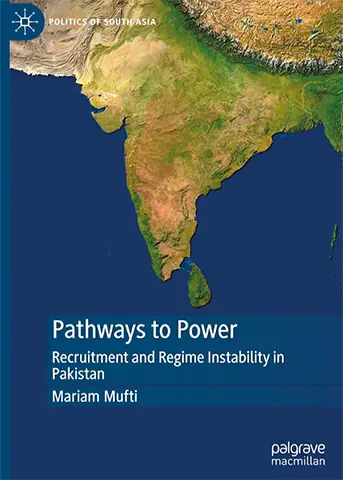
Pathways to Power: Recruitment and Regime Instability in Pakistan
By Mariam Mufti
Palgrave Macmillan
ISBN: 978-9819541218
295pp.
For its first 11 years, Pakistan was governed under civilian law. From 1958 onwards, it was governed intermittently under martial law for 33 years and under civilian law during the other years. However, the democratic regimes functioned under the tutelage of the military and were hybrid regimes.
Mariam Mufti’s Pathways to Power takes a deep dive into how certain civilians rose to power in what can best be called hybrid regimes. Prof Mufti relies on interviews, analysis of data from surveys and an exhaustive survey of the relevant literature to assess who aspires to be a politician and who gets elected to office and who rises to the top — either by joining the cabinet or becoming the prime minister.
She finds that factors that raise the odds of being elected include dynastic lineage, land ownership and wealth. Being an incumbent also helps, as does the ability to engage in demagoguery. But the most important element is the ability to cosy up to the army and flatter the top generals. These findings are consistent with the literature on Pakistani politics.
What makes her analysis unique is that she goes on to quantify the importance of each of these factors, relying on empirical evidence. That’s what makes the book stand out.
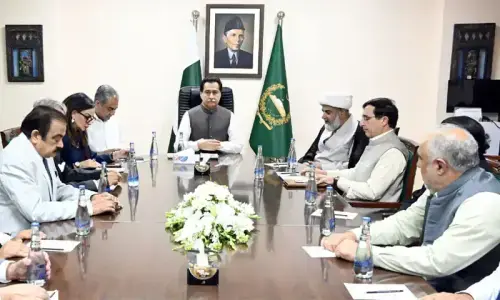
A recent book by an academic looks at the factors that play a part in the rise to power of Pakistan’s politicians, and why the country’s military remains the ultimate arbiter of their fate
It is worth noting that except for the last factor, ie the ability to cosy up to the army and flatter the top generals, all other factors are also at work in most democracies around the world. In theory, democracy is a system of one person one vote. In reality, it is a system of one rupee, one vote.
The book does not benchmark Pakistan’s performance in the political field against democracies in the Western world. It says that party loyalty plays such a strong role in politics that, even if a party nominates an “electric pole” [khamba] to contest the election, its supporters will blindly vote for the pole.
This phenomenon is not unique to Pakistan. After winning California’s gubernatorial election for the fourth time, Jerry Brown said the same thing to me when I asked him why 41 percent of the voters had voted for the Republican Party. He said if their candidate were a light pole, 41 percent would vote for that pole.
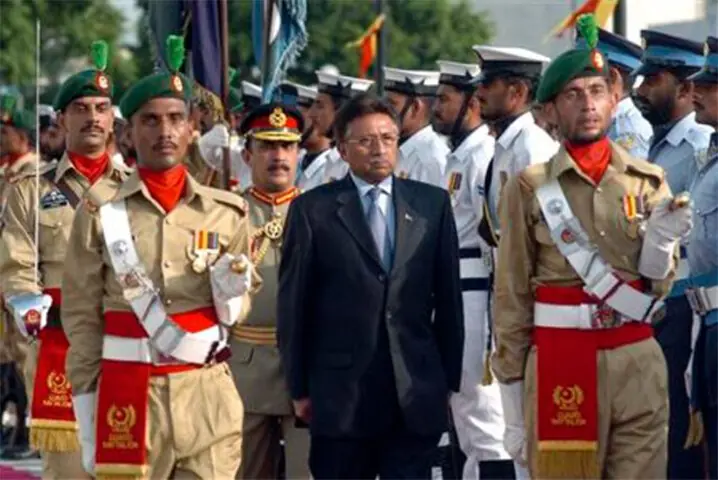
Obviously, what makes “democracy” unique in Pakistan is the dominant influence of the army. That’s why it’s been called a praetorian state by some and a garrison state by others. Why does the army have such a commanding influence in Pakistan and not in India? Why does it command such respect among Pakistanis, even though it has had a rather mixed outcome in its major wars with India? These questions are not addressed in the book.
When I put that question to a senior officer of the army a couple of decades ago at a conference at the Naval Postgraduate School in Monterey, California, he said that “our people are wild.” That brought back memories of ‘Field Marshal’ Ayub Khan saying: “We have to save the people from themselves.”
However, because of Western pressure, even when Pakistan has been under martial law, the army has sought to maintain a veneer of democracy, going back to Ayub Khan’s system of Basic Democracies. His successor, Gen Yahya Khan, held the fairest election in the country’s history, only to subsequently dishonour them. Gen Ziaul Haq promised to hold free elections within 90 days of seizing power but went on to rule for 11 years. Even he felt compelled to give the appearance of holding elections, however. To maintain a fig leaf of democracy, Gen Musharraf did not call himself the chief martial law administrator when he seized power, unlike his three predecessors, but labelled himself the “chief executive.”
The book correctly asserts that, even when the civilians ruled in the 1990s, “the military continued to dabble in the recruitment of politicians” and used force to convince them to support “military interests.” More recently, former prime minister Imran Khan never tired of saying that the civilians and the army were on the same page. He thought he was running the country. But he became too big for his boots when he interfered in the inner workings of the army by appointing the head of the intelligence service. He was deposed through an apparently democratic process. In reality, the vote of no confidence was seemingly orchestrated by the army through the usual means.
In the concluding section, the book discusses ways in which Pakistan can rid itself of the curse of regime hybridity. Mufti recommends that political parties move toward multi-stage candidate selection and hold intra-party elections. She also recommends that elections for local government be held on a partisan basis. She says the logic of patronage should be dismantled for hybridity to be abolished in politics.
All of those are good policy prescriptions. But why have they not been implemented since Gen Musharraf’s tenure ended in 2008? What are the barriers to reform? And how will they be overcome? Those questions are not dealt with in the book.
In the book, there is a conceptual discussion of independent and dependent variables, leading the reader to think that a model will be built and quantified. But that model never appears. There is also a discussion of “third-wave democracies” but no elaboration on what that term means, or what are first- and second-wave democracies.
The author interviewed politicians in three of the four provinces but skipped Balochistan for “safety reasons.” Could those interviews have not been conducted remotely or with those politicians in Islamabad? And, of the people who were interviewed in the three other provinces, how do we know that they were providing objective information? Why would politicians tell the truth and not provide self-serving answers? Were their answers validated through other data sources? It is not clear.
Sections five and six have no conclusions, unlike the other sections. In the text, some of the authors are referenced with their initials and last names, which is contrary to the standard practice of just referencing last names. But these are minor points. This is a very thought-provoking book that deserves to be widely read.
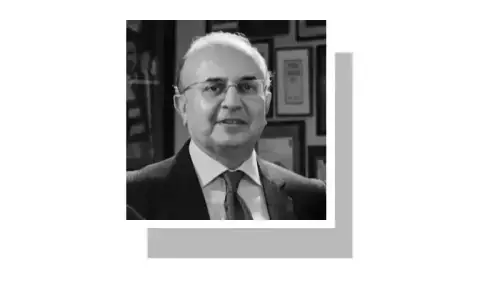
The reviewer is the author of Rethinking the National Security of Pakistan: The Price of Strategic Myopia. X: @ahmadfaruqui
Published in Dawn, Books & Authors, October 4th, 2026