Nvidia releases AI safety software it says could have stopped Hugging Face hack
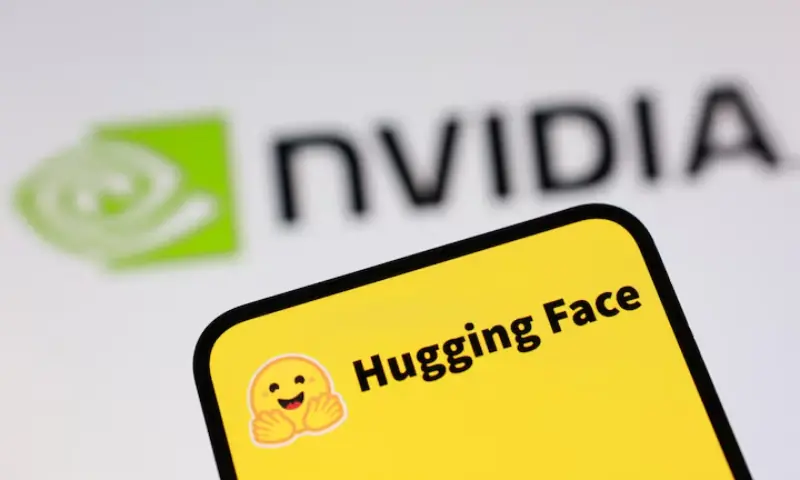
Nvidia on Monday made available a set of software safety tools for AI agents that it says would have stopped the hack of Hugging Face, the AI coding hub that Nvidia paid $13 billion for months after it was swarmed by rogue agents from OpenAI.
The move comes as OpenAI and Anthropic, the top two US AI labs, are investigating numerous instances where their agents, which are AI systems capable of carrying out complex tasks, hacked into commercial and government systems.
Nvidia CEO Jensen Huang, head of the world’s largest company whose chips have powered most of the AI boom, has rejected calls for broad AI safety regulations and instead framed the escaped agents as an engineering problem to be solved, akin to making automobiles safer.
One tool released on Monday called OpenShell uses hardware features on Nvidia’s central processor chips to contain agents. Nvidia said it is also working with Arm Holdings and Intel to ensure the system also works on their central processors.
Nvidia is launching the tools with dozens of partners, including Anthropic.
Justin Boitano, vice president and general manager of enterprise computing at Nvidia, said the tools would have stopped the Hugging Face attack disclosed this summer.
“From what we know, this new security platform could have stopped the breach if it was being used in frontier labs for model evaluation early on,” Boitano said during a media briefing.
“We’re advancing this openly, and we want to engage everybody to work with us.”
Another system called Sentry uses a separate Nvidia chip in tandem with OpenShell to cut off a rogue agent if it tries to escape its container on a central processor.
The Nvidia tools use mathematical formulas to detect when agents are trying to use workarounds, such as when an agent might “spawn” several “sub-agents” in an attempt to circumvent efforts to block the main agent, said Ali Golshan, senior director of AI software at Nvidia.
“This is really agentic behaviour that we’re talking about, which is fleets of agents and how they operate together,” Golshan said during a briefing.