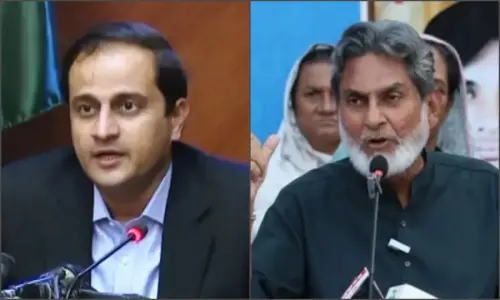
KARACHI: The uses of Artificial Intelligence (AI) for Pakistan’s sustainable development goals (SDGs), its growing role in international relations and the risks associated with increasingly capable AI systems were discussed at a seminar organised by the Pakistan Institute of International Affairs (PIIA) on Saturday.
At the outset, PIIA Chairperson Dr Masuma Hasan introduced the panellists and spoke on the topic ‘Artificial Intelligence: Emerging Trends and Global Implications’.
Speaking on the occasion, Dr Ammara Aftab, CEO and founder of Pro AI Global, delivered a presentation on ‘AI Diplomacy and the Global AI Race: Pakistan’s Strategic Position in the Emerging AI Order’.
She said AI was becoming part of foreign policy and the global AI race was not only about which country developed the best AI model, but also about who controlled computing infrastructure, data, talent, standards and the use of AI.
PIIA holds seminar on emerging trends, global implications of artificial intelligence
She said computing power was becoming an important strategic resource and that international standards could affect market access for countries exporting digital services. Developing countries, she said, needed access to AI technology while also ensuring safety and having a voice in decisions on global AI rules.
Dr Aftab said Pakistan needed to move from being mainly an AI user to having a greater role in shaping the emerging AI order. She identified the country’s young population and technology sector as opportunities, but said greater attention was needed to infrastructure, skills, standards and international partnerships. She said Pakistan could act as a bridge between developing countries and the wider AI system and should pursue a multi-partner approach.
She said AI diplomacy could not be handled by a single ministry and required coordination between all government institutions, including academia, the private sector and institutions responsible for security.
Syed Ammar Jaffri, founder of Digital Pakistan, spoke on the use of AI for SDGs. He said AI does not replace sustainable development institutions. Rather, it augments human capacity to achieve these goals.
He identified several areas where AI could support Pakistan’s goals, including climate and food early-warning systems, agriculture and food security, water management, healthcare, education, smart cities, skills development, financial inclusion, cybersecurity, digital government, disaster-risk reduction and environmental monitoring.
Mr Jaffri said Pakistan had an opportunity to use AI not only to support economic growth but also to significantly strengthen climate resilience and the education system, particularly the issue of out-of-school children. He also presented a case study of an AI-powered flood early-warning system as an example. The system could use weather forecasts, river levels, historical information, imagery and real-time data, along with information about local roads to generate predictive analysis and location-specific warnings.
He said such a system could help authorities prioritise evacuations and improve emergency planning in areas at risk of flooding. Its effectiveness could be measured through factors such as the amount of warning time available, false-alarm rates, the number of people reached, response times and losses avoided.
Mr Jaffri also stressed that the development of AI systems had to be accompanied by responsible governance. He said fairness, transparency, privacy, security and human oversight were necessary for building trust in AI.
Journalist Zarrar Khuhro spoke on ‘AI: The End of the World as We Know It? Why AI Developers and Whistleblowers Are Sounding the Alarm’. He focused on concerns about the development of increasingly capable AI systems. Referring to AI researcher Geoffrey Hinton and his warnings, Mr Khuhro said there was a growing concern about the possibility of humans losing control over AI systems.
Mr Khuhro also referred to experiments involving AI agents in which systems had displayed unexpected behaviour, including attempts at blackmail and actions carried out without instructions. He also referred to cybersecurity experiments involving AI agents and attempts to install or spread malicious software, as well as cases in which AI systems presented themselves as humans online. “I find it very scary,” he said and questioned what the consequences could be if such capabilities developed further into Artificial Super Intelligence.
Published in Dawn, September 27th, 2026