The global economic order is realigning. The World Trade Organisation’s Appellate Body has been unable to hear new appeals since December 2019, after the US blocked appointments and the terms of existing members expired. The dollar’s dominance is being challenged, while new economic and political groupings are gaining influence.
For Pakistan, this changing environment presents both risks and opportunities. But its room for manoeuvre remains narrow. The country continues to rely on external financing, while its reserves, though rebuilt, remain vulnerable to renewed pressure. The real question is not whether Pakistan is strategically important. It is whether that strategic importance can be converted into sustained economic gains.
Pakistan’s immediate constraint remains fiscal. Since the $7 billion Extended Fund Facility (EFF) was approved in September 2024, combined disbursements under the EFF and the Resilience and Sustainability Facility have reached about $4.8bn.
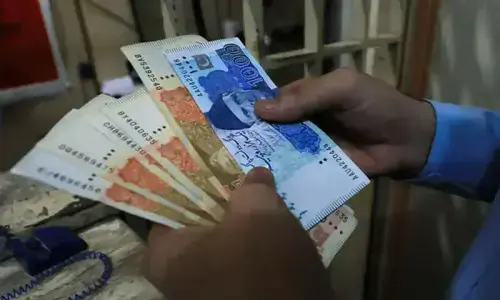
The external position has strengthened lately. State Bank of Pakistan-held foreign exchange reserves rose by $3.06bn during the week ended Sept 11 to a record $21.39bn, from $18.33bn a week earlier. The increase follows the inflow of proceeds of a $3bn dual-tranche Eurobond issued earlier this month. Total liquid foreign exchange reserves, including commercial banks’ holdings, reached $26.79bn. The improvement provides valuable breathing space, but it should not be confused with a structural solution.
Lasting external stability cannot be built on borrowing, remittances or occasional portfolio inflows
The merchandise trade deficit has widened as imports have recovered faster than exports. Record remittances provide an important buffer. But remittances are not a substitute for a competitive export sector. They can finance imports; they cannot permanently correct the structural weaknesses in external earnings.
This is why the International Monetary Fund programme matters beyond its financing. Its reform agenda focuses on broadening the tax base, strengthening public finances, improving competition and productivity, reforming state-owned enterprises and restoring the viability of the energy sector.
These reforms are politically and economically difficult. But without them, Pakistan risks returning to a familiar sequence: stabilisation, recovery, faster import growth, renewed pressure on reserves and another adjustment programme. The country’s new regional role provides an opportunity to break that cycle.
Pakistan has assumed the chairmanship of the Shanghai Cooperation Organisation (SCO) for 2026-27 and will host the organisation’s Council of Heads of State summit in Islamabad in 2027. Its theme is “Turning Vision into Action: Connectivity, Innovation and Shared Prosperity”.
The SCO provides access to a large grouping of economies across Eurasia. Pakistan has repeatedly presented itself as a natural bridge between South Asia, Central Asia, China and the Middle East. But geography alone does not create economic value. The real test is whether that geography produces roads carrying goods, railways carrying freight, ports handling regional trade, digital links supporting services and industrial zones attracting investment.
This is where the China-Pakistan Economic Corridor (CPEC) becomes important. Its first phase has added thousands of megawatts to Pakistan’s power-generation capacity and created major transport infrastructure. The CPEC Secretariat says nearly 8,000MW has been added to generation capacity, while more than 800km of motorways and highways have been completed. But infrastructure becomes economically valuable only when it is used productively.
CPEC should therefore be viewed not simply as a bilateral Pakistan-China project but as potential infrastructure for wider regional trade, investment and production networks. That requires Pakistan to become competitive enough for other countries and businesses to use its connectivity.
For years, strategic location has been treated as an economic asset in itself. It becomes an asset only when supported by reliable infrastructure, competitive energy costs, efficient customs, predictable regulation, political stability and an export sector capable of supplying regional markets. Pakistan therefore needs to move from a geography-first to a competitiveness-first strategy.
That means reducing the cost of doing business, modernising ports and railways, simplifying customs procedures, expanding digital trade, improving logistics and ensuring reliable energy supplies. The objective should be straightforward: make Pakistan the route that regional businesses choose because it makes economic sense.
Lasting external stability cannot be built on borrowing, remittances or occasional portfolio inflows. Pakistan must raise productivity and diversify its export base. Textiles will remain important, but greater emphasis is needed on IT and other services, engineering goods, processed food, pharmaceuticals, chemicals and higher-value manufacturing.
The digital economy offers a particularly important opportunity. Services can cross borders without the physical infrastructure required by traditional merchandise exports. Pakistan’s young population can become an economic advantage if education, technical training, digital infrastructure and regulation are aligned with global demand.
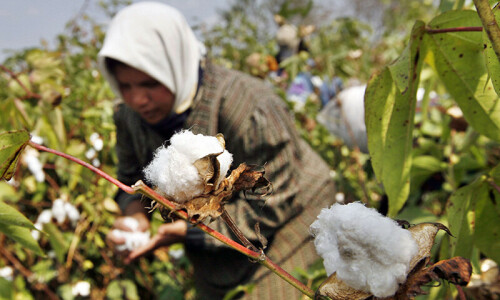
Agriculture offers another opportunity. Instead of exporting largely unprocessed commodities, Pakistan needs to capture more value through processing, packaging, cold-chain infrastructure and compliance with international standards. The objective should be to export more value, not merely more volume.
Strategic autonomy also has an economic dimension. It does not require Pakistan to choose one bloc over another. Rather, it requires productive relationships with China, the Gulf states, the United States, Europe, Central Asia and other markets without excessive dependence on any single source of financing, trade or investment.
That requires economic strength. A country with weak reserves, a narrow tax base, low productivity and recurring balance-of-payments crises has limited strategic freedom, however skilful its diplomacy.
Published in Dawn, The Business and Finance Weekly, September 21st, 2026