A small republic in every classroom
PAKISTAN is extraordinarily young. Two in every three of its people are under 30. The question is not whether Generation Z will change Pakistan. Demographically, it will. The question is whether it will be ready, and little in the way this country is arranged suggests it will.
Their task can be stated in a sentence. The Constitution of Pakistan on paper and the Constitution as it works on the ground are two different documents, and the distance between them is what this generation has to close.
I was 14 when martial law came and a young man when that general died. My generation learnt a dangerous lesson: power does not explain itself. The man who speaks out is transferred; the man who stays quiet is promoted; the judge who insists upon his independence is superseded. Caution, practised long enough, becomes accommodation, and accommodation becomes submission. We learnt to accommodate power.
Our institutions learnt it too. The courts found a doctrine for every occasion: revolutionary legality in 1958, necessity in 1977, validation in 2000. Havel wrote of the greengrocer who displayed a slogan he did not believe because it was safer. Parties became family enterprises; student unions were banned in 1984 and never restored. What we built governs without consent.
Pakistan’s next generation will not be formed by protest. It will be formed by argument, and the place to begin it already exists.
So what must this generation build first? Not a movement. Character.
I have watched men who stood fearlessly at the bar change after reaching the bench. Not suddenly, and not for money. The comfort of office begins quietly to weigh, and each surrender is called realistic. Character is what resists that, and character is built by exposure to lives larger than one’s own. That is what history, literature and poetry are for: to make suffering legible, so that conviction has something to rest upon.
But reading alone will not do it. What is read must be argued about, and the structure for that argument is already built, already funded and sitting idle. It is the university classroom.
Every class, in every discipline, should be run as a small republic, and the argument should be about the discipline itself. Let the law class argue whether a judgement was rightly decided, not merely what it held. Let the medical class argue triage, consent, and who receives the last bed in a public ward. Let the engineering class argue what was built, who paid, and who must live beside it. Let the business class argue what a wage ought to be, and whether a balance sheet that is lawful is therefore honest. Every syllabus buries such questions beneath what is examinable.
Let each class elect its office bearers, for a fixed term and with real duties. Let the elections be contested, and let students lose them, because losing an election and returning next week to sit beside the person who beat you is the most useful hour of civic instruction this country could offer. Let the dissenter be protected by rule, not by the goodwill of the majority. That is how a democratic mind is made: by being outvoted by someone you believe wrong, and having to work beside him afterwards.
Argue any of these questions honestly and it will not remain within its discipline. Ask an engineering class whether the dam should be built. The answer requires a lawyer on water rights, an economist on who bears the cost, a doctor on what happens downstream, and someone who has met the people being moved. A faculty can contain a syllabus; it cannot contain a real question. Memorisation keeps a student inside his discipline; argument drives him out. Debate and multidisciplinary education are not two reforms but one, and the first produces the second.
This is also where the politics lies. Our professions are organised as separate estates: a bar, a medical association, a chamber of commerce. Each can be managed on its own. What cannot be managed is a generation of doctors, engineers, lawyers and accountants who argued with one another at 20 and still take one another’s calls at 40.
Teaching without debate is not education. It is transmission. Education here needs revisiting at its root: less theory recited, more of it tested against the country outside. Take the law class to a district court, the medical class to a public ward at night, the engineering class to the settlement beside the project, the business class to the factory floor. Students must be made to feel Pakistan and its misery, not to read about it.
Imagine the young men and women such an education would prepare. The more grounded they are, the more effective they will be. A generation formed this way will not need to be told to push back against unelected power. It will be too many, too competent and too well connected to be governed without consent.
None of this arrives quickly. It takes two decades, the time between losing a class election at 20 and running a ministry or a court at 40. That is the honest horizon, and why the work must begin now.
Return, then, to the gap. On paper the Constitution is not in doubt: authority exercised through the chosen representatives of the people, rights that power may not violate, public power exercised for the common good. My generation learnt to live inside the distance between that page and this country. Look at what we have brought it to. Closing that distance is the work now left to theirs.
They must learn to hold power to account. It begins in a classroom, with an argument, and an election that somebody loses.
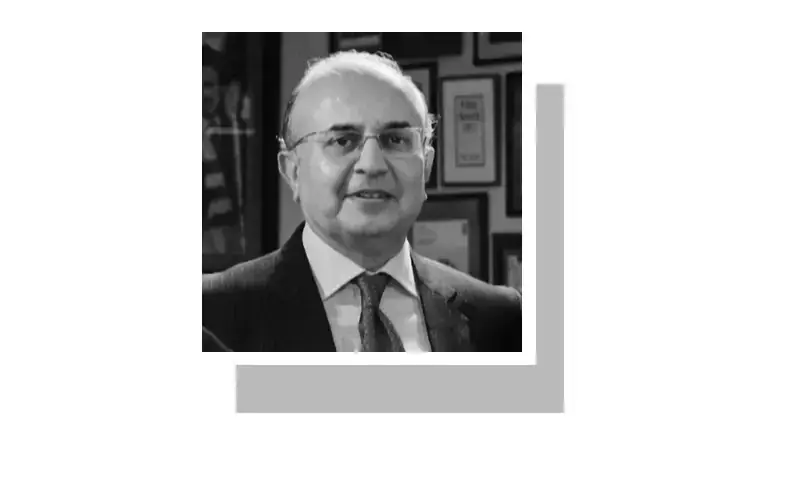
The writer is a former senior puisne judge of the Supreme Court of Pakistan. He holds the Distinguished Chair in Constitutionalism & Justice at the Shaikh Ahmad Hassan School of Law, Lums, and is currently a Distinguished Visiting Fellow at Yale University.
Published in Dawn, September 20th, 2026