JI says 'basic outline' of proposal for petroleum levy relief agreed upon during talks with govt
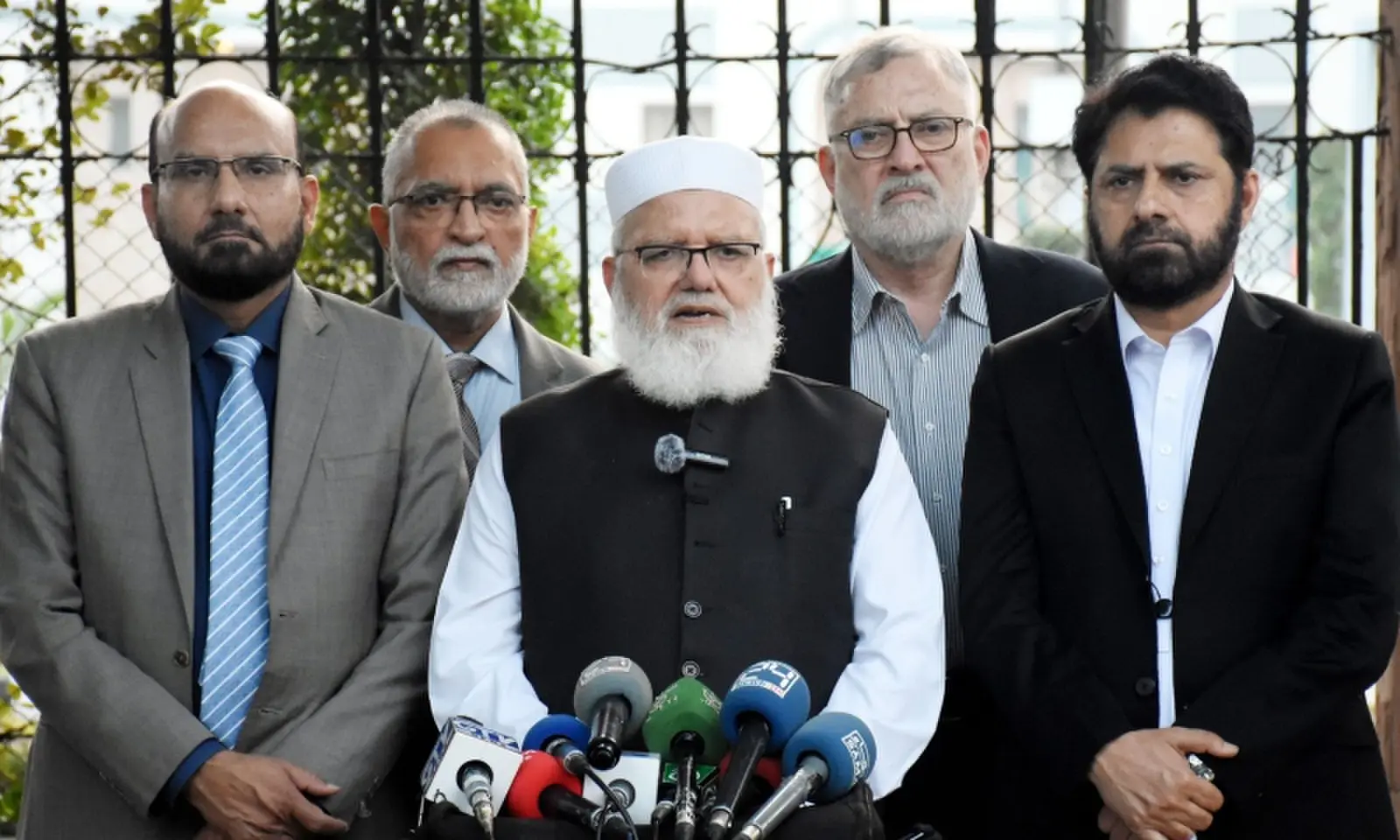
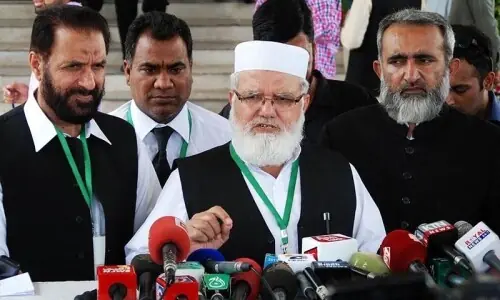
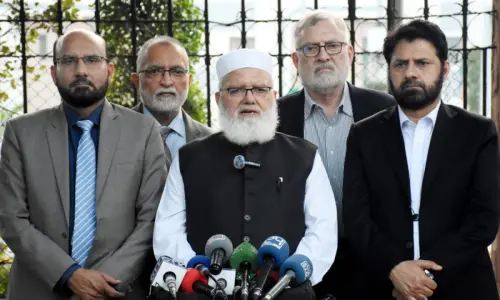
ISLAMABAD: Jamaat-i-Islami (JI) Vice Emir Liaqat Baloch said on Tuesday that the government and the party had agreed on the “basic outlines” of a proposed agreement as the two sides held their 10th round of negotiations on petroleum levy relief.
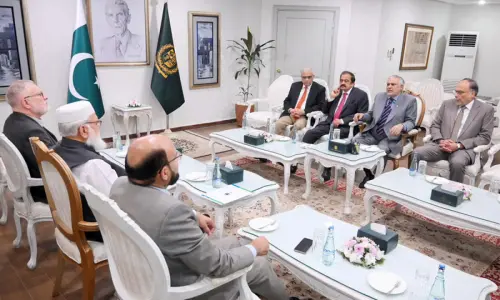
After a meeting with Prime Minister Shehbaz Sharif last month, both sides agreed to form a bipartisan committee to expand the government’s ongoing fuel relief scheme in response to JI’s demands for the abolition of the petroleum levy. The JI also warned of resuming its postponed march to Islamabad by mid-November if no relief was announced.
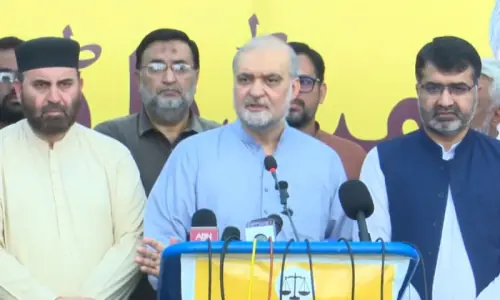
Speaking to the media after the talks at the Ministry of Foreign Affairs (MOFA), Baloch said a final decision was expected after a possible meeting between PM Shehbaz and JI chief Hafiz Naeemur Rehman, according to a statement issued by the party.
Baloch said the proposed meeting would involve detailed discussions before the agreement was finalised. He was accompanied by members of the JI negotiating committee, the statement added.
Baloch described Tuesday’s meeting as the “most important” round of negotiations yet, after previously held nine sessions and reiterated that securing relief remained the “central objective”.
According to the statement, the discussions focused on two key aspects — providing relief to consumers and reaching an agreement on measures to achieve that objective.
The JI added that the government had acknowledged the difficulties resulting from the regional conflict and that both sides agreed to expand and continue the existing relief package.
It was the government’s responsibility to negotiate with the International Monetary Fund (IMF) to ensure the continuation of relief measures, the statement quoted Baloch as saying.
The Fund has called for phasing out the fuel support scheme promptly, citing high cost and broad targeting.
During the meeting, the JI proposed extending the relief scheme to vehicles with engines of up to 1,000cc and the agriculture sector, including tractors. As per the statement, Baloch said the government also acknowledged that the demand for abolition of the petroleum levy was justified and could result in substantial relief for the public.
In Tuesday’s talks, the JI demanded “immediate and visible reductions” in petroleum prices, along with the abolition of the levy. The party also proposed a mechanism for phasing out the levy, the statement said.
The government promised to present a future course of action on the levy’s abolition while explaining its financial constraints, Baloch was quoted as saying.
Criticising the government’s economic priorities, Baloch said it was unwilling to curb lavish expenditure and non-development funds; meanwhile, the Federal Board of Revenue (FBR) had failed to meet its tax collection targets, the statement added.
He said the government was placing the burden of its “financial shortcomings onto ordinary citizens instead of reducing its own expenditure and improving revenue collection”.
As per the party statement, the negotiation process had reached “stage of final decisions”.
“The two sides had also worked on drafting the proposed agreement during Tuesday’s meeting,” the statement quoted Baloch as saying, adding that the party’s future course of action will depend on the government’s response, based on which it will decide whether to proceed with its proposed long march.
According to the JI statement, the party’s protest had helped prevent further increase in petroleum prices.
“The burden should not be placed on the people. The rulers must reduce their own expenditures and provide relief to consumers gradually,” Baloch was quoted as saying.
The JI would not continue negotiations indefinitely, the statement read, adding that “the party would walk away the day it felt talks no longer served any purpose.”
The talks so far
The JI has been demanding for over two months that the Centre abolish petroleum levies, as fuel prices have skyrocketed due to conflicts in the Middle East since March.
The Centre and JI agreed to form committees in early September — when the latter had planned a nationwide strike — to recommend measures to reduce the levy.
On Sept 20, the party launched a protest march towards Islamabad, warning that if the government failed to abolish the petroleum levy, the protest could turn into one to oust the government.
On Sept 22, the JI emir said his party, whose convoy had reached Multan, was postponing its long march at the request of PM Shehbaz, who had assured the other side of a meeting to discuss the matter.
When PM Shehbaz and Rehman finally met about a month later, they agreed to form a joint committee to recommend proposals for expanding the fuel relief scheme and for a phased reduction in the petroleum levy for the next budget.
On Nov 3, the two sides held “candid discussions” on practical measures to provide relief to low-income citizens from petroleum prices.
Speaking to media after the talks, Baloch said that JI had presented six proposals to the government to provide relief to the people.
“These included abolishing the petroleum levy, introducing a relief package, reducing public transport costs and extending relief to owners of vehicles above 800cc and the agricultural sector,” he said, noting that four key points were discussed.
Both sides agreed to continue their consultations over the coming days to formulate a way forward on energy pricing and public relief.