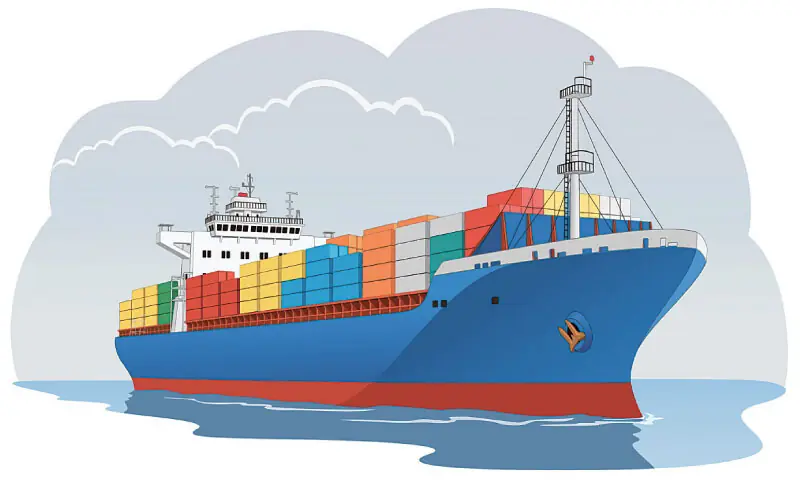
For Pakistan, maritime trade is a national economic lifeline. Energy supplies, imports and exports, industrial production and regional connectivity all depend on the uninterrupted functioning of the maritime and logistics system. However, the security environment around Pakistan is changing.
The question Pakistan must therefore ask is not simply whether its ports are secure, but whether its maritime economy can continue functioning when disruption occurs.
This was the central theme of the recent seminar, “Port Resilience & Maritime Stability in the Time of Regional Conflict”, organised at the Karachi Port Trust (KPT) Staff College in Karachi. The discussion highlighted the need for Pakistan to move beyond conventional port security towards a comprehensive national concept of maritime resilience.
Regional conflicts, disruption of shipping routes, geopolitical tensions, sanctions, cyber threats, energy insecurity and extreme weather events are demonstrating that a port can remain physically intact while the system around it becomes increasingly vulnerable.
This strategic opportunity matters as global supply chains are being reconsidered, and Pakistan’s location gives it an advantage
Resilience is fundamentally about alternatives. A resilient maritime system must be able to absorb disruption, maintain essential operations and recover quickly. That means alternative routes, alternative logistics arrangements, reliable infrastructure, digital systems that can withstand disruption and institutions capable of coordinating during a crisis.
Pakistan has a significant geographical advantage. Its Arabian Sea coastline provides access to international shipping, while its three principal ports, Karachi Port, Port Qasim and Gwadar, can provide strategic depth to the national economy.
But geography alone does not create resilience. These ports should increasingly be viewed as components of a single national maritime system. The concept of “Three Ports, One System” deserves serious consideration. Karachi, Port Qasim and Gwadar have different operational strengths and should complement rather than compete with one another.
If one gateway faces congestion, security concerns, energy disruption or temporary loss of capacity, the national system should have the ability to shift cargo and services elsewhere. This requires investment in inter-port connectivity, rail and road infrastructure, inland container depots, dry ports and multimodal logistics.
The vulnerability of regional transit trade provides another important lesson. Pakistan has historically been an important maritime gateway for Afghanistan and has the geographical potential to connect Central Asia with global markets. But prolonged disruption at border crossings has demonstrated how quickly cargo can become stranded and trade can move towards alternative corridors.
Pakistan therefore needs a transit architecture designed for continuity rather than crisis management. The effective implementation of the TIR system and the expansion of e-TIR can help create more secure, transparent and efficient corridors. Digital cargo tracking, modern customs procedures, predictable regulations and reduced discretionary intervention should become central components of the system.
AI and digitalisation can transform ports through better vessel planning, cargo optimisation, predictive maintenance, traffic management and supply chain coordination. But increased digital dependence creates another vulnerability.
A port does not necessarily need to be physically attacked to be disrupted. A cyberattack affecting operational systems, communications or cargo information can create serious consequences for the wider economy. Cyber resilience must therefore become an integral part of port resilience.
There is also a broader economic dimension. Pakistan’s maritime resilience should not be measured only by the capacity of its container terminals. It should include the country’s wider blue economy: shipping and fleet development, fisheries and aquaculture, shipbuilding and repair, ship recycling, maritime tourism, bunkering, marine services and the international employment of Pakistani seafarers. The opportunity is considerable.
Improving fisheries through cold chain infrastructure can increase export value. Developing commercial ship repair can encourage vessels to remain in Pakistan for services rather than merely cargo operations. Upgrading Gadani in line with international standards can strengthen Pakistan’s ship-recycling sector. Maritime tourism can create new economic activity along the country’s coastline.
Similarly, increasing the participation of Pakistani seafarers in the international maritime workforce can generate employment and foreign exchange while strengthening Pakistan’s maritime human capital. But none of this will happen automatically.
Resilience requires investment, policy consistency and institutional coordination. Government agencies, ports, shipping lines, terminal operators, logistics companies, customs authorities, academia and the private sector need to participate in designing the system.
This also requires a new approach to maritime education and professional development. The maritime professional of the future will need to understand much more than ships and cargo. Knowledge of artificial intelligence, cybersecurity, environmental regulation, supply-chain resilience, geopolitics, logistics and commercial decision-making will increasingly be essential. The KPT Staff College can play an important role in developing this capability by becoming a platform not only for training but also for strategic dialogue, scenario-based exercises and continuing professional development.
As global supply chains are being reconsidered, and businesses increasingly look for reliable alternatives, there is a strategic opportunity for Pakistan. The country’s location on the Arabian Sea gives it an advantage but geography is only the beginning. Infrastructure, connectivity, technology, governance, investment and human capital must convert that geographical advantage into national economic strength.
The writer is a maritime surveyor and consultant
Published in Dawn, The Business and Finance Weekly, September 14th, 2026