Senate body okays bill to regulate cosmetics
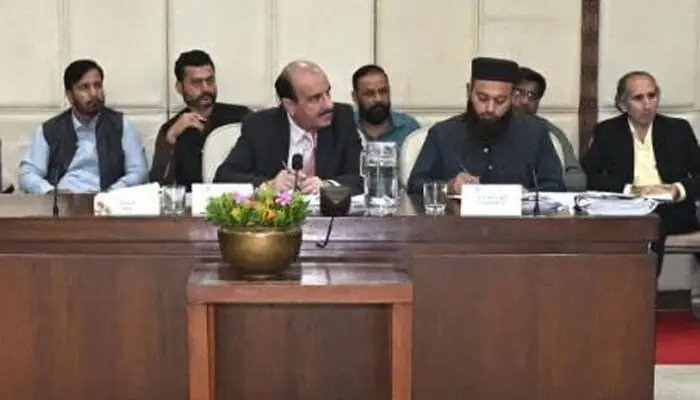
ISLAMABAD: The Senate Standing Committee on Science and Technology on Wednesday approved the Pakistan General Cosmetics Bill, 2026, with two amendments, while expressing concern over unsafe cosmetic products, prolonged water supply problems at the National University of Sciences and Technology (Nust) and untreated wastewater affecting the institution.
The meeting, chaired by Senator Kamil Ali Agha at Parliament House, also reviewed the Islamabad Capital Territory Food Safety (Amendment) Bill, 2025, and the issue of sea erosion in Sindh.
The committee was briefed on the proposed cosmetics legislation and the Pakistan General Cosmetics Regulatory Authority (PGCRA), established under the Pakistan General Cosmetics Act, 2023. It was informed that the federal cabinet had approved winding up the authority in January 2025, following which a committee constituted by the prime minister reviewed the matter and submitted its report.
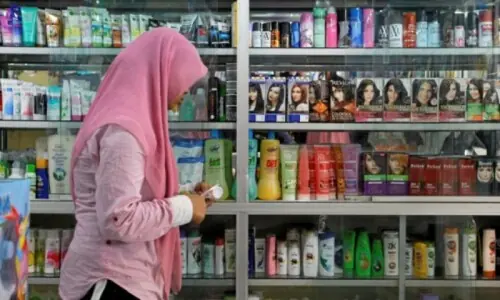
Senator Kamil Ali Agha stressed the need for an effective regulatory mechanism amid the growing use of cosmetics and the availability of unregulated and potentially harmful products.
He also raised concerns about the smuggling and informal trade of cosmetics entering the country through various channels without adequate regulatory checks.
The committee discussed the proposed regulatory framework’s relationship with the Drug Regulatory Authority of Pakistan (Drap), emphasising the need for clearly defined responsibilities and an effective system of checks and balances.
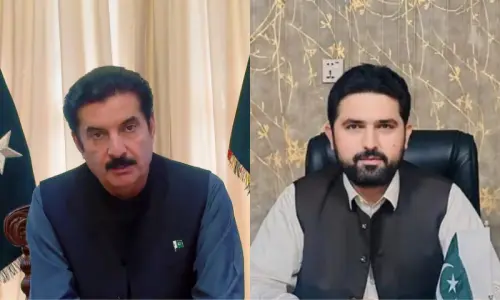
Federal Minister for Science and Technology Khalid Hussain Magsi said smuggling was a separate but related challenge and stressed that effective implementation of the legislation would be crucial to ensuring consumer safety. The committee subsequently approved the bill with two amendments.
Regarding Nust, officials told the committee that the university had paid Rs22 million to the Capital Development Authority (CDA) in 2005 for a three-million-gallon-per-day water supply pipeline from the Shah Allah Ditta reservoir, but the project remained incomplete because of encroachments and unresolved land issues.
Nust had also paid Rs18m in 2008 for a pipeline from the H-11 reservoir. Supply of 50,000 gallons per day began in January 2026 on the committee’s directions but was discontinued in June due to water shortages.
The chairman directed the authorities to expedite resolution of the land issue and explore the Shah Allah Ditta source as a sustainable option. He also asked officials to prepare a proposal enabling Nust to fund the required work from its own resources and complete it within six months.
The committee was informed that untreated wastewater from G-13 and H-13 passing through the Nust area was creating environmental problems due to the absence of a sewerage treatment plant. Nust had prepared Rs159 million PC-I for the project, while the CDA had imposed a Rs574 million penalty over construction undertaken without prior approval.
The committee recommended reviving its subcommittee, with Senator Afnanullah Khan as convener, to oversee implementation of earlier recommendations and resolve outstanding issues between Nust, CDA and the Federal Government Employees Housing Authority.
It also recommended that Nust conduct an in-house exercise to determine whether changes to its charter were required.
On the food safety bill, the committee discussed restrictions on the sale and consumption of energy drinks in and around educational institutions. It decided to forward proposed amendments to the relevant authorities and invite the interior ministry and food safety officials to its next meeting.
The committee also sought a research-based presentation on sea erosion in Sindh, including measures to address rising water levels and prevent further loss of land.
The chairman appreciated the ministry’s efforts to establish the Pak-Korea Solar Testing Lab. The ministry secretary said talks were also underway with Korean counterparts for establishing a facility to test solar batteries.
Published in Dawn, September 10th, 2026