Woman Unknown director challenges film industry inequality
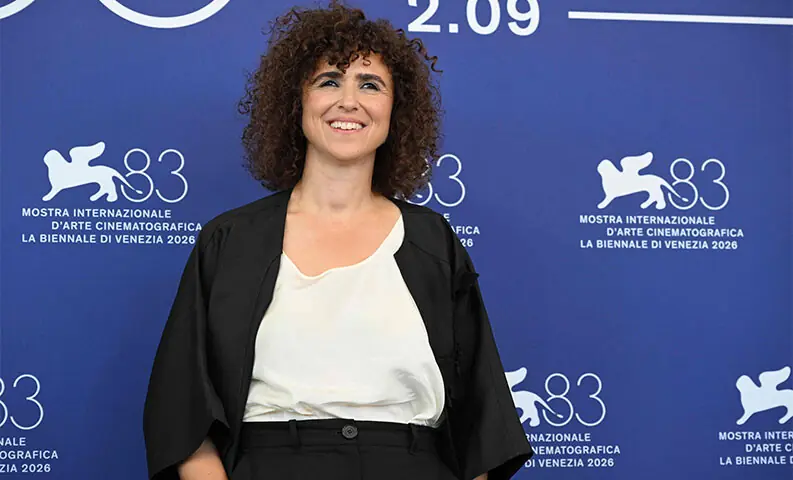
VENICE: The scarcity of women competing for the Venice Film Festival’s top prize reflects a structural problem in the film industry, Danish director May el-Toukhy said on Sunday as she unveiled her gritty drama Woman Unknown.
El-Toukhy is the only woman directing a fiction film among the 21 contenders for the Golden Lion. Just one other competition entry, a documentary, has a female co-director, fuelling debate about women’s representation in cinema.
“It is a structural problem, and it’s a structural problem that I have encountered throughout my own career,” the Danish-Egyptian filmmaker told a news conference ahead of the premiere of her latest movie.
“It was very, very hard to get my first film done after graduating from film school. I think it took me six or seven years, whereas my male peers were much faster than me.”
Festival director Alberto Barbera has defended this year’s line-up, noting that women directed just 24pc of submitted films, down from 30pc a year earlier, and saying selection decisions were based on artistic quality.
El-Toukhy said securing financing remained more difficult for women directors, affecting everything from budgets to casting opportunities and, ultimately, a film’s chances of reaching major festivals.
Invisibility of women
Set in the aftermath of World War Two, Woman Unknown follows Marie, a Danish housemaid preparing to marry her wealthy employer when a past relationship with a German soldier threatens to destroy her future.
The film unfolds against the backdrop of a newly liberated Denmark, where women accused of fraternising with occupying German forces were often subjected to public humiliation and vigilante justice. El-Toukhy said the story’s themes echoed her comments about representation.
“My film is about the invisibility of women,” she said. “It’s about being objectified on one hand and on the other hand being unseen and voiceless.” While grateful for the attention generated by her presence in competition, she said she would prefer to be joined by more female filmmakers.
“Of course, I would love to have more female colleagues in competition beside me,” she said. “After MeToo, all of us were really aware of this gender imbalance, and something has happened over the course of the last couple of years where we’re kind of returning to what it used to be.”
Actor Mathilde Arcel, who plays Marie, said the film shed light on women who carried the stigma of wartime relationships for decades. “There are women who never even told their families that they experienced these things,” she said. “Even today, when Denmark celebrates Liberation Day, some are still afraid and still ashamed.”
Published in Dawn, September 7th, 2026