Korean heritage delegation visits Taxila
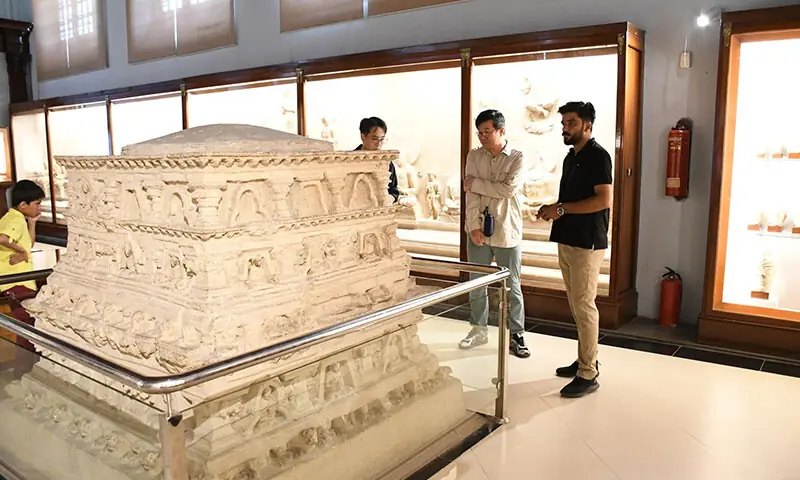
TAXILA: A Korean heritage delegation walked through the timeless ruins of Taxila and Sirkap, retracing the glorious footsteps of the Gandhara civilisation and witnessing a cultural legacy that once transformed this historic land into a centre of learning, faith, art and human civilisation.
Kim Younwook, Director General of the Korea Heritage Agency, along with Jeon Bumhuan, Project Manager of the Official Development Assistance (ODA) Project, visited Taxila Museum and the ancient archaeological remains of Sirkap, immersing themselves in the archaeological and cultural heritage of one of South Asia’s most historically significant regions.
The delegation was received and briefed by Deputy Director of the Department of Archaeology Muhammad Aasim Dogar, who introduced the visitors to the historical treasures preserved at the museum and explained the wider archaeological importance of Taxila.
Inside Taxila Museum, the visitors encountered a priceless gallery of antiquity, including sculptures, architectural fragments, coins, pottery and other archaeological treasures bearing testimony to the cultural flowering of the Gandhara region.
Officials explained that each artifact represents a fragment of a civilisation in which diverse cultures, traditions and artistic influences converged, leaving behind a distinctive Gandharan artistic tradition whose influence travelled far beyond the boundaries of the ancient Taxila Valley.
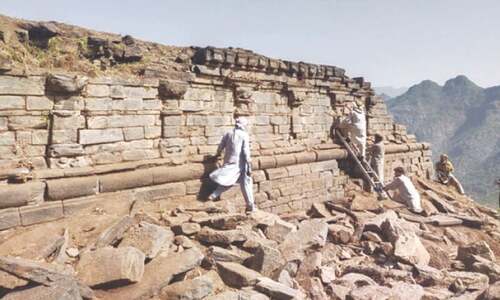
The delegation then proceeded to Sirkap, where the silence of the ancient ruins continues to preserve memories of a remarkable past.
Spread across the archaeological landscape, the remains of Sirkap offer a glimpse into an ancient urban civilisation. Its streets, structures and surviving architectural remains stand as enduring witnesses to Taxila’s position as a crossroads where peoples, ideas, religions and artistic traditions met and flourished.
For centuries, the Taxila Valley remained a meeting ground of civilisations. The region witnessed the passage and interaction of Achaemenian, Greek, Mauryan, Indo-Greek, Scythian, Parthian and Kushan traditions, while Buddhism flourished and Gandharan art reached extraordinary heights.
Against the magnificent historical backdrop, the visit of the Korean heritage officials assumed particular significance, offering more than a routine tour of archaeological remains.
The visitors were briefed on the archaeological significance of Sirkap and the importance of protecting its surviving remains for future generations. Their visit also highlighted the relevance of international cooperation in safeguarding archaeological treasures that belong not only to a particular country or civilisation but also form part of the collective heritage of humanity.
Published in Dawn, September 7th, 2026