Punjab issues guidelines for police as flood threat remains high
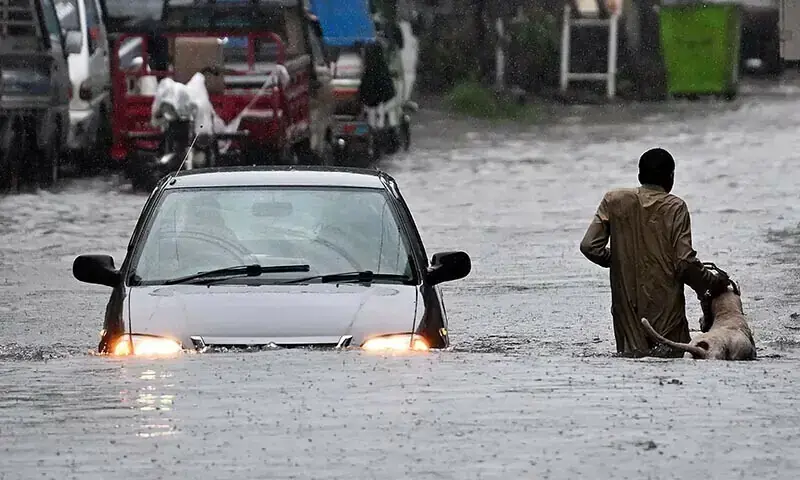
RAWALPINDI: As the threat of floods still remains high mainly due to expected heavy rainfall, the Punjab government has issued guidelines to the police and district administration to ensure safety of human lives, livestock, timely evacuation from vulnerable areas, protection of vital installations and maintenance of law and order and prevent crime in flood-affected areas.
Under the guideline, the police across the province should ensure law and order and take preventive measures to control theft, looting, burglary, cattle theft, robbery, harassment, fraud, illegal occupation of evacuated houses and exploitation of affected families.
In addition, effective patrolling can be arranged in evacuated and partially evacuated localities.
All key installations, including barrages, bridges, embankments, grid stations, hospitals, police stations, government buildings, warehouses, communication towers, water supply schemes and other critical infrastructure shall be safeguarded. Sensitive points shall be identified and security arrangements shall be made accordingly.
Key installations, including barrages, bridges, grid stations, hospitals, govt buildings, shall be safeguarded
All concerned police personnel shall be briefed about their duties, deployment points and emergency response procedures.
Police control rooms shall be established at the district level with wireless, telephone and Internet facilities, duty staff and updated contact directories of all stakeholders. These control rooms shall function round the clock during flood alerts and ensure prompt receipt, verification and dissemination of information.
Police shall prevent panic, disorder, road blockage, forced entry into restricted areas and any attempt to exploit the emergency situation. Effective patrolling shall be arranged in evacuated and partially evacuated localities.
All police stations, especially those located near rivers, canals, hill torrents, nallahs and low-lying areas have been directed to prepare a list of vulnerable points and flood-prone settlements. These locations shall be physically visited by the officials concerned.
And all SDPOs/SHOs in coordination with revenue and irrigation staff will assess ground risks, evacuation requirements and availability of flood-fighting equipment.
All necessary flood-fighting equipment, vehicles, boats, life jackets, ropes, searchlights, raincoats, first-aid kits, dozers, excavators, generators and other emergency tools shall be checked and kept available in an operational condition.
Any deficiency in equipment shall immediately be brought to the notice of the district administration for timely action.
All machinery, vehicles, boats, communication sets, generators and emergency equipment shall be tested in advance. Damaged, non-functional or outdated equipment shall be repaired, replaced or arranged through the concerned departments before the onset of any emergency situation.
The requirement of trained staff, boat operators, drivers, wireless operators, rescue assistants and police personnel for flood duty shall be worked out in advance. Where additional workforce, volunteers or private resources are required, necessary arrangements shall be finalised with proper backup plans.
Wireless systems and control rooms established by the Irrigation Department shall be linked with the police control rooms for timely exchange of information regarding water levels, breaches, expected flood flow and possible danger points.
Police reserves shall be identified and kept on a standby for vulnerable points, evacuation routes, relief camps, embankments, bridges, barrages, public buildings and sensitive installations. Reserve deployment shall be flexible and capable of quick movement according to the ground situation.
Leave during the flood season shall not be granted to essential staff except in extreme emergencies. DPOs shall ensure the availability of adequate police strength for emergency response, control room duty, camp security, patrolling, traffic management and rescue assistance.
Under the guideline, the district police shall assist the civil administration in timely evacuation of people from flood-prone areas. Special attention shall be given to women, children, elderly persons, persons with disabilities, patients and livestock owners. Evacuation routes shall be kept clear, secure and properly guided by police personnel.
DPOs shall coordinate with DCs for provision of transport, escort and police squad during transportation, storage and distribution of relief goods. Police shall ensure that relief items are safely transported and distributed in an orderly manner without theft, mismanagement or disturbance.
Police shall prevent panic, disorder, road blockage, forced entry into restricted areas and any attempt to exploit the emergency situation.
Police shall provide security cover to rescue teams, health teams, livestock teams, district administration officials, volunteers and machinery deployed for rescue or embankment protection. Unnecessary public gatherings near dangerous points shall be discouraged.
All divisional police chiefs shall personally supervise flood preparedness in their respective regions, while the DPOs shall ensure physical verification of arrangements at vulnerable points and relief camp sites. The SDPOs and SHOS shall remain in the field and shall be responsible for timely response within their respective jurisdictions.
Published in Dawn, September 5th, 2026