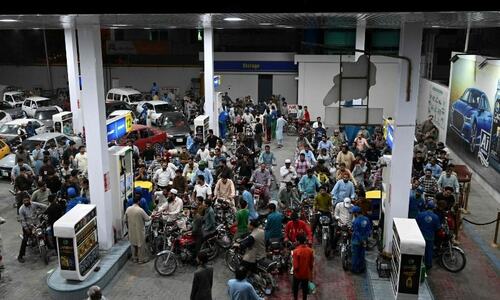

PAKISTAN’S transition to electric mobility is stalling not for want of ambition but consistency. The government’s plan for 30pc EV penetration within five years, meant to save $4.5bn annually on fuel imports, sits uneasily alongside a policy environment that sends mixed signals to investors, manufacturers, auto parts makers and consumers alike. Oil marketing companies, which should be natural partners in building the charging infrastructure needed, keep pouring capital into conventional retail expansion. The absence of investment in charging infrastructure reflects where OMCs expect the money to keep flowing. Their decision is shaped directly by what government policy signals, or does not signal, about the future. With different lobbies trying to influence the upcoming auto policy, the government has delayed its announcement, creating more market uncertainty.
The situation is not unique to Pakistan, but our history of policy reversals gives such lobbying particular traction. Consumers remember. Investors remember. This is one of the biggest obstacles to EV adoption: nobody wants to bet on infrastructure or vehicle purchases when the policy underpinning them could be reversed many times in its five-year life. The way out is not to pick winners indefinitely but to be clear about which winner is being picked, and for how long. Electric mobility deserves front-loaded fiscal support: import duty concessions on batteries and EV components, purchase incentives for consumers, and preferential tax treatment that make the total cost of ownership competitive with conventional ICE and hybrid technologies. But even incentives for EVs should have a sunset date and be linked to the manufacturers’ localisation effort. This is standard practice in every successful EV market. Beyond that specific push for electrification, policy should stop playing referee between technologies. Whatever comes next should compete on its own economic and environmental merit rather than on whoever has the better lobbyist in Islamabad. A technology-neutral framework beyond the EV push would strip entrenched players of their lobbying incentive, letting markets decide which non-EV technologies survive. Charging infrastructure will follow this transition, not lead it. OMCs will not sink capital into charging networks ahead of demand — that misreads how the industry allocates money. Push EV sales past a threshold, and charging becomes commercially rational on its own.
Published in Dawn, September 1st, 2026