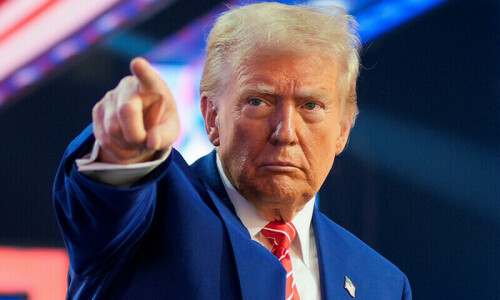
Trump votes by mail after calling ballots ‘inherently corrupt’
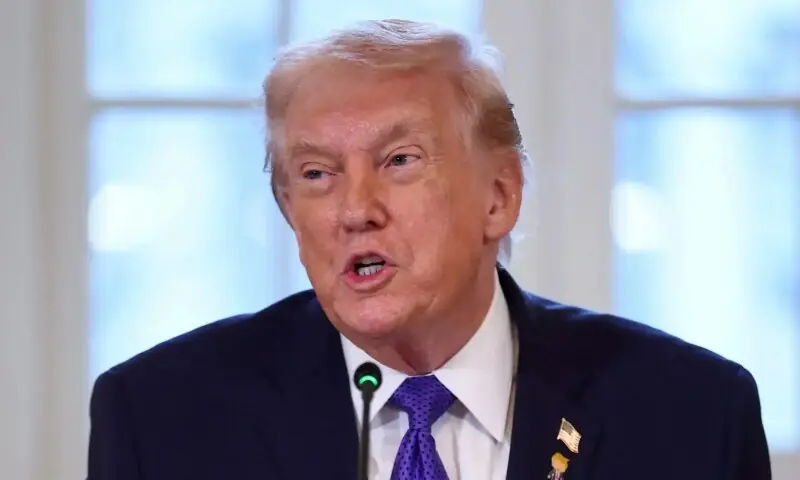
WASHINGTON: US President Donald Trump voted by mail in Florida’s Republican primary on Tuesday despite repeatedly denouncing the practice as corrupt and pushing to restrict its use ahead of November’s midterm elections.
Palm Beach County voting records cited by US media show Trump requested a ballot in late July and returned it last week for the contests in his adopted home state.
Trump has for years claimed without evidence that mail-in voting is highly vulnerable to fraud, repeatedly linking it to his false assertion that the 2020 presidential election was stolen from him.
“Mail-in ballots are inherently corrupt,” he said during a July speech on election security. The White House said there was no contradiction because Trump was away from Florida, pointing to exceptions in legislation that the president has been pushing to restrict the practice.
“As President Trump has said, the SAVE America Act has commonsense exceptions for Americans to use mail-in ballots for illness, disability, military, or travel — but universal mail-in voting should not be allowed because it’s highly susceptible to fraud,” White House spokeswoman Olivia Wales said.
“As everyone knows, the president is a resident of Palm Beach and participates in Florida elections, but he obviously primarily lives at the White House in Washington DC. This is a non-story,” she said.
White House officials say Trump has not been in the Sunshine State for months.
Florida law allows any eligible registered voter to request a mail ballot, although the Republican-controlled state has tightened identification and ballot-handling rules in recent years.
Trump has meanwhile pressed Congress to pass the SAVE America Act, which would impose tougher identification and citizenship requirements and sharply restrict mail voting, while his administration is also asking the Supreme Court to revive parts of an executive order on election procedures blocked by lower courts. It is not the first time Trump has used a system he regularly attacks.
He voted by mail in Palm Beach County in 2020 and again during a Florida special election earlier this year. After the latter vote, Trump defended doing so while away from the state but reiterated his broader opposition.
“No, I think mail-in voting is a terrible thing,” he said. “I think if you vote, you should go.” The Florida primary includes the Republican contest to succeed term-limited Governor Ron DeSantis, with Trump backing congressman Byron Donalds.
Politico reported on Monday that Trump voted by mail in Florida’s Republican primary, citing local voting records. Palm Beach County’s election office said that information regarding a voter’s vote-by-mail is confidential.
Published in Dawn, August 19th, 2026