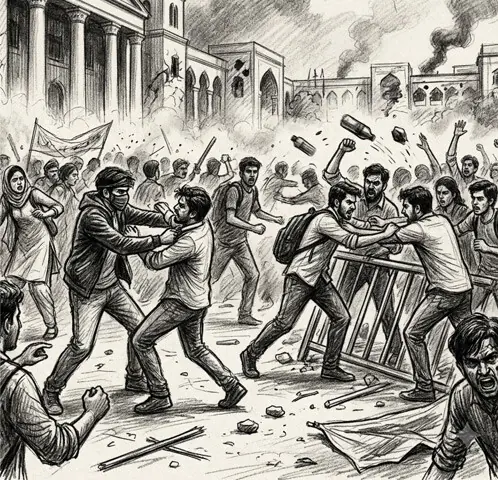
THE recent unrest owing to violent acts by student groups at the University of Karachi has once again sparked a debate that never seems to go away: do politicised student groups give students the voice they deserve, or do they open the door to conflict on campuses? Universities are more than classrooms and exams. They are places where young people learn to think independently, take responsibility and prepare for life beyond graduation. Student groups, when they work as they should, give students a chance to speak up about issues that affect them and to engage with university administrations in a constructive way.
Campuses in Pakistan have witnessed periods when student politics became overshadowed by external influences, resulting in violent clashes that disrupted academic life. Those memories still shape how many people view student groups today. Student representation and campus discipline are not mutually exclusive; they can go hand in hand when there is a shared commitment to peaceful dialogue. The recent events at the University of Karachi should once again serve as a reminder that communication is always better than confrontation. Universities thrive when students feel heard, administrations remain open to dialogue, and disagreements are resolved through discussion rather than disruption.
Student groups should never become a source of fear, division or violent acts. They should be a platform for constructive engagement, responsible leadership and meaningful participation. When that balance is achieved, they can strengthen universities instead of weakening them.
Marrium Khan
Karachi
Published in Dawn, August 18th, 2026