THE State Bank governor’s optimistic assessment of the economy must be seen in the context of the reality hidden beneath the headline numbers. While progressing from stabilisation to sustainable growth is critical, the transition is still in its early stages.
Mr Jameel Ahmad expects GDP growth to accelerate from 3.7pc in the last fiscal to between 3.5pc and 4.5pc in the current year, with the economy benefiting from greater discipline. Yet the range itself is revealing: at the lower end, growth would be actually slow. Even 4.5pc represents only a modest recovery for an economy with a rapidly expanding population, growing underemployment and unmet investment needs. Neither has stabilisation produced the necessary conditions for durable economic expansion.
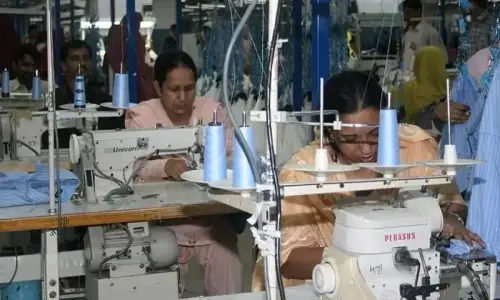
The recent improvement rests heavily on restrained demand, tighter fiscal management, subdued imports and an improved external position due to debt rollovers and borrowings. These may be essential for stability, but they do not constitute a growth strategy. Sustainable growth requires stronger productivity, more private investment, expanding exports and investor-friendly reforms.
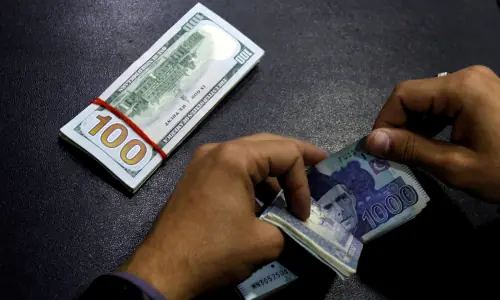
Mr Ahmad’s reference to record remittances should be treated with caution. Remittances exceeding $41bn in FY26 and potentially reaching $44bn this year are providing crucial support to the external account. But remittances are household transfers, not a substitute for export competitiveness or FDI. An economy cannot sustainably finance its development ambitions by relying just on the earnings of its citizens abroad. Additionally, the expectation that reserves will exceed $21bn is encouraging, but accumulation must be accompanied by a stronger capacity to earn foreign exchange.
Otherwise, the cycle of reserve rebuilding followed by another external financing crunch will return. Inflation averaging 7.1pc is also an important gain. Yet keeping inflation within the 5-7pc target demands more than monetary restraint. Food, energy and administered prices remain vulnerable to supply disruptions, exchange rate pressures, global commodity shocks and regional crises. Monetary policy can contain demand-driven inflation but it cannot solve structural weaknesses in agriculture, energy or supply chains. Meanwhile, the modernisation of the digital payment system is a useful step towards financial efficiency. But the system’s infrastructure is an enabler rather than an engine of growth.
The big challenge, therefore, is to prevent stabilisation from becoming an end in itself. Pakistan has repeatedly achieved temporary macroeconomic stability, only to watch it unravel when growth accelerates through imports, fiscal slippages and external borrowing. This time, the test is whether the economy’s productive capacity can be expanded without exposure to those vulnerabilities. The journey from stabilisation to sustainable growth will be completed when repeated cycles of borrowing, harsh adjustments and crisis management become a thing of the past.
Published in Dawn, August 17th, 2026