WHO decries impunity after 10,000 attacks on healthcare
GENEVA: The World Health Organisation said on Friday that more than 10,000 attacks on healthcare had been recorded since 2018 — but nobody has ever been brought to justice.
These attacks, reported across 29 countries and territories, have resulted in approximately 5,700 deaths and 8,500 injuries, the WHO said.
WHO chief Tedros Adhanom Ghebreyesus repeatedly states that healthcare should never be a target.
The WHO verifies and records attacks on healthcare but does not attribute blame as it is not an investigation agency.
Ukraine, Lebanon and Palestinian territories account for majority of incidents
Altaf Musani, the director of the WHO’s humanitarian and disaster management unit, who presented the figures at a media briefing in Geneva, said accountability could take place not just at the national level.
Health facilities and the health system at large fall under the protection of international humanitarian and rights law, and are protected by certain Geneva Conventions, he said.
However, “of the more than 10,000 verified incidents that I spoke of, not a single one has entered the accountability system”.
This year alone, the UN health agency has recorded 914 attacks, resulting in 911 deaths and 1,486 injuries, Musani said.
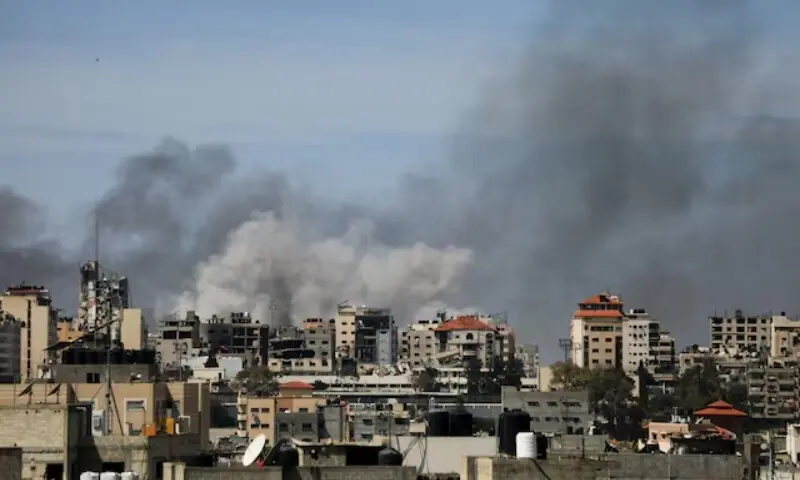
Ukraine, Lebanon and the Palestinian territories account for the majority of incidents in 2026. Other incidents were reported from Myanmar, Iran, Sudan, the Democratic Republic of Congo, South Sudan, Russia, Syria and Nigeria.
Musani said attacks with heavy weapons were by far the most frequently reported type of attack this year, followed by obstruction of healthcare and psychological violence.
There have been 44 reported incidents involving the abduction, arrest or detention of health workers and patients, affecting 148 individuals.
Long-lasting impact
“When a hospital is attacked, the impact is not only on the people inside that hospital that day,” Musani said.
“It is the patient who cannot receive care tomorrow, the ambulance that cannot make its next referral, the health worker who cannot return to work, or the medicine supply that can no longer reach other facilities.”
He said that all 36 hospitals in the Gaza Strip had sustained damage by the end of 2025.
Published in Dawn, August 15th, 2026