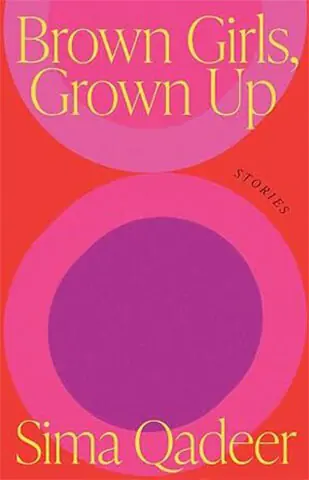
Brown Girls, Grown Up
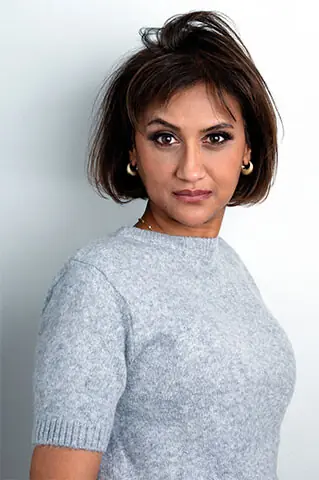
By Sima Qadeer
Curbstone Books
ISBN: 979-8-89948-032-4
264pp.
There is a particular kind of fiction that mistakes explanation for insight and narrates culture similar to the way guidebooks often narrate cities. Sima Qadeer’s collection of short stories, Brown Girls, Grown Up, does the opposite of this.
Her writing style is incisive and leaves room for the reader to reach their own conclusions. Her work explores the many internal shifts that women experience as they juggle roles that they are expected to play. They are mothers, wives, daughters and sisters all at once. The unifying factor in these roles is not any sort of identity crisis but a quieter and relentless weight of responsibilities.
The most prominent feature of Qadeer’s stories is her protagonists. They are vibrant, modern women facing the challenges of everyday lives. Like her, they are also Pakistani-Canadian, raised in a world different to the one their parents grew up in. Unlike their parents, for them, Canada is not an adopted country. Qadeer makes this distinction clearly, and allows her readers to understand that these women don’t think of themselves as outsiders.
The ‘othering’ — the act of making someone feel like an alien — is an external event, not an internal condition. This is because, here, the female protagonists feel at home in Canada — it is other people’s perceptions that make them feel like strangers in a place where they already belong.
A debut collection of incisive short stories by a Pakistani-Canadian author focuses on women negotiating identity, relationships and the expectations that shape their lives
Take the case of Amira in ‘Feeling Good Vibrations’, who grapples with her own insecurities as she finds herself befriended at a therapy course by Celine, an almost otherworldly, beautiful and confident woman. Amira feels ‘seen’ as she and Celine — two women from completely different backgrounds — bond over the overwhelming demands of children and family life. Celine is an “urban-hipster Toronto mom.” She is everything Amira is not — effortlessly confident and a product of her white, suburban privilege. Amira lulls herself into believing that their friendship has meaning. She describes feeling validated as the two women find common ground.
It doesn’t last long, though and she discovers this the hard way: “At what point, Amira wondered, did privilege and ignorance intersect and transform into wilful racism?” Qadeer is precise and direct, forcing the reader to pause and feel Amira’s discomfort. A passing remark, the retelling of an anecdote peppered with normalised stereotyping and racism is a moment of instant connection for anyone who has experienced being treated as an outsider.
‘Tell the Truth and Shame the Devil’ is Rehana’s post-mortem of a life lived within the throes of guilt, shame and regret. “We carry shame differently… You can’t lump all shame together… The shame of a white woman at not feeling pretty enough is not the same as the shame that comes from being told that you will never be pretty because of the colour of your skin. You can change how you look. But you can’t change the colour of your skin.” Qadeer’s words are a powerful reminder of the weight carried by South Asian women who are made to feel isolated in their relationships and their surroundings by offhand remarks and the expectations of a deeply flawed society.
Hanna in ‘Love Me a Coconut’ grapples with the unique challenges that come with raising biracial children. “My half-Pakistani daughter didn’t recognise the brown she was also painted with, what it meant to be a female of colour, how her ancestors had carried her legacy long before she was born, that she had a mother who would never be pink like her.” With great sensitivity and nuance, Qadeer describes the dynamics of an inter-faith marriage and the accompanying baggage it brings.
A deeply poignant conversation underlines the importance of a stable childhood, during which parents instil confidence within their child and prioritise their welfare without holding on to unrealistic expectations. In this short story, Qadeer shows her readers the difference between two women, each of whom experienced different childhoods and how they impact their adult lives.
Qadeer writes about domesticity not always as a comfort or constraint but as a slow erosion, and the disconnect it leaves behind as the woman searches for herself in the midst of running mundane errands. In ‘Shakey Fakey, Okay, Lady’, Sabira carries out a forensic audit of her marriage as she faces the prospect of a divorce that has been suggested by her husband. She realises that the marriage had been over for some time. Complacency had hollowed it out gradually, leaving no room for mourning.
Similarly, in ‘Gelatin’, Inaya and Greg also find themselves at a crossroads in their marriage. Inaya has done it all — the coveted list any South Asian family would be proud to see their daughter tick off: multiple degrees, marriage and children. However, she still finds herself blunted by a lack of purpose, feeling invisible in her marriage. Qadeer slows down the pace of the narrative to mirror Inaya’s increasing disassociation from her relationship and the fading away of any real sense of intimacy.
In the midst of this fog, Qadeer introduces Soraya, Inaya’s confidante and older sister. There is something to be said about her depiction of the South Asian older sister: the voice of reason, carrier of burdens and truthsayer. The South Asian older sister is a breed unto herself: often overlooked and perpetually under stress as she tries to steer her younger siblings towards calmer shores and finds herself as the designated parent.
Qadeer’s Soraya hits home when she writes, “You were the youngest and you never learned about responsibility. What it takes to stick with something even when it’s not ideal. Very few people have ideal. Why do you get to sit back and cry that it didn’t work out for you? We all have to reckon with reality. It doesn’t mean we abandon our lives.” Soraya’s frustration is palpable and leaps off the page.
Qadeer’s intuitive and judicious use of language is one of the driving forces behind each story’s narrative. She is irreverent and audaciously funny when she needs to be. In ‘Momxiety’, Yasmeen knows the stakes are high as she navigates the tumultuous terrain of school backyard politics. Finding the right clique and being accepted by them is the source of what she calls “Social PTSD”, an experience most mothers can relate to.
Sima Qadeer’s collection sheds light on the daily battles that women fight with themselves, as they renegotiate the terms of their individuality. She doesn’t fixate upon the grammar of suffering, nor does she undermine it. She relates the lived experience of second-generation Pakistani-Canadians, reminding the reader that the women in her stories are not navigating between two worlds as much as navigating a world that keeps insisting they should be.
The reviewer is a freelance writer with a background in law and literature. X: @ShehryarSahar
Published in Dawn, Books & Authors, August 16th, 2026