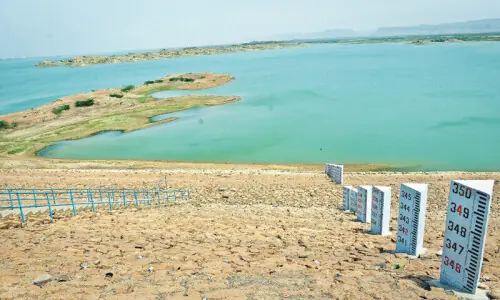
KARACHI: Industries across Hub are grinding to a halt as an acute water crisis spirals out of control despite the fact that the Hub Dam stands almost full.
Leaders of the Hub Chamber of Commerce and Industry (HCCI) alleged that industries, farmers and residents are being systematically deprived of their due share of water.
HCCI President Yakoob H. Karim and Ismail Suttar, former president, have issued an SOS appeal to Prime Minister Shehbaz Sharif, seeking his immediate intervention to avert what they described as an impending industrial, agricultural and humanitarian crisis.
In a statement, they warned that unless water is supplied to Hub’s industries and growing population in line with actual demand, several industrial units could be forced to suspend operations within weeks, putting thousands of jobs at risk and dealing a serious blow to the national economy.
Chamber appeals to PM as dam remains full; warns of job losses, revenue hit
Hub is the industrial backbone of Balochistan. If industries are deprived of water, production will halt, workers will lose their livelihoods, and the country will suffer significant economic losses, they said.
Hub contributes more than Rs7 billion annually in taxes to the national exchequer. Prolonged water shortages would not only reduce government revenue but also adversely affect exports, investment and industrial growth, they cautioned.
Hub has only one water source — the Hub Dam — whereas Karachi receives water from multiple sources. Despite this, they alleged that Hub continues to receive an inadequate share of water. They said the current allocation provides 36.7 per cent of the water to Hub and 62.3pc to Karachi, although Hub’s population, cultivated land and industrial base have expanded exponentially over the past four decades.
They recalled that when the water-sharing formula was established in the 1980s, Hub’s population stood at only 20,000, with five industrial units and around 1,000 acres of cultivated land. Today, they said, the population has exceeded one million, the number of industrial units has risen to approximately 300, and more than 25,000 acres are under cultivation. However, they maintained that Wapda continues to implement a four-decade-old allocation formula that no longer reflects present-day realities.
The HCCI leaders claimed that industries have been receiving far less water than required for the past two months, forcing many factories to operate well below capacity while others have curtailed production. If the situation persists, they warned, widespread factory closures and a sharp rise in unemployment could become unavoidable.
Published in Dawn, August 9th, 2026