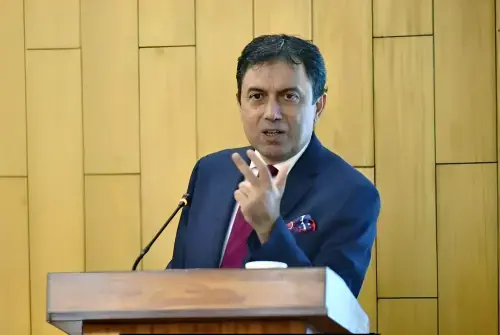
LAHORE: Acting Governor and Punjab Assembly Speaker Malik Muhammad Ahmad Khan on Tuesday stressed the need for “meaningful” devolution of power to the grassroots-level, a robust local government system and the empowerment of elected representatives in accordance with the Constitution, saying these steps were indispensable for ensuring effective governance in Pakistan.
Speaking as the chief guest at a round-table conference titled “Governance: Lekin Nizam Kya? (But under which system?),” he said governance should not remain the subject of academic discussions alone, but must evolve into a sustained national discourse focused on improving public service delivery and citizens’ quality of life.
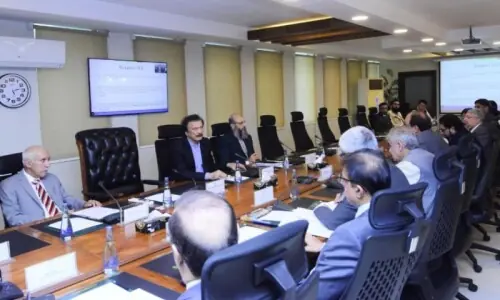
The conference was attended by University of Lahore Board of Governors Chairman Awais Raoof, legal experts, academics, lawyers, intellectuals, students and representatives of different segments of society.
Mr Khan said the relationship between the state and its citizens is based on a social contract that obligated the state to make citizens active stakeholders in governance by ensuring the provision of essential civic services, including healthcare, sanitation, drainage and other basic public facilities.
Expressing concern over the condition of local governance, he said many rural areas continued to suffer from the absence of an effective local government structure and adequate municipal services, describing the situation as one of the country’s foremost governance challenges.
He said the success of a democratic system should be measured by its ability to improve daily lives of ordinary citizens, adding that public confidence in democratic institutions diminishes when governance fails to bring tangible improvements in living standards.
Referring to the Constitution, Mr Khan said it envisages the transfer of administrative authority to elected representatives and stressed the need to examine why that constitutional objective has yet to be achieved in its true spirit.
He said the country is confronting political, economic and administrative challenges that require state institutions and political forces to work within their constitutional domains and pursue collective decision-making in the larger national interest.
He also emphasised the importance of nurturing a democratic culture that accommodates political dialogue and dissent, saying tolerance for differing viewpoints is essential for the stability and maturity of democratic institutions.
He said safeguarding citizens’ rights remains the state’s foremost responsibility and maintained that proposals concerning new provinces or administrative reforms should be debated through an inclusive national dialogue, with due consideration given to public opinion.
Concluding, Mr Khan said the country’s democratic future depends on strengthening institutions rather than individuals, upholding the rule of law, ensuring transparent accountability, establishing an effective local government system and empowering elected representatives in line with the Constitution.
Published in Dawn, August 5th, 2026